Truemag

  • Newsletters
  • Thought Leadership
  • Mobility
  • Safety
  • Work Trucks
  • Videos
  • Home
  • Subscribe
  • Contact Us
  • Media Kit
  • Who We Are

Red-Light Camera Debate Is a Mix of Anger, Revenue and Safety

Getting a $50 ticket for missing a red light is unpleasant enough. But when it is received in the mail without warning, generated from an unmarked camera, it can cause resentment.

“If there were signs up, yes, I’d feel differently,” said Dan Rosenbaum after he received his camera-based ticket for an infraction in Brooklyn.

Mr. Rosenbaum’s reaction is common among drivers who question whether the cameras are deployed to prevent accidents or to generate revenue. The absence of a caution sign can raise suspicions.

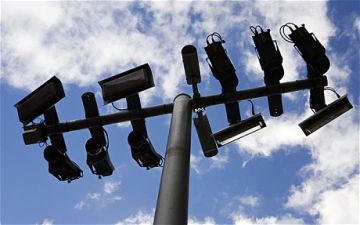
In New York, there are red-light cameras at 150 intersections; none of the cameras are marked. The idea is to keep drivers vigilant. “We want people to obey the law everywhere,” said Polly Trottenberg, commissioner of the city’s Transportation Department.

Drivers are increasingly being alerted to the cameras through other means — from navigation devices to traffic apps like Waze, which allows drivers to mark the location of cameras and radar traps.

“I use Waze, even when I know where I’m going,” said Bobby Orbach, a technology entrepreneur in Brooklyn who has also received an automated $50 fine. “It will say, watch out, red-light camera ahead.”

On an average day in New York, Waze users report 74,000 incidents, including accidents, construction zones and the presence of police, according to the company, which is owned by Google.

Many municipalities welcome such technology and see it as a deterrent that helps improve traffic safety.

“In general, it’s more likely to be effective if the program is publicized,” said Anne McCartt, a senior researcher at the Insurance Institute for Highway Safety. Although there is no specific research on posted warning signs and their deterrent effect, she said, “You want to not just enforce the law but publicize the enforcement.”

A 2005 study by the Federal Highway Administration looked at red-light camera programs in seven cities and found that while they accounted for a 25 percent drop in front-to-side collisions, there was a 15 percent increase in rear-end accidents.

Some cities have reduced the number of cameras or even gotten rid of them altogether. According to the I.I.H.S., the number of communities with red-light cameras fell from 540 in 2012 to 466 as of this month.

While New York City has recently been adding speed cameras, revenue from existing red-light cameras has been falling. Those cameras generated $28 million in 2014, down from $71 million in 2011, said Ms. Trottenberg, the transportation commissioner.

New York has no plans to remove the cameras, but falling revenue can cause other municipalities to abandon these programs. Increased political pressure is another motivation.

To see the original article go to The New York Times.

Mar 23, 2015connieshedron
Remembering Pierce WalshDestination Orlando for 2015 NAFA I&E -- The Latest in Fleet Management
Recent Posts
  • IMPROVLearning: How Comedy, Behavioral Science and AI Improve Fleet Safety
  • Improving Productivity with AI: Turning Fleet Data into Faster Decisions
  • National Safety Council Projects Increased Traffic Crash Risk during Fourth of July Weekend
  • Keep Every Heavy-Duty Maintenance Inspection on Track — Free Fullbay Checklist
  • Gain Data-Driven Insights into Commercial Vehicle Market Trends at Executive Leadership Summit
  • Last Chance to Save: Register for NAFA’s Maintenance Workshop
  • License Plate Cameras Are About to Start Tracking a Lot More Than Just Your Car
  • America’s Heavy EV Problem May End with Drivers Paying More
  • Trends in U.S. Drivers’ Perceptions and Attitudes Toward Vehicle Automation, 2019–2025
  • 2026 NETS Strength IN Numbers Conference: Early Bird Rates!
ASSOCIATION NEWS
Last Chance to Save: Register for NAFA’s Maintenance Workshop
How AFLA Is Positioning Itself for the Future of Fleet Mobility
‘Raise Your Hand and Get Involved’
NAFA Names 2026 Class of Fellows, Honoring Leaders in Fleet Management
Award Winners Honored at NAFA I&E
2026 NAFA I&E Seeks to Change Perceptions, Invigorate Fleets
NAFA Announces Lineup for Media Day at I&E 2026: Industry Leaders to Showcase the Latest Innovations
TECHNOLOGY
Improving Productivity with AI: Turning Fleet Data into Faster Decisions
Fleet Operations Are Changing – The Industry Needs to Evolve With Them
AI-Powered Vehicle Inspections Move Beyond the Checklist
Motive’s New Workforce Capabilities Aim to Improve Performance, Automate Rewards
AI + Human Insight: Why Fleet Leaders Need Both to Win in 2026
NTSB Finds Automation Overreliance Contributed to Two Fatal Ford BlueCruise Crashes
New AI Assistants Automate Fleet Data Analysis, Decision Making and More
CONFERENCES & WEBINARS
2026 NETS Strength IN Numbers Conference: Early Bird Rates!
AFLA 2026 – Keynotes Announced!
Private Fleets Flex at National Private Truck Council Conference
Free NAFA Webinar: Manage Your Fuel Cost Volatility
Registration Now Open for NETS Annual Conference
Early Bird Pricing for AFLA 2026 – Ending June 1
NAFA Online Seminar: Essentials of Fleet Management
INDUSTRY ANNOUNCEMENTS
Union Leasing Becomes Moventum Fleet Management as 70-Year Company Accelerates into Next Phase
Fleetio Wins Innovations Award at NAFA’s 2026 Institute & Expo
WIFM is heading to NAFA!
Cox Automotive Unveils Cox Fleet, Setting a New Standard for Fleet Uptime Nationwide
AFLA Canadian Fleet Professional of the Year Award: Nominations Open!
NAFA Webinar: Kickoff the 2026 100 Best Fleets Contest on December 4!
Join NAFA’s Free Fleet 101 Live Course

Fleet Management Weekly Newsletter Archive
Access to back issues of the FMW newsletter.

FMW Mobility
How mobility is rapidly changing the fleet management landscape.

Newsletter

Subscribe

FMW Fleet Videos
Video clips of industry leaders speaking on a variety of engaging hot topics in fleet.

2014-2020 © Fleet Management Weekly