|
|
 |
If you missed the deadline to lock in the $7,500 credit, don’t worry, you’ll still have the chance to grab the savings.
Chevy, Cadillac, GMC, and Ford’s electric vehicles will still be eligible for the credit after the September 30 deadline. Ford and GM plan to continue offering the $7,500 tax credit for at least another few months.
Ford and GM’s financing units will step in and provide down payments to dealers. One of the dealers briefed on the program said the down payment will enable the vehicle to become eligible for the federal $7,500 EV tax credit.
via Electrek
|
image:IIHS
The growth of automatic emergency braking systems undercuts a common gripe about red light safety cameras by preventing rear-end crashes that can occur when drivers stop short, a new study from the Insurance Institute for Highway Safety shows.
In 2023, more than a thousand people were killed and more than 136,000 were injured in crashes that involved a driver running a red light.
“Red light running causes extremely dangerous, high-speed side crashes, so red light safety cameras are an essential intervention,” IIHS President David Harkey said. “This study illustrates that AEB helps address one of their few downsides, which hopefully can help accelerate their deployment in intersections across the country.”
via IIHS
|
In California, public EV chargers now outnumber gas pumps. The California Energy Commission (CEC) announced last week that there are now 68% more charging connectors than gas-pump nozzles.
That’s thanks to a sustained buildout of charging infrastructure that added 22,631 plus between March and September 2025, bringing the total to 201,180 plugs in total. That’s in addition to an estimated 800,000 chargers installed in single-family homes across the state.
“In the state of California, 94% of people now live within just 10 minutes of an EV charger,” Governor Gavin Newsom said in a statement. “We’re proving that electric vehicles are here to stay—even as Trump sells out American innovation and jobs to China.”
via Autoblog
|
Cities everywhere are turning to technology and specifically to AI to manage crowded streets and overstretched parking, and Germany is no exception. The country is preparing to trial a parking enforcement system that looks more like something from a tech lab than a city street.
The city of Heidelberg is now using the Cityscanner, a small vehicle with cameras, lidar, and real-time database checks to sniff out parking violations.
Developed by Regensburg-based DCX Innovationis, the Cityscanner uses roof-mounted cameras to capture 25 frames per second. As it does that, it reads license plates, checks to see if cars are within valid parking spaces, and even cross-references digital parking apps like Easypark or Parkster.
via CarScoops
|
|
|
|
|

By Sage McLaughlin, Business Development Manager, REC Solar
Solar microgrids provide a compelling alternative to grid-connected EV charging. By generating and storing energy on-site, fleet operators gain far greater control over their energy supply.
During outages, microgrids can continue to power operations, a critical advantage that mitigates operational disruptions and financial losses that might occur if a fleet cannot be charged.
For fleet operators navigating the complexities of electrification, microgrids offer a luring combination of resilience, cost control, and sustainability.
As fleets grow more dependent on electrified vehicles, energy strategy becomes an integral part of fleet management. Microgrids represent not just an energy solution, but a long-term infrastructure investment.
READ MORE
|
|
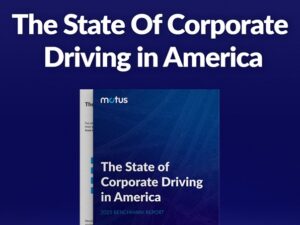
The state of corporate driving is changing – here’s what Fleet Managers need to know. Get the data, insights, and benchmarks you need to navigate risk and make smarter decisions about your company’s vehicle program.
Rising insurance premiums. Higher accident rates. Shifting employee expectations. The Motus 2025 State of Corporate Driving Report highlights the trends shaping companies that rely on employees driving for work.
Inside, you’ll find out how forward-thinking companies are treating cars as legitimate office spaces, why satisfaction increases when employees can choose their own vehicles, and why one-size-fits-all reimbursement programs are failing employees in many regions.
READ MORE
|
|
By Brett Carlson, co-founder and CEO, ServiceUp
In my two decades of leading technology companies and now building ServiceUp, the strongest businesses don’t just run on fuel and spreadsheets, they run on trust.
For fleet managers that means trust with repair shops, parts suppliers, insurers, drivers, OEMs, and everyone else in the ecosystem.
At the end of the day relationships are what get your calls answered first before everyone else, your vehicles prioritized, and your business supported when disruption hits.
READ MORE
|
|
|
|