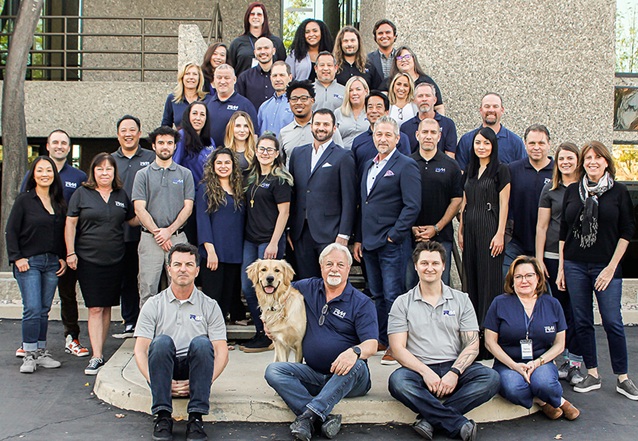
Photo: Recall Masters Team
By Fleet Management Weekly Staff
October 1, 2025
Vehicle recalls can create a major headache for car owners. Not only do they pose potential safety hazards, but they might require repairs using parts that are out of stock, making the vehicle unusable in the meantime.
As difficult as this can be for the average car owner, it can become a nightmare for fleets whose bottom line depends on keeping a large number of vehicles running daily. With multiple makes and models in their fleet, it’s a ton of work to stay up to date on the latest recalls and repairs without a centralized system to track them.

Christopher Miller
That’s where Recall Masters comes in. The leading provider of comprehensive recall and retention solutions, Recall Masters provides an aggregated overview of recall information that helps fleets stay on top of recalls before they become an issue. They even connect fleets to local repair shops and maintenance techs to get repairs done quickly and minimize vehicle downtime.
To learn more about Recall Masters’ software and its mission to make roads safer, we spoke with Christopher Miller, Founder and Chairman of Recall Masters.
Tell me about Recall Masters. What do you do and why does it matter to fleets?
Recall Masters was founded with a vision of making the road safer. We’ve built specialized software across all 46 brands sold in the US that aggregates all the recall information into one place. We then standardize the way we communicate that to vehicle owners, dealerships, the Department of Transportation (DoT), fleet management companies, fleet maintenance companies, and providers.
In this way, fleets can go to one place to get a report of every vehicle in their fleet. They can find out which vehicles have open recalls, as well as which ones have a remedy and parts available for repair. They can even categorize those recalls based on the type and rank of each risk, prioritizing them according to repair difficulty.
Why are recalls such a big problem in the fleet industry?
 Recalls have increased in volume, frequency, and complexity over the past decade. When you factor in voluntary recalls issued by the manufacturer alongside the NHTSA mandated recalls, more than 25% of the 60-80 million cars on the road today have open recalls on them. Customers are being inundated, especially now that vehicles are often owned by three to five different people in their lifespans, creating even more complications.
As a fleet owner, you need to keep your vehicles operational but you also have insurance liabilities and concerns to address. How do you measure and balance the recall risk with the business risk of taking these vehicles out of operation? That’s where Recall Masters can come in to help.
What are some examples of fleets that you’ve helped?
 We work with numerous FMCs. We’re currently working with Signal to process around half a million VINs in their fleets. We prefer to work directly with providers who have boots on the ground, as they’re the ones who can make a difference. If a fleet with a lot of vehicles comes to us, we might ask what fleet management system they use. If we’re not already integrated through our enterprise service division, we work with the fleet operator to ensure the information is fed into the systems where and when they need it. We want to make sure Recall Masters fits seamlessly into the workflow that already exists.
This isn’t something done by management with a bunch of Excel spreadsheets. There’s no one entering VINs into 46 manufacturer websites, trying to piece together a bunch of disjointed, fragmented information. We take all this different terminology the manufacturers use and boil it down into a standardized set of information. For example, if Toyota refers to a recall that has a chance of causing a fire as a “thermal flare up” we label it a fire.
 Parts availability is another big problem. If you have a vehicle that you can’t repair because a part is unavailable, what are you supposed to do with it? Take it off? Leave it on the market? That’s where our risk score comes in. If we know there’s a recall and there are no available remedies or replacement parts, but it hasn’t caused any collisions, our risk score may help that fleet manager determine the best use of the vehicle in their fleet. By tracking what are called “stop sales” and “don’t drive” recalls, which mean a particular vehicle should not be driven, we provide real-time information and inform them by the next day if anything of concern comes up.
What innovations are on the horizon?
Technology has improved over the years, as has the government’s ability to focus on, track more efficiently, and monitor recalls. As such, organizations are becoming increasingly responsible for ensuring that their recalled vehicles are being repaired. That includes both the fleet managers and the dealerships selling the vehicles.
 You have various laws, liabilities, lawsuits, and fines, as well as the Department of Transportation holding hearings to hold manufacturers accountable for the development of these vehicles. If you’re a fleet provider, the pressure to track recalled vehicles is increasing. There’s almost no excuse these days not to track these recalls or at least know their status. Companies like Uber and Lyft are tracking their vehicles for recalls using services like ours to ensure all their drivers are compliant, as this affects their insurance premiums.
That’s one of the many things fleet organizations need to worry about in the future, because the pressure is only going to increase. Thankfully, the availability of information will also increase, so it’s imperative to have a solution like ours.
What’s Recall Masters doing next to make roads safer?
Recall Masters has evolved and gotten very good at identifying vehicles with open recalls. Now, our business is starting to cover every facet of the repair process. That means we not only ingest the VINs, but we also use the contact information of each driver to send text messages and email them directly. We can direct them to the right local facility or mobile service technician through their FMC.
 Our agents handle inbound responses and manage repair scheduling so drivers can get appointments quickly and effectively. We also work directly with providers to proactively schedule repairs for vehicles in their area. After all, it’s one thing to have a big list of VINs and to know which vehicles have open recalls. The tricky part is getting these people actually to bring their cars in. We can help with coordination beyond just the recalls themselves by managing the loaner process or temporarily replacing the vehicle with another one from the same fleet.
 Recall Masters is also starting to utilize AI and predictive analytics to identify potential issues associated with specific vehicles. By examining the build information and a list of each vehicle’s parts, we can identify the most common repairs and maintenance issues these vehicles encounter. These might be safety-related, even if they haven’t risen to the level of a recall yet. They may be cost- or time-intensive, requiring the vehicle to be off the road for an extended period.
In addition, we’re starting to produce total cost of ownership numbers. Obviously, recalls are free to repair, but if you’re about to purchase a vehicle and you find out it spends 5% of its time in the repair center, you know that’s no good. Mainly because those problems tend to compound with time. Then, when you factor in the cost associated with maintaining vehicle upkeep, you have a real problem.
 That’s why we’re working on proactively showing what types of issues any given vehicle may have, down to the year, make, model, and mileage of the vehicle. If you catch and fix many of these issues early on, you can save a lot of time and headache in future repairs. So being proactive in this process is the next step for Recall Masters in how we assist our clients. We’re working on all of these right now and they will be available in the near future.