By Ed Pierce, Contributing Editor, Fleet Management Weekly
January 7, 2025
The recent federal update that NEVI funds are once again available for EV charging network deployment marks a crucial milestone for private, commercial, and government fleets navigating the electric transition — ending months of uncertainty that slowed infrastructure development nationwide. (TT News)
What are NEVI Funds?
The National Electric Vehicle Infrastructure (NEVI) Formula Program is the foundation of federal efforts to build a nationwide EV charging network, authorized under the 2021 Bipartisan Infrastructure Law. It provides about $5 billion in formula grants to states to deploy publicly accessible EV charging stations — especially DC fast chargers along designated Alternative Fuel Corridors — and to create a compatible, reliable network for all EV drivers. (Department of Transportation)
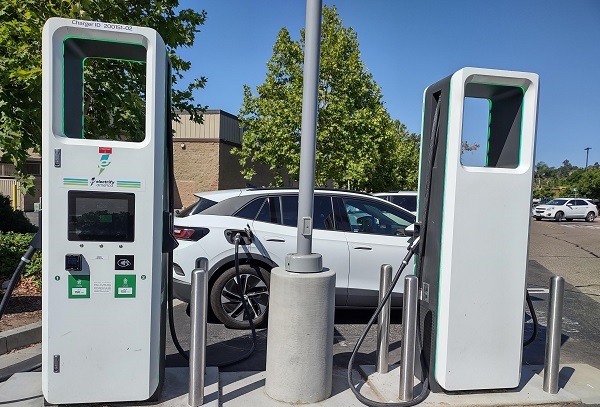 Under NEVI’s rules, funded stations must be non-proprietary, support open-access payments, and meet performance standards so EV drivers — including commercial fleets — can charge confidently across regions. States usually receive funds based on a federal allocation formula and must submit deployment plans to the Federal Highway Administration to access those funds. (Alternative Fuels Data Center)
Why Funding was Disrupted — and What Changed
Earlier this year, the NEVI program was effectively paused as federal policy shifted and guidance was revised to align with new priorities. That pause stopped approvals of many charging plans and put states and private partners in limbo. Legal challenges from states followed, and a federal court ultimately ordered the release of funds and allowed NEVI planning to continue. With revised guidance aimed at simplifying requirements and reducing bureaucratic hurdles, states are once again approving projects and issuing awards. (Canary Media)
What Restarting NEVI Means for Fleets
📍 Private Fleets (Commercial & Logistics): For private commercial fleets — from delivery vans to heavy-duty tractors — reliable EV charging infrastructure is a key requirement for electrification plans. The return of NEVI funds renews efforts to build stations along major corridors, reducing range anxiety and enabling inter-city and regional fleet electrification.
- Route certainty: NEVI-funded DC fast chargers spaced along corridors make longer routes — especially for regional delivery, logistics, and intermodal fleets — more feasible without costly private charging setups.
- Total cost reduction: Federally subsidized charging helps lower initial deployment costs, encouraging site hosts (e.g., warehouses, partner fueling stations) to install high-power chargers.
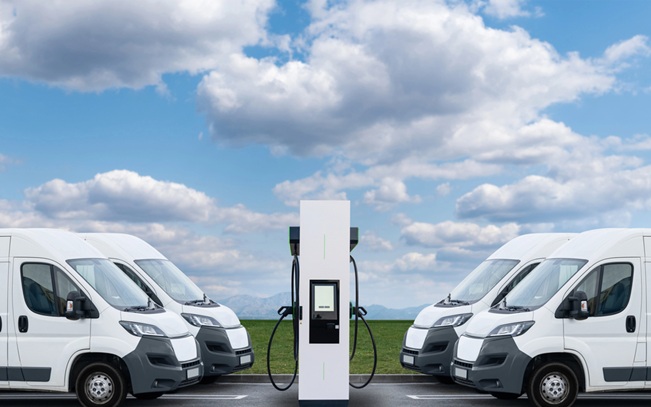 For fleet managers trying to justify EV truck purchases, this federal support reassures them that infrastructure will follow the vehicles. It also promotes private charging investments (e.g., autonomous fleets, EV truck stops), increasing charging options beyond public stations.
📍 Commercial Fleets (Retail, Hospitality, Service Fleets): Commercial businesses — including retail locations, hospitality chains, and service fleets — benefit as states and developers speed up charger deployment at high-traffic sites. NEVI’s reopening speeds up planning and construction, providing more on-site charging for business-owned vehicles and customers.
Smart siting along highways and urban hubs makes midday and overnight charging more practical, strengthening the case for electrifying shorter-haul and mixed-use fleets. When combined with municipal electrification incentives and utility programs, this can significantly improve ROI for EV conversions.
📍 Government Fleets (Federal, State & Local): Government fleets often lead in electrification — from municipal vehicles and utility trucks to law enforcement and transit support vehicles. With NEVI funds back online:
- Public-sector electrification plans are gaining momentum, as infrastructure availability remains a major barrier to government fleet EV adoption.
- Rural and underserved communities also benefit from programs aimed at promoting charging equity, helping government fleets operate confidently outside major metro areas.
- Public-private partnerships will accelerate, with state DOTs and local governments using NEVI funds to co-invest in stations that serve both civic and commercial needs.
Charging Network Outlook & Market Impact
 With federal NEVI funding flowing again, the EV charging market and related services are set for renewed growth. Private charging network operators and OEMs are planning expansions — from investments of hundreds of millions in state rollout plans to new commercial charger installations across the country. (ACT News)
Industry analysts view this as a steppingstone to broader EV adoption — by alleviating one of the biggest hurdles in the EV ecosystem. As charger deployment ramps up, fleets will feel increased pressure to switch to electric sooner to benefit from lower operating costs and regulatory incentives, while avoiding stranded costs in internal combustion assets.
Looking Ahead
The reopening of NEVI funding offers a clearer road for fleet electrification — but time is limited. With funding scheduled through FY 2026 and deployment timelines varying by state, fleet planners must act fast:
- Engage with state DOT NEVI coordinators to influence site selection and deployment priorities.
- Combine NEVI-supported public infrastructure with private depot charging plans for seamless operation.
- Coordinate fleet electrification timelines with federal and utility funding cycles to maximize savings.
A Real Move Forward
The restart of NEVI funds isn’t just symbolic — it’s a real move to help fleets of all types speed up EV adoption. By enabling smarter, more widespread charging deployment, the federal program bolsters the business case for electrification across private, commercial, and government fleets, and helps create a more connected, resilient EV charging ecosystem nationwide.
 About the author
Fleet marketing expert and consultant Ed Pierce is a contributing editor at Fleet Management Weekly. He can be reached at 484-957-1246 or [email protected].