Truemag

  • Newsletters
  • Thought Leadership
  • Mobility
  • Safety
  • Work Trucks
  • Videos
  • Home
  • Subscribe
  • Contact Us
  • Media Kit
  • Who We Are

MIT Has a Crazy Vision for a Future Without Stoplights

Tech Insider

MIT researchers have devised a way to eliminate traffic lights, improving traffic flow to the point where twice as many cars could be on the road.

Paolo Santi and Carlo Ratti, researchers working in MIT’s Senseable City Lab, are proposing a slot-based traffic system to replace traffic lights.

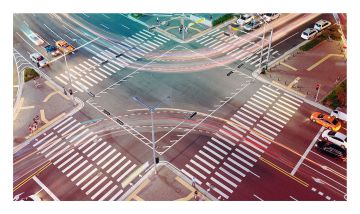
Here’s how it works: instead of approaching a traffic light, drivers would approach an intersection with several slots, like a row of toll booths.

But drivers wouldn’t have to stop and wait at the slot — they can just drive straight through without any hesitation.

It sounds too good to be true, but it works because a driver’s car would communicate with a computer that manages the intersection. That computer would record the car’s speed, GPS position in relation to the intersection, and desired location.

It would then assign drivers to specific slots that would allow them to drive in whatever direction they need to go in. It’s almost like a perfectly coordinated ballet — all of the cars are moving in different directions without any bumping into each other.

“The key to this improved efficiency is that we manage traffic at a single vehicle instead of as the flow of vehicles as is done with traffic lights,” Santi told Tech Insider.

The only issue is that for the system to work, drivers must always insert their intended location into their navigation system. That’s a bit problematic considering people don’t always want to drive with their GPS activated and old cars aren’t equipped with navigation consoles like newer models are.

Santi said the system could work with human drivers, but should really be used in conjunction with driverless cars, especially when factoring in human error. If someone were to go to the incorrect slot, havoc could occur.

“Thats why it’s probably not advisable in practice to implement such a system with human drivers,” Santi said.

It seems like the slot-based system would work better with driverless cars than traditional traffic lights. For driverless cars to successfully navigate traffic lights, they need to be given the ability to see. Strides have been made in that area with LIDAR technology.

But assigning a driverless car a slot number would be fairly easy for a the car’s computer to process.

Still, it seems like it would be difficult to handle pedestrians with a system where traffic is constantly flowing.

Santi said they’ve accounted for that issue and that pedestrians could use the GPS function on their smartphones to get slot assignments and cross safely.

But it’s hard to imagine parents feeling comfortable with kids crossing intersections where traffic literally never stops. That, and, it requires everyone have their smartphone on them at all times.

But the system, published in the journal PLOS One, highlights how roads are bound to change as driverless technology advances.

Apr 3, 2016connieshedron
First-Ever IIHS Headlight Ratings Show Most Need ImprovementToyota, Microsoft Partner to Develop Car Tech That Drivers Want
Recent Posts
  • Why the Traditional Vehicle Ordering Cycle No Longer Works
  • DASH Breaks Ground on DC Metro Region’s First On-Route Electric Bus Chargers
  • IMPROVLearning: How Comedy, Behavioral Science and AI Improve Fleet Safety
  • Improving Productivity with AI: Turning Fleet Data into Faster Decisions
  • National Safety Council Projects Increased Traffic Crash Risk during Fourth of July Weekend
  • Keep Every Heavy-Duty Maintenance Inspection on Track — Free Fullbay Checklist
  • Gain Data-Driven Insights into Commercial Vehicle Market Trends at Executive Leadership Summit
  • Last Chance to Save: Register for NAFA’s Maintenance Workshop
  • License Plate Cameras Are About to Start Tracking a Lot More Than Just Your Car
  • America’s Heavy EV Problem May End with Drivers Paying More
ASSOCIATION NEWS
Last Chance to Save: Register for NAFA’s Maintenance Workshop
How AFLA Is Positioning Itself for the Future of Fleet Mobility
‘Raise Your Hand and Get Involved’
NAFA Names 2026 Class of Fellows, Honoring Leaders in Fleet Management
Award Winners Honored at NAFA I&E
2026 NAFA I&E Seeks to Change Perceptions, Invigorate Fleets
NAFA Announces Lineup for Media Day at I&E 2026: Industry Leaders to Showcase the Latest Innovations
TECHNOLOGY
Improving Productivity with AI: Turning Fleet Data into Faster Decisions
Fleet Operations Are Changing – The Industry Needs to Evolve With Them
AI-Powered Vehicle Inspections Move Beyond the Checklist
Motive’s New Workforce Capabilities Aim to Improve Performance, Automate Rewards
AI + Human Insight: Why Fleet Leaders Need Both to Win in 2026
NTSB Finds Automation Overreliance Contributed to Two Fatal Ford BlueCruise Crashes
New AI Assistants Automate Fleet Data Analysis, Decision Making and More
CONFERENCES & WEBINARS
2026 NETS Strength IN Numbers Conference: Early Bird Rates!
AFLA 2026 – Keynotes Announced!
Private Fleets Flex at National Private Truck Council Conference
Free NAFA Webinar: Manage Your Fuel Cost Volatility
Registration Now Open for NETS Annual Conference
Early Bird Pricing for AFLA 2026 – Ending June 1
NAFA Online Seminar: Essentials of Fleet Management
INDUSTRY ANNOUNCEMENTS
Union Leasing Becomes Moventum Fleet Management as 70-Year Company Accelerates into Next Phase
Fleetio Wins Innovations Award at NAFA’s 2026 Institute & Expo
WIFM is heading to NAFA!
Cox Automotive Unveils Cox Fleet, Setting a New Standard for Fleet Uptime Nationwide
AFLA Canadian Fleet Professional of the Year Award: Nominations Open!
NAFA Webinar: Kickoff the 2026 100 Best Fleets Contest on December 4!
Join NAFA’s Free Fleet 101 Live Course

Fleet Management Weekly Newsletter Archive
Access to back issues of the FMW newsletter.

FMW Mobility
How mobility is rapidly changing the fleet management landscape.

Newsletter

Subscribe

FMW Fleet Videos
Video clips of industry leaders speaking on a variety of engaging hot topics in fleet.

2014-2020 © Fleet Management Weekly