By now, you’ve seen the renderings and heard the promises. Someday, robocars will dominate American roadways, each racing along just inches from its neighbors, safely under the control of a computer that never makes mistakes.
No more congestion, fewer atmosphere-choking emissions, and crucially, a drastic drop in deadly crashes.
Someday. Autonomous vehicles are truly on the way, but until they complete their conquest, they’ll have to share the road with awful human drivers.
People are unpredictable. They don’t always follow the rules.
They get distracted, brake late and hard, and make aggressive lane changes. They’ve already proved a menace to the robots: A quick check of records from the California DMV shows humans have a nasty habit of rear-ending driverless cars stopped at red lights or stop signs.
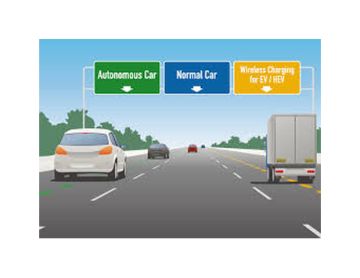
The solution? Keep ’em separate. Give each class of car its own lanes, or even entire roads. That’s the thrust of a white paper proposal that imagines an “autonomous vehicle corridor” replacing the I-5 freeway between Seattle and Vancouver. In other words, that entire stretch of critical roadway linking two major cities across an international border would be given over to driverless cars by 2040, with no old-fashioned, human piloted, cars allowed.
VC firm Madrona Venture Group first proposed the idea last year, and has now refined it to explain how such a radical proposal could be phased in over time. The white paper’s authors include Tom Alberg, who serves on the Amazon board, and Craig Mundie, former CTO of Microsoft and a member of the Council on Foreign Relations. The Seattle-based group looked at a stretch of road close to home, where they’d personally experienced frustrating traffic jams, but the idea could work anywhere.
“I do believe that the points we make in the paper can be generalized to a lot of interstates, and metropolitans areas,” says Alberg. In fact, they might prove easier to implement elsewhere, without the whole two-country thing complicating matters.
In the early days of the transition, any autonomous vehicle, no matter its powertrain or number of occupants, would be allowed to use existing HOV lanes on the I-5. These carpool lanes are usually separated from the rest of the traffic, making them easy to handle even for today’s semi-autonomous driving systems. The Madrona team says this should be implemented within a year.
By 2025, that HOV lane would be closed to human drivers, along with the one next to it (the highway is eight lanes wide). The paper’s authors say those two lanes could be used as three, as autonomous vehicles can safely drive more closely together. By 2030, the majority of the highway would be closed to human drivers, with the takeover complete by 2040.
“This final transition will require some tipping point in terms of vehicle availability and public interest,” the authors write. “We believe this will happen in the next ten to twenty years, when usage and data will demonstrate the dramatic benefits of autonomy along the dimensions of safety, efficiency, and productivity.”
The white paper restrains its proposal to the 140-mile stretch of I-5, but it’s easy to imagine someplace like California signing on. The Golden State already allows electric cars access to coveted carpool lanes, to encourage low-emissions driving. The same carrot could encourage the adoption of the safer autonomous vehicles that should reduce overall collisions.
If you think all this sounds grossly unfair to people who can’t afford or don’t want a driverless car, don’t freak. The benefits of improving traffic flow could extend to all road users—at least while the humans are still allowed.
A University of Illinois study found that if just five percent of vehicles are autonomous on a regular road, that’s enough to eliminate those stop-and-go pulses of traffic that humans cause by not driving smoothly. The team sent one autonomous vehicle onto a track with 20 regular drivers, and found it completely cut “phantom traffic jams,” by acting as a pace car. British traffic engineers employ a similar concept on “smart motorways” which use variable speed limits to keep everyone moving smoothly, even if it’s at a slower pace. The result is usually a quicker journey overall, with fewer sudden changes in speed and thus fewer crashes.
Of course, a white paper from some VC firm won’t convince any transportation agency to make such a major change. But Alberg says the goal is to convince traffic engineers, transportation commissions, and highway planners to start taking the changing world of AVs into consideration. At first, his group got little traction, but they’re heartened that the Washington State DOT has asked them to testify on the idea at its next public meeting.
If you want to be ready for the carpool lane and you have the cash, you can already buy a car that at least partially drives itself. Tesla, Cadillac, Audi, Mercedes-Benz, Nissan, and others all offer cars that can handle themselves on the highway to varying degrees. That tech will gradually make its way down market, and Alberg and his co-authors want the decision makers to clear the road for it.