Truemag

  • Newsletters
  • Thought Leadership
  • Mobility
  • Safety
  • Work Trucks
  • Videos
  • Home
  • Subscribe
  • Contact Us
  • Media Kit
  • Who We Are

Google Autonomous Vehicle Suffers 1st Injury Accident

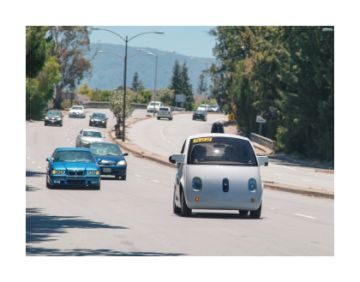
Sometimes, it seems, there’s nothing that even the smartest cars can do. Yet again, a Google autonomous vehicle was rear-ended, apparently due to a distracted driver. The 14th accident involving one of the self-driving vehicles, it also marked the first involving injuries.

The July 1 crash occurred near the tech giant’s home of Mountain View, California, and saw three employees in the autonomous vehicle go to the hospital due to what’s been described as “minor” whiplash. The driver of the other vehicle also suffered some minor injuries.

“The clear theme is human error and inattention,” Chris Urmson, head of the Google autonomous vehicle program, wrote on his blog. “We’ll take all this as a signal that we’re starting to compare favorably with human drivers.”

Google has been testing autonomous technology for a number of years, initially using modified Toyota and Lexus vehicles, and so far clocking about 1.9 million miles. It is just beginning to roll out the first of what will be 100 specially designed vehicles that will be used around its Silicon Valley headquarters.

The program generated headlines earlier this year when it was revealed that more than a dozen crashes have occurred involving the original test fleet. In all instances, according to Urmson – and backed by crash reports – the other driver has been blamed. With the latest crash, the Google vehicles has been rear-ended in 11 of the 14 incidents.

The latest occurred at a speed estimated at 17 mph. It was enough to knock the front bumper off the other vehicle. Sensors onboard the Google vehicle show that the other car did not brake.

“Our self-driving cars are being hit surprisingly often by other drivers who are distracted and not paying attention to the road,” wrote Urmson. “That’s a big motivator for us.”

A growing number of automakers have begun using forward collision warning systems, some capable of automatically applying the brakes if the driver fails to respond when a crash becomes likely. The Insurance Institute for Highway Safety reports such technology is already having a significant effect on reducing accidents, and federal regulators are considering the idea of making such systems mandatory.

Forward collision warning is already a key element of autonomous vehicle technology – which many believe will begin to reach production by early in the next decade. Some makers, such as Cadillac, Nissan and Mercedes-Benz, hope to introduce semi-autonomous features to their products as soon as 2016.

Quoting the book, Traffic: Why We Drive the Way We Do, by Sheila Klauer, of the Virginia Tech Transportation Institute, Urmson added, “People, on the other hand, ‘drive as if the world is a television show viewed on TiVo that can be paused in real time – one can duck out for a moment, grab a beer from the fridge, and come back to right where they left off without missing a beat.’”

To see the original article go to The Detroit Bureau.

Jul 19, 2015connieshedron
Smart Steering Wheel Detects Driver DrowsinessCenter for Automated Road Transportation Safety Launched
Recent Posts
  • IMPROVLearning: How Comedy, Behavioral Science and AI Improve Fleet Safety
  • Improving Productivity with AI: Turning Fleet Data into Faster Decisions
  • National Safety Council Projects Increased Traffic Crash Risk during Fourth of July Weekend
  • Keep Every Heavy-Duty Maintenance Inspection on Track — Free Fullbay Checklist
  • Gain Data-Driven Insights into Commercial Vehicle Market Trends at Executive Leadership Summit
  • Last Chance to Save: Register for NAFA’s Maintenance Workshop
  • License Plate Cameras Are About to Start Tracking a Lot More Than Just Your Car
  • America’s Heavy EV Problem May End with Drivers Paying More
  • Trends in U.S. Drivers’ Perceptions and Attitudes Toward Vehicle Automation, 2019–2025
  • 2026 NETS Strength IN Numbers Conference: Early Bird Rates!
ASSOCIATION NEWS
Last Chance to Save: Register for NAFA’s Maintenance Workshop
How AFLA Is Positioning Itself for the Future of Fleet Mobility
‘Raise Your Hand and Get Involved’
NAFA Names 2026 Class of Fellows, Honoring Leaders in Fleet Management
Award Winners Honored at NAFA I&E
2026 NAFA I&E Seeks to Change Perceptions, Invigorate Fleets
NAFA Announces Lineup for Media Day at I&E 2026: Industry Leaders to Showcase the Latest Innovations
TECHNOLOGY
Improving Productivity with AI: Turning Fleet Data into Faster Decisions
Fleet Operations Are Changing – The Industry Needs to Evolve With Them
AI-Powered Vehicle Inspections Move Beyond the Checklist
Motive’s New Workforce Capabilities Aim to Improve Performance, Automate Rewards
AI + Human Insight: Why Fleet Leaders Need Both to Win in 2026
NTSB Finds Automation Overreliance Contributed to Two Fatal Ford BlueCruise Crashes
New AI Assistants Automate Fleet Data Analysis, Decision Making and More
CONFERENCES & WEBINARS
2026 NETS Strength IN Numbers Conference: Early Bird Rates!
AFLA 2026 – Keynotes Announced!
Private Fleets Flex at National Private Truck Council Conference
Free NAFA Webinar: Manage Your Fuel Cost Volatility
Registration Now Open for NETS Annual Conference
Early Bird Pricing for AFLA 2026 – Ending June 1
NAFA Online Seminar: Essentials of Fleet Management
INDUSTRY ANNOUNCEMENTS
Union Leasing Becomes Moventum Fleet Management as 70-Year Company Accelerates into Next Phase
Fleetio Wins Innovations Award at NAFA’s 2026 Institute & Expo
WIFM is heading to NAFA!
Cox Automotive Unveils Cox Fleet, Setting a New Standard for Fleet Uptime Nationwide
AFLA Canadian Fleet Professional of the Year Award: Nominations Open!
NAFA Webinar: Kickoff the 2026 100 Best Fleets Contest on December 4!
Join NAFA’s Free Fleet 101 Live Course

Fleet Management Weekly Newsletter Archive
Access to back issues of the FMW newsletter.

FMW Mobility
How mobility is rapidly changing the fleet management landscape.

Newsletter

Subscribe

FMW Fleet Videos
Video clips of industry leaders speaking on a variety of engaging hot topics in fleet.

2014-2020 © Fleet Management Weekly