Truemag

  • Newsletters
  • Thought Leadership
  • Mobility
  • Safety
  • Work Trucks
  • Videos
  • Home
  • Subscribe
  • Contact Us
  • Media Kit
  • Who We Are

Why China Will Win The Race For Supremacy In Autonomous Vehicles

Forbes

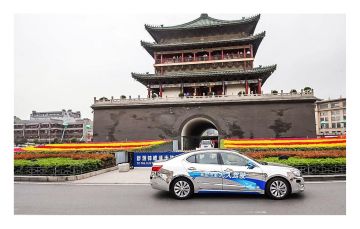
Americans might not realize it, but there’s a race going on between the United States and China for leadership in autonomous cars.

America enjoys clear superiority in technical innovation — right now. Google and Tesla are leading the way, with start-ups like Otto and Cruise Automation coming on fast. But China has its own secret weapon: No other country in the world can match its ability to create industries via powerful, top-down mandates.

“Our biggest advantage is that we, as a socialist nation, can pool resources in a major mission,” Chinese President Xi Jinping said this week.

By 2020, China will have many more autonomous vehicles running on its roads than America simply because the People’s Republic will be quicker to pave the way with autonomous vehicle-friendly road rules and investments.

And being fast matters. In the autonomous car business, the artificial intelligence that drives robo-cars improves as it gathers on-the-road experiential data.

Another edge over the U.S.: less societal ambivalence. Chinese have no sentimentality about the freedom of driving. With hundreds of millions of new drivers taking to the road relatively recently, many would be happy to release the wheel if it would end of the chaotic, dangerous conditions that plague Chinese cities.

China has proven its ability to create breakthrough industries via government fiat, such as:

Magnetic Levitation. China runs maglev trains that transport people in quiet comfort at up to 430km per hour.

Electric Vehicles. Chinese will buy 600,000 EVs and plug-in hybrids this year, more than double the number in the U.S.

Solar Panels. China is by far the largest global manufacturer and market, accounting for one-fourth of all panels built worldwide.

Autonomous vehicles are China’s next major mission. China’s Ministry of Industry and Information Technology later this year will unveil a master plan for extensive highway driving by 2020 and fully autonomous urban driving by 2025.

Meanwhile in the U.S., a patchwork of federal, state and local legislation setting the rules of the road must be hacked through — a process that promises to hold the U.S. back while China forges ahead with its no-nonsense, top-down approach.

One reason for the sense of urgency in China: Chinese leaders throughout history have always feared “luan” or social chaos. And that’s what the country’s late but rapid transition to the automobile age has produced. Each year, China’s frenetic roads are home to more than 200,000 road fatalities, according to the World Health Organization. That compares to 33,000 in the United States.

Look for the Chinese to start with dedicated bus and fixed route taxi lanes for autonomous vehicles in major cities. Those pre-defined and measurable trips are the easiest to implement.

Read more of the original article in Forbes.

Jun 6, 2016connieshedron
NAFA Webinar: Global ReadinessA Call to Action -- A Focus on Customer Experience Leads to Advocate Marketing Opportunities
Recent Posts
  • IMPROVLearning: How Comedy, Behavioral Science and AI Improve Fleet Safety
  • Improving Productivity with AI: Turning Fleet Data into Faster Decisions
  • National Safety Council Projects Increased Traffic Crash Risk during Fourth of July Weekend
  • Keep Every Heavy-Duty Maintenance Inspection on Track — Free Fullbay Checklist
  • Gain Data-Driven Insights into Commercial Vehicle Market Trends at Executive Leadership Summit
  • Last Chance to Save: Register for NAFA’s Maintenance Workshop
  • License Plate Cameras Are About to Start Tracking a Lot More Than Just Your Car
  • America’s Heavy EV Problem May End with Drivers Paying More
  • Trends in U.S. Drivers’ Perceptions and Attitudes Toward Vehicle Automation, 2019–2025
  • 2026 NETS Strength IN Numbers Conference: Early Bird Rates!
ASSOCIATION NEWS
Last Chance to Save: Register for NAFA’s Maintenance Workshop
How AFLA Is Positioning Itself for the Future of Fleet Mobility
‘Raise Your Hand and Get Involved’
NAFA Names 2026 Class of Fellows, Honoring Leaders in Fleet Management
Award Winners Honored at NAFA I&E
2026 NAFA I&E Seeks to Change Perceptions, Invigorate Fleets
NAFA Announces Lineup for Media Day at I&E 2026: Industry Leaders to Showcase the Latest Innovations
TECHNOLOGY
Improving Productivity with AI: Turning Fleet Data into Faster Decisions
Fleet Operations Are Changing – The Industry Needs to Evolve With Them
AI-Powered Vehicle Inspections Move Beyond the Checklist
Motive’s New Workforce Capabilities Aim to Improve Performance, Automate Rewards
AI + Human Insight: Why Fleet Leaders Need Both to Win in 2026
NTSB Finds Automation Overreliance Contributed to Two Fatal Ford BlueCruise Crashes
New AI Assistants Automate Fleet Data Analysis, Decision Making and More
CONFERENCES & WEBINARS
2026 NETS Strength IN Numbers Conference: Early Bird Rates!
AFLA 2026 – Keynotes Announced!
Private Fleets Flex at National Private Truck Council Conference
Free NAFA Webinar: Manage Your Fuel Cost Volatility
Registration Now Open for NETS Annual Conference
Early Bird Pricing for AFLA 2026 – Ending June 1
NAFA Online Seminar: Essentials of Fleet Management
INDUSTRY ANNOUNCEMENTS
Union Leasing Becomes Moventum Fleet Management as 70-Year Company Accelerates into Next Phase
Fleetio Wins Innovations Award at NAFA’s 2026 Institute & Expo
WIFM is heading to NAFA!
Cox Automotive Unveils Cox Fleet, Setting a New Standard for Fleet Uptime Nationwide
AFLA Canadian Fleet Professional of the Year Award: Nominations Open!
NAFA Webinar: Kickoff the 2026 100 Best Fleets Contest on December 4!
Join NAFA’s Free Fleet 101 Live Course

Fleet Management Weekly Newsletter Archive
Access to back issues of the FMW newsletter.

FMW Mobility
How mobility is rapidly changing the fleet management landscape.

Newsletter

Subscribe

FMW Fleet Videos
Video clips of industry leaders speaking on a variety of engaging hot topics in fleet.

2014-2020 © Fleet Management Weekly