
By Ted Roberts, Publisher, Fleet Management Weekly
June 24, 2026
Maria Neve Explains Why Fleets Must Shift to Continuous Planning
For decades, fleet vehicle ordering followed a familiar pattern. Fleet managers developed annual replacement plans, submitted orders within established ordering windows, and expected relatively predictable production and delivery schedules.
According to Maria Neve, Vice President of eFMC Strategy for Inspiration Fleet, that environment no longer exists.
 Inspiration Fleet, a division of Inspiration Mobility Group, is an evolved fleet management company (eFMC) that supports both internal combustion and electric fleets and combines fleet expertise with energy infrastructure capabilities.
Neve has become one of the industry’s most outspoken advocates for long-term scenario planning, technology adoption, and treating fleet management as a strategic business function rather than an operational afterthought.
We spoke with Neve about the evolving vehicle ordering environment, the impact of tariffs and supply chain volatility, and why fleet managers need to rethink their planning for the future.
Q: What does the current vehicle ordering environment look like for fleets?
Maria Neve: The annual order cycle was designed for a stable world, and we no longer live in one.
 OEM order banks open and close on schedules that can shift mid-cycle, sometimes even midweek. Model-year transitions are no longer predictable, and supply chain disruptions can still move delivery timelines by 30 to 60 days with very little warning.
Because of that, fleet planning really needs to become a rolling exposure model rather than a once-a-year exercise.
A fleet that creates a twelve-month plan in October and then doesn’t revisit it until the following year is exposed to risks that didn’t exist three to five years ago.
Q: How often should fleet managers revisit their plans?
Neve: Vehicle selectors and ordering plans should be living documents.
At a minimum, fleets should review them quarterly. If the vehicles are business-critical or exposed to tariffs, supply constraints, or specialized upfitting requirements, monthly reviews are preferable.
Planning can no longer stop after the vehicle order is placed.
Q: What factors are being overlooked by many fleets?
Neve: Fleet managers often focus solely on order-to-delivery timing, but that’s only part of the picture.
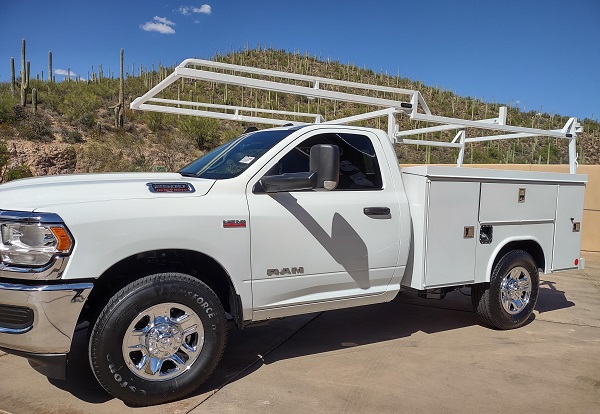 You also need to account for upfits, body modifications, telematics installations, registration requirements, safety equipment, branding, and other aftermarket activities.
For some vocational fleets, those additional steps can add six to twelve months to the timeline.
The true lead time isn’t just the vehicle. It’s everything required to make the vehicle operational.
Q: What should fleet managers do to stay ahead?
Neve: Understand your dependencies.
Talk regularly with your fleet management company, OEM representatives, and upfit partners. No one can guarantee exact timelines anymore, but having informed estimates is far better than guessing.
 You also need to understand your own operational constraints.
If you’re managing maintenance internally, consider bay capacity, tooling requirements, technician availability, and infrastructure readiness—especially for alternative-fuel vehicles.
Those factors are just as important as the vehicle itself.
Q: How have tariffs and policy changes affected fleet planning?
Neve: Tariff and policy changes are no longer rare. They’re baseline assumptions.
 The Section 232 tariffs apply to imported vehicles and components regardless of powertrain. Gasoline, diesel, and electric vehicles can all be affected.
At the same time, regulations governing vehicle data access, right-to-repair rules, accounting standards, tax policies, and emissions requirements continue to evolve.
Fleet managers can’t assume that today’s conditions will remain unchanged next year.
Q: How should fleets approach total cost of ownership analysis?
Neve: A single TCO model isn’t sufficient anymore.
Fleets should develop multiple scenarios—current, worst-case, and best-case conditions.
Scenario planning helps organizations understand the range of possible outcomes and make better decisions as circumstances change.
Q: Is relying on a single OEM still a viable strategy?
Neve: Generally, no.
 Supply chain disruptions over the past several years have underscored the importance of maintaining a multi-OEM strategy.
That doesn’t mean abandoning relationships. OEMs are partners, not adversaries. Upfitters are partners as well. But flexibility has become essential.
Q: What broader changes are taking place within fleet management?
Neve: We’re entering a new era.
Fleet management is shifting from tactical and reactive to strategic and proactive.
Organizations should be thinking five to ten years ahead when it comes to powertrains, technology platforms, infrastructure, and emerging innovations.
Continuous planning, scenario modeling, and ongoing optimization are increasingly becoming competitive advantages.
Q: Why is fleet management becoming more strategic?
 Neve: Fleet performance directly impacts business performance.
The gap between high-performing fleets and those that fail to adapt is widening. Fleet management should never have been an afterthought, and it absolutely can’t be today.
Fleet managers have access to a wealth of resources—from fleet management companies and technology providers to industry associations and publications. The key is staying informed and using those resources to prepare for change rather than to react to it.
Looking Ahead
 Neve believes the fleet industry is moving toward continuous planning, deeper technology integration, and more sophisticated scenario analysis. Organizations that embrace these changes will be better positioned to manage uncertainty, control costs, and maintain operational resilience.
“The industry is changing rapidly,” she said. “The most important thing fleet managers can do is ensure they have the information they need so they don’t get left behind.”