By Ed Pierce, Fleet Brand Acceleration
April 15, 2026
In the automotive fleet industry, marketing success is often measured by familiar metrics: lead volume, cost per acquisition, brand awareness, and pipeline velocity. Yet many fleet product and service suppliers—whether in telematics, transport logistics, remarketing, or upfitting—are discovering a hard truth: strong marketing cannot overcome a weak customer experience. In fact, Customer Experience (CX) doesn’t just support marketing performance; it defines it. When CX aligns with brand promises, marketing accelerates growth. When it breaks down, it quietly undermines everything marketing works to build.
For Fleet Management Weekly readers—marketing leaders, sales executives, and C-suite decision-makers—the implication is clear: CX is no longer an operational afterthought but a strategic marketing asset.
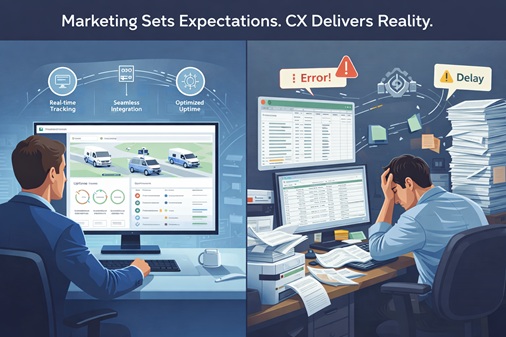
Marketing Sets Expectations—CX Delivers Reality
At its core, marketing is a promise. It communicates value propositions, differentiators, and outcomes. In the fleet space, those promises might include improved vehicle uptime, streamlined logistics, lower total cost of ownership, or enhanced driver safety.
But the moment a fleet customer engages—whether through onboarding, implementation, or ongoing service—the promise is tested.
If a telematics platform claims seamless integration yet requires weeks of manual data reconciliation, marketing credibility erodes. If a transport provider promotes real-time visibility yet delivers inconsistent updates, trust declines. If an upfitter markets speed and precision yet misses delivery windows, the brand takes a hit no campaign can repair.
In B2B fleet environments, where contracts are large, relationships are long-term, and switching costs are high, these disconnects are magnified. Marketing may win the deal, but CX determines whether the relationship grows—or quietly deteriorates.
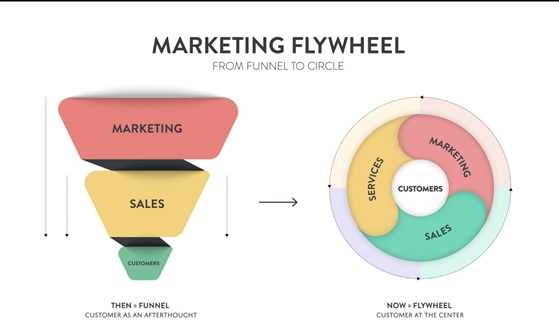
The Fleet Buyer’s Journey Doesn’t End at the Sale
Traditional marketing funnels imply a clear endpoint: conversion. But in fleet, the “moment of truth” often occurs after the sale.
Fleet managers continuously evaluate suppliers. They assess responsiveness, data accuracy, service consistency, and problem resolution. Every interaction—every support ticket, delivery update, or account review—reinforces or undermines the supplier’s value proposition.
This ongoing evaluation creates a feedback loop that directly impacts marketing outcomes:
- Renewals and expansions depend on positive CX.
- Referrals and word-of-mouth—critical in the tight-knit fleet community—are driven by experience, not messaging.
- Case studies and testimonials, often central to fleet marketing, only emerge when customers see real value.
In this sense, CX is not downstream from marketing; it is an extension of it.
Where CX Breaks—and How It Undermines Marketing
Despite its importance, CX often fragments across organizations. Marketing, sales, operations, and customer success use different systems, metrics, and priorities. This fragmentation creates gaps that customers feel immediately.
 One common failure point is data inconsistency. Fleet customers rely on accurate, timely information—vehicle status, delivery ETAs, and maintenance alerts. When systems don’t integrate seamlessly, customers face delays, discrepancies, or manual workarounds. Marketing may promote “end-to-end visibility,” but the lived experience tells a different story.
Another challenge is onboarding complexity. Fleet solutions often involve multiple stakeholders, systems, and processes. If onboarding is poorly coordinated, customers face confusion, delays, and frustration at the very moment they expect to start receiving value. This early friction can permanently color their perception of the supplier.
 Communication gaps also play a significant role. Fleet operations are dynamic, and issues arise—delays, exceptions, unexpected costs. When suppliers fail to communicate proactively and transparently, customers lose confidence. Marketing messages about partnership and reliability ring hollow.
Finally, misaligned incentives within organizations can undermine CX. Sales teams may be rewarded for closing deals, while operations teams are measured on cost control or efficiency. Without alignment, the customer experience becomes inconsistent, and marketing promises are difficult to sustain.
CX as a Differentiator in a Competitive Market
The fleet industry is increasingly competitive. Many suppliers offer similar core capabilities. Telematics platforms provide comparable data sets. Transport providers compete on network reach and pricing. Upfitters differentiate on turnaround time and quality. In this environment, CX becomes a primary differentiator.
 A supplier that consistently provides transparent and responsive service distinguishes itself, even when its core offerings are comparable to those of competitors. Conversely, a supplier with strong features but inconsistent execution struggles to retain customers.
Leading fleet suppliers are recognizing this shift and investing accordingly. They are integrating systems to deliver unified data views, streamlining onboarding, and equipping customer-facing teams with better tools and insights. They are also elevating the role of customer success, ensuring that post-sale engagement is proactive and strategic.
For marketing leaders, this presents an opportunity. When CX is strong, marketing can confidently amplify real-world outcomes. Campaigns gain credibility. Messaging resonates more deeply. Sales cycles shorten as prospects hear consistent validation from existing customers.
Aligning Marketing and CX: A Strategic Imperative
To fully leverage CX as a driver of marketing success, fleet organizations must break down silos and align functions around a shared customer journey.
 This starts with shared visibility. Marketing, sales, and operations should have access to the same data and insights on customer interactions, performance, and satisfaction. This enables more accurate messaging and more targeted engagement.
Next is closed-loop feedback. Customer insights—whether from surveys, account reviews, or support interactions—should feed back into marketing and product development. If customers consistently highlight onboarding challenges or data issues, those insights should inform both operational improvements and marketing narratives.
Expectation management is equally critical. Marketing must accurately reflect what the organization can deliver today—not what it aspires to deliver in the future. Overpromising may generate short-term pipeline, but it creates long-term CX challenges that undermine growth.
 Finally, organizations should adopt customer-centric metrics that align marketing and CX. Metrics such as customer lifetime value, net revenue retention, and net promoter score offer a more holistic view of performance than traditional marketing KPIs alone.
Turning CX into a Marketing Engine
When CX and marketing are aligned, the impact is transformative. Customer success stories become more authentic and compelling. Sales teams enter conversations with greater credibility. Marketing campaigns shift from claims to proof points. The brand evolves from a set of messages to a set of lived experiences.
In practical terms, fleet suppliers can take several steps to activate this alignment:
- Map the end-to-end customer journey, identifying key touchpoints and potential friction points.
- Invest in integration, ensuring that data flows seamlessly across systems and teams.
- Standardize onboarding, creating a consistent, efficient experience for new customers.
- Train customer-facing teams to deliver not just service, but strategic value.
- Leverage satisfied customers as advocates, amplifying their experiences through marketing channels.
These actions require coordination and investment, yet they deliver measurable returns in retention, growth, and brand strength.
Conclusion: CX Is the Marketing Multiplier
In the automotive fleet industry, marketing does not operate in isolation. It is part of a broader ecosystem that includes sales, operations, and customer success. Within that ecosystem, customer experience is the multiplier.
 When CX aligns with marketing promises, it accelerates growth, strengthens relationships, and builds lasting brand equity. When it falls short, it undermines credibility, erodes trust, and diminishes the impact of even the most sophisticated marketing efforts.
For fleet product and service suppliers, the path forward is clear. Treat customer experience not as a support function but as a core component of marketing strategy. Align teams, integrate systems, and focus relentlessly on delivering value at every stage of the customer journey.
Because in the end, the most powerful marketing message is not what you say—it’s what your customers experience.
 About the author
Fleet marketing expert and consultant Ed Pierce is an editor at Fleet Management Weekly. He can be reached at 484-957-1246 or [email protected].