
By Fleet Management Weekly Staff
April 1, 2026

Patrick Brennan
Editor’s Note: Cox Fleet, a Cox Automotive brand, supports fleets of all sizes across the country with a comprehensive service model including scheduled maintenance, emergency roadside assistance, managed care, parts distribution, and equipment sales. With a network of more than 65K+ service providers, 1,500+ expert Cox Fleet technicians and a 24/7/365 support team, Cox Fleet provides national scale with local accountability. In this Q&A, Fleet Management Weekly speaks with Patrick Brennan, Senior Vice President of Operations for Cox Fleet, about how unifying services under one brand, predictive maintenance, and ecosystem-wide data are reshaping uptime, cost control, and long-term fleet performance.
Fleet Management Weekly: With Cox Fleet unifying services under one brand, what advantages does an integrated service network offer, and how do those advantages translate into measurable uptime and cost improvements?
Patrick Brennan: One of the biggest advantages is the depth of information we have across our client base. The more we understand about a customer’s fleet—what vehicles they operate, how those vehicles are used, and what their business model entails—the better we can build a solid, customized maintenance plan.
 For many of our clients, managing a fleet is not their core business. They have other priorities, and fleet operations can sometimes fall lower on the list. When we step in with a comprehensive view of their portfolio and develop a thoughtful plan, we can help prevent unexpected events that disrupt operations. This directly impacts uptime and reduces the hidden costs associated with unplanned downtime, emergency repairs, and service delays.
Fleet Management Weekly: Why will predictive maintenance and integrated service networks be crucial to lowering costs and maximizing uptime going forward?
Brennan: Predictive maintenance starts with access to the full picture. That includes historical maintenance data, real-time telematics information, and insights from thousands of fleets across our ecosystem.
 When we can see trends across different vehicle types, applications, and operating environments, we can begin to anticipate what may happen next. That allows us to sit down with clients to discuss what they should expect proactively, rather than reacting after a failure occurs.
There is always a need to adjust and refine maintenance plans, but having a strong baseline plan in place is essential. Telematics data, combined with portfolio-wide insights, is where the future is headed. That combination enables true prediction, better scheduling, and fewer surprises.
Fleet Management Weekly: What are the key differentiators between Cox Fleet and the competition?
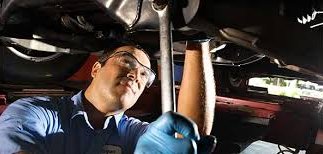
Brennan: First, we have more than 1,500 first-party technicians on our team. We invest heavily in recruiting, developing, and retaining top technical talent, which gives our clients consistency and confidence in the work performed.
 Second, we complement that with a network of more than 65,000 third-party service providers. This enables us to support scheduled maintenance, specialty services such as tires, glass, and towing, and roadside events wherever our clients operate.
Another major differentiator is the level of investment from our corporate ownership. Cox is investing significantly in technology, data, AI, and process improvements to increase transparency and consistency across fleet maintenance. At the same time, we are investing in people—bringing in strong leaders and developing their skills so we can continue raising the bar for the industry.
That combination of people, network scale, and long-term investment positions us to drive meaningful change.
Fleet Management Weekly: As fleets move further into 2026, what advice would you offer?
Brennan: Start with safety. Every fleet should have a robust, up-to-date safety plan and actively implement it every day. Whether employees are on the road, in the yard, or in the shop, everyone deserves to go home safely.
 Second, build a solid maintenance plan. Too many organizations operate reactively. A well-thought-out plan puts fleets in a much better position to handle the unexpected—whether it is a weather event or an unplanned mechanical issue.
Finally, find strong partners. Many fleet managers are pulled in multiple directions by finance, operations, and executive leadership. A trusted partner who understands fleet operations, shares best practices, and provides meaningful data can make a significant difference over time.
Fleet Management Weekly: What are some of your clients’ biggest challenges, and how does Cox Fleet help address them?
Brennan: A common challenge is that fleet operations are not central to many companies’ core business. That makes it even more important to have strong plans and disciplined execution.
Compliance is another major area. Preventive maintenance schedules, DOT inspections, and documentation all have to be handled correctly and consistently.
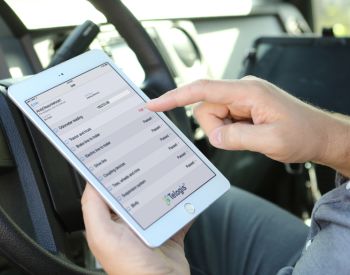 Safety is always top of mind. Safety messaging can grow stale if it is not reinforced regularly. We encourage fleets to begin and end each day with safety. Driver Vehicle Inspection Reports (DVIRs) are a good example. They seem simple, but they require careful attention. A proper DVIR should take a few minutes, not a few seconds. We have implemented this rigor across our own fleets, which include tens of thousands of vehicles, and we encourage clients to do the same. Those small daily habits make a big difference in preventing larger issues.
Fleet Management Weekly: Can you share a success story?
Brennan: We recently began working with a new client that delivers residential construction materials. Their trucks must leave the yard on schedule every morning. If they do not, construction crews are affected, and the entire day can unravel.
The client decided to centralize decision-making and gain better visibility into fleet performance. We worked with them to develop a holistic maintenance and analytics plan and are rolling it out across the country.
 We are now providing data they have never had before, including images and video of vehicle condition and detailed performance metrics. This has materially improved uptime and changed how they operate. We are also able to share peer comparisons and best practices from similar fleets, which help drive continuous improvement.
We view this as a roadmap for other fleets seeking to fundamentally change how they manage assets and increase uptime.
Fleet Management Weekly: Is there anything else you would like to add?
Brennan: We are in the process of integrating our legacy fleet services organization—our first-party technicians—with our third-party network in a more unified way. That creates tremendous flexibility in how service plans are built.
 Beyond maintenance, Cox Fleet also operates Great Dane dealerships across the country, helps source equipment, and supports end-of-life disposal and remarketing through the broader Cox Automotive ecosystem, including Manheim. This allows us to touch the lifecycle of vehicles and trailers from cradle to grave.
That one-stop-shop capability is something the industry has been requesting, and we are excited to deliver it.
To find out how Cox Fleet can deliver for your fleet, click here.