By A.J. Bruning, Bruning Law Firm
February 18, 2026

A. J. Bruning, Attorney
As an attorney who has litigated hundreds of commercial vehicle accident cases, I have seen firsthand how compliance failures lead to preventable crashes—and significant liability exposure. The gaps I see most often are not obscure regulatory technicalities. They are fundamental breakdowns in driver qualification, maintenance documentation, hours-of-service monitoring, and training that create the conditions for accidents.
Understanding these compliance gaps from a litigation perspective can help fleet managers focus their safety efforts where they matter most. The goal is not just to pass an audit—it is to build a documented safety culture that prevents accidents and protects your operation when things go wrong.
The Compliance Landscape in 2026
The stakes have never been higher. According to Federal Motor Carrier Safety Administration (FMCSA) data, large trucks were involved in more than 168,000 crashes in 2024, resulting in nearly 4,900 fatalities. Meanwhile, through early 2025, FMCSA investigations found more than 50,000 violations—with the average penalty now exceeding $7,000 per violation and some penalties reaching as high as $125,000.
 The regulatory environment is also evolving rapidly. The CSA Safety Measurement System is undergoing its most significant overhaul since 2010, with full enforcement of the updated system beginning in February 2026. FMCSA is shifting to more data-driven safety ratings, using inspection, violation, and crash data for continuous oversight. Fleet managers who do not proactively address compliance gaps will be increasingly exposed—both to regulatory action and civil liability.
From where I sit in the courtroom, the carriers who fare best after an accident are those that demonstrate a genuine commitment to safety through comprehensive documentation. The carriers who fare worst are those with gaps between what their policies state and what their records show.
Driver Qualification File Issues: The Foundation of Liability
Deficiencies in driver qualification files are among the most common and preventable problems carriers face. Over the past five years, FMCSA investigators have issued more than 62,000 violations related to driver files—nearly 17 percent of all violations recorded. These are not technical violations that require specialized knowledge to avoid. They are basic documentation failures that signal a lack of attention to safety fundamentals.
The most frequent DQF violations in 2025 include:
- Inquiries into driving records not maintained in driver qualification file (over 1,400 violations)
- Incomplete or missing employment applications (over 1,100 violations)
- Failing to maintain a driver qualification file entirely (over 1,000 violations)
- Missing motor vehicle records—over 6,400 citations in the past five years
 From a litigation standpoint, these gaps are devastating. When I take a case and find that the carrier never verified a driver’s employment history or failed to obtain and review MVRs showing prior violations, the inference is clear: the carrier did not want to know about problems. This creates a powerful narrative of willful blindness that resonates with juries.
A single incomplete DQ file can result in penalties ranging from $1,100 to $16,000 per violation during an FMCSA audit—but the liability exposure in litigation is far greater. When a driver with a problematic history causes a serious accident and the carrier cannot demonstrate that it properly vetted that driver, punitive damages become a real possibility.
What Fleet Managers Should Do
- Conduct quarterly audits of all driver qualification files using a standardized checklist
- Document not just the MVR, but who reviewed it, when, and what action was taken on any violations
- Verify employment history with previous employers—and document your attempts even when employers do not respond
- Monitor medical certificate expiration dates through state MVR systems, as required since January 2026
- Establish clear disqualification criteria and apply them consistently
Maintenance Documentation Gaps: When Equipment Fails
 About 60 percent of critical violations found during FMCSA audits relate to recordkeeping, and six of the top ten violations fall into this category. Maintenance documentation failures are particularly problematic because they directly contribute to equipment-related accidents. When brakes fail, tires blow, or lights malfunction, the first thing I look for is the maintenance history.
The Violations I See Most Often in Litigation
Incomplete or missing DVIRs
The Driver Vehicle Inspection Report is your first line of defense—and often your biggest vulnerability. When drivers rush through pre-trip inspections or check boxes without actually inspecting, the DVIR becomes evidence of negligence rather than due diligence. I have seen cases where identical checkmarks on weeks of DVIRs showed that no real inspection was occurring—the driver was simply going through the motions.
Failure to track scheduled maintenance
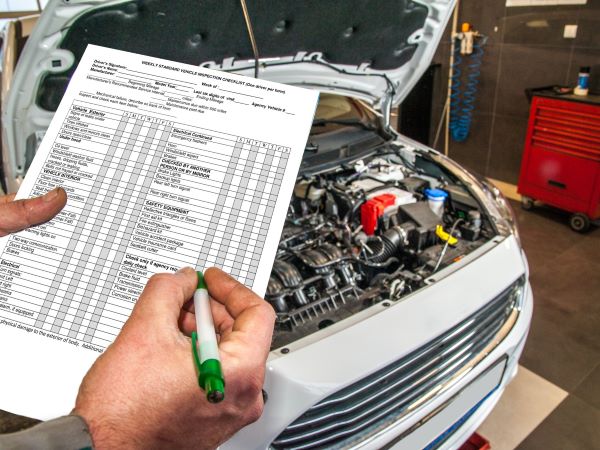 Carriers must maintain records showing when each vehicle’s next inspection, maintenance, or repair is due. Without a systematic tracking method, carriers cannot demonstrate that they are maintaining their vehicles properly. This violation alone has generated over 1,200 citations this year, with an average penalty of $2,040. More importantly, it creates an inference that the carrier was not keeping track of vehicle condition.
Deferred repairs
When a driver notes a defect on a DVIR and it is not promptly repaired, you have documented a known problem. If that defect contributes to an accident, the paper trail points directly to liability. Every maintenance record must clearly identify the specific vehicle, including the company unit number, make, serial number, year, and tire size.
What Fleet Managers Should Do
- Implement a systematic preventive maintenance tracking system with clear documentation of upcoming service dates
- Ensure every maintenance record clearly identifies the specific vehicle with all required information
- Close the loop on DVIR defects—document the repair, the parts used, and the inspector’s sign-off
- Train drivers on thorough pre-trip and post-trip inspection procedures, and audit compliance
- Never allow a vehicle with a documented defect to return to service without documented repair
Hours of Service and ELD Compliance: The Fatigue Factor
The FMCSA reports that noncompliance with hours-of-service regulations results in over 100,000 violations annually. More critically, fatigue plays a role in an estimated 13 percent of all commercial vehicle crashes, and the FMCSA estimates that driver fatigue contributes to over 8,000 truck-related incidents each year. When I investigate an accident, hours-of-service compliance is always one of the first areas I examine.
 ELD enforcement has intensified significantly in recent months. In December 2025, FMCSA removed several ELD devices from the approved list for failing to meet federal standards, requiring affected drivers to revert to paper logs. The agency is also planning technical modifications and rule streamlining, which could require hardware or software upgrades for many fleets.
From a litigation perspective, ELD records are pivotal to proving driver fatigue, hours-of-service violations, or company negligence. With stricter compliance requirements, this data becomes even more valuable to plaintiffs—and more damaging to carriers who fall short. Failure to comply with ELD mandates may demonstrate a pattern of systemic negligence that supports claims for punitive damages.
The red flags I look for in litigation:
- Hours of service violations in the days leading up to a crash
- Patterns of driving during high-fatigue windows (2-4 AM)
- Last-minute log edits or unassigned driving time
- Discrepancies between ELD data and other records such as fuel receipts or toll records
- Evidence that supervisors failed to review or act on HOS exceptions
What Fleet Managers Should Do
- Establish regular ELD data review protocols—weekly at minimum, with documented supervisor review
- Create clear procedures for addressing HOS violations before drivers return to service
- Verify your ELD devices remain on the FMCSA approved list and update as needed
- Document all supervisory reviews and corrective actions taken
- Train dispatchers to never pressure drivers to exceed HOS limits
Training Documentation Deficiencies: Proving Competence
 The Entry-Level Driver Training requirements continue to evolve, and FMCSA enforcement has intensified. In 2025, the agency removed 244 training providers from the Training Provider Registry as part of a crackdown on substandard programs, leaving more than 2,600 providers in proposed-removal status heading into 2026. This signals that regulators are increasingly serious about training compliance.
Beyond initial training, the bigger litigation issue is ongoing training documentation—or the lack of it. If you cannot prove training occurred, it did not occur. In my experience, training failures typically manifest in these ways:
No documented orientation
New driver orientation should be documented with dates, topics covered, and acknowledgment signatures. “We always cover that” is not evidence—documentation is. When a driver causes an accident within weeks of being hired and there is no orientation record, the carrier appears negligent.
Missing remedial training records
 When a driver has an incident—accident, violation, or customer complaint—and there is no record of follow-up training, you have documented that you did not take the problem seriously. This is particularly damaging when a driver with prior incidents causes a subsequent accident.
Outdated training materials
Training on regulations that have since changed or on equipment no longer in use suggests a program that exists on paper but not in practice. Regular updates demonstrate an ongoing commitment to safety.
What Fleet Managers Should Do
- Maintain documented training records for every driver, including sign-in sheets, topics covered, and completion certificates
- Implement mandatory retraining protocols after safety incidents with specific documentation requirements
- Verify that any training providers you use remain in good standing with FMCSA
- Update training materials annually to reflect regulatory changes and lessons learned from incidents
- Document specialized training for any unique equipment or cargo types
Closing the Gaps: A Practical Framework
 The compliance gaps that lead to accidents and liability are rarely surprises. They are the predictable result of gaps between policy and practice that accumulate over time until something goes wrong. Closing these gaps requires a systematic approach.
Effective compliance requires three elements:
- Written policies that match reality
Your safety manual tells a jury what you said you would do. Every deviation between the manual and actual practice becomes evidence of conscious disregard. If your manual says you review ELDs weekly, actually review them weekly. If it says drivers receive remedial training after incidents, provide that training.
- Systematic documentation
Having an MVR on file is not enough. Document who reviewed it, when, and what action was taken. When a driver notes a DVIR defect, document the repair and sign-off. When training occurs, document attendance, topics, and completion. Documentation provides the evidence that your safety program is real, not just words on paper.
- Regular internal audits
Do not wait for a lawsuit or an FMCSA investigation to uncover gaps. Quarterly audits of driver files, maintenance records, ELD data, and training documentation identify problems before they become evidence. Create a standardized audit checklist and assign responsibility for completing audits on schedule.
Conclusion
The violations that create the most liability exposure are not those that require advanced regulatory expertise—they are the fundamental gaps in driver qualification, maintenance documentation, hours-of-service monitoring, and training that should be standard practice in any professional fleet operation.
 Closing these gaps is not just about avoiding fines or passing audits. It is about building a documented safety culture that prevents accidents from occurring in the first place—and protects your operation when an incident does occur.
When an accident occurs—and in any fleet, one eventually will—your documentation is your best defense. It tells the story of how your operation approaches safety. Make sure that story is one of diligence, consistency, and genuine commitment to keeping drivers and the public safe.
A.J. Bruning is an attorney at Bruning Law Firm in St. Louis, Missouri, where he represents victims of commercial vehicle accidents.