By Fleet Management Weekly Staff
February 25, 2026
During hazardous winter weather, trucking fleets face heightened safety challenges that require long-term planning, active preparation, and smart use of technology. We spoke with Michael Fackler, Technical Director of Transportation Risk Control at Travelers, about best practices for managing winter driving risks and how modern technology is transforming fleet safety management.

Michael Fackler, Travelers
Q: What winter driving risks do employers most commonly underestimate, and how can fleets proactively address them before conditions worsen?
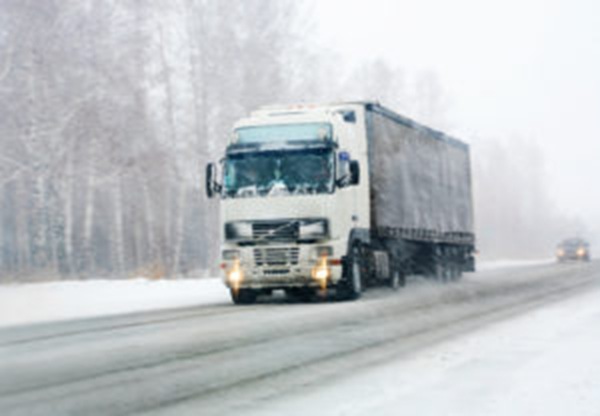
MF: While many employers prepare for heavy snowstorms, most underestimate more frequently encountered icy conditions. It can be more dangerous because it drastically reduces traction, significantly increases stopping distances, and makes it easy for drivers to lose control through even the most minor movements of the steering wheel.
Fleets can reduce these risks by encouraging drivers to reduce speeds and increase following distances and empowering drivers to park when road conditions deteriorate – not just when snow is actively falling.
Building flexibility into drivers’ schedules also helps remove the pressure to push through slippery roadways. While fog and wind can create additional challenges, degraded road surface conditions, especially ice, remain the primary winter driving hazard and should be the central focus of winter safety programs.
Q: Beyond vehicle maintenance, what pre-trip planning steps are most critical during winter weather events?
MF: It’s critical to set clear expectations with customers and internal team members about possible delays. This helps remove timing pressure and supports drivers in making safer decisions.
 Route planning is especially important during winter months. Drivers should know about areas that are prone to icing, steep grades, bridge decks, and locations where road treatment or clearing may lag. Pre-trip planning along routes should also include reviewing winter driving best practices – even with experienced drivers – since reinforcement helps people perform better under stress.
Drivers should also be empowered to make route changes in real time and park safely until conditions improve.
Q: How can employers set realistic expectations and policies to reinforce safety so that drivers don’t feel unintentionally incentivized to take risks in hazardous conditions?
MF: The key is making driver safety the absolute priority in all decision-making processes. Employers must constantly remind drivers that their safety comes first and that all operational decisions should be made with that principle in mind.
 Establishing clear policies provides drivers with the authority to make safety-first decisions. Companies then need to back up these policies with appropriate actions to ensure drivers don’t face negative consequences for making safety-conscious decisions, even if it results in delays.
Q: How are real-time weather data and telematics changing how fleets manage winter driving risks today?
MF: Real-time telematics data allows fleets to monitor conditions as they develop and enables better decision-making about route changes, timing adjustments and when to seek safe parking until conditions improve.
Integrating cameras and other technologies can also provide valuable data for post-incident analysis and ongoing driver training. It can help fleets identify patterns and areas for improvement in their safety programs.
Q: Are there risks for fleets that still fly under the radar and should be the focus of greater attention? What would those be?
 MF: In our experience, driver quality and retention are two areas that consistently come up as challenges – no matter the fleet size or its operating model – and deserve greater attention than they may receive.
High turnover rates can create pressure for employers to hire quickly and shorten training, which may lead to safety compliance issues down the road. Investing in driver quality and retention remains one of the most practical ways to strengthen safety culture and reduce risk.
Q: Where is the transportation industry regarding predictive analytics, whether for driver behavior or vehicle maintenance? Is it still early days or has it been widely adopted? What has been the impact on risk management?
MF: Adoption of predictive analytics in transportation is rapidly advancing, particularly through telematics and connected vehicle platforms that track poor driving habits, such as hard braking and cornering, rapid acceleration or deceleration, and close following. Fleets using these tools can identify high-risk driving patterns early and intervene before crashes occur.
 On the maintenance side, analytics are increasingly used to flag potential issues – like brake wear, tire pressure problems, and overheating – helping fleets prevent breakdowns or roadside violations.
Advanced Driver Assistance Systems (ADAS) are another significant development, and the benefits cannot be overstated. The technology helps lower both the frequency of claims and their severity due to slower impact speeds in collisions. Sometimes they even prevent collisions completely. Fortunately, ADAS adoption is growing as newer vehicles come equipped with built-in systems and older trucks are retrofitted.
Q: Is there a Travelers success story that you’d like to share with our readers?
MF: Last year, the Travelers Risk Control team worked closely with a national food distributor that employs nearly 300 drivers. Partnering with the customer’s new fleet safety manager, Travelers helped analyze a large quantity of telematics data to determine how to help significantly reduce auto claims linked to overnight driving.
 By combining driver feedback and data insights, Travelers helped the customer develop new training and support programs for drivers. As a result, the company has seen a significant reduction in claims. This success demonstrates how bringing together the latest technology, telematics data, and industry best practices – in a comprehensive and collaborative way – can lead to meaningful results.
To find out how Travelers can help your fleet control risk, click here.