By National Grid
September 24, 2025
Utilities across North America, including National Grid, are actively supporting their customers in fleet electrification initiatives. They facilitate these efforts for various reasons, such as helping customers achieve decarbonization targets, improving the economics of fleet operations, enhancing local air quality, and better planning and support for necessary infrastructure deployments.
Utilities are a natural partner for public and private fleet operators, as they understand the impacts of adding large, electrified fleets to the grid. Utilities need to be engaged early to ensure that grid infrastructure is upgraded to reliably handle the charging needs of many electric vehicles (EVs).
Fleet electrification advisory programs are becoming a staple program model to engage large and small fleets, including business, municipal, school, transit, and government customers.
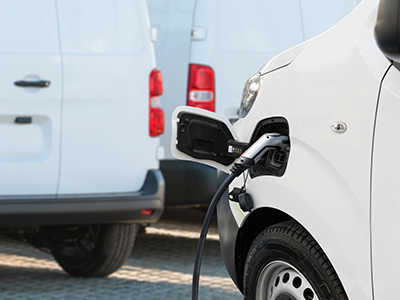 While many utilities are in the early stages of creating fleet-focused programs, National Grid has been actively supporting customer fleet electrification assessments for many years. Their Massachusetts fleet advisory services program has delivered comprehensive fleet assessments to more than 150 public and municipal fleets to help those customers develop a roadmap toward electrification, evaluating more than 11,000 vehicles.
The experience of conducting more than 150 different fleet electrification assessments has provided them and their implementation partner ICF many lessons learned critical to guiding their future electrification support efforts and can help other utilities that are considering or moving forward with similar program models.
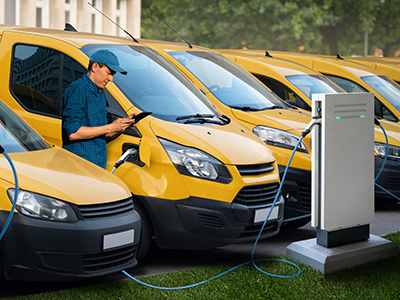 For example, National Grid initially had a 30 percent goal of engaging and supporting environmental justice fleets; ultimately, about 68 percent of fleets participating in the program were from environmental justice communities. This article highlights the benefits of fleet electrification, the fleet operator process from start to finish, some results from their program, and how to get started by engaging with your utility early.
Benefits of fleet electrification
- Operations and maintenance cost reduction. EVs lower operations and maintenance costs. They’re more efficient, less expensive to fuel, and require less maintenance over time, lowering the Total Cost of Ownership (TCO) for many use cases.
- Emissions reduction. Fleet vehicles have both lower efficiency and more miles traveled leading to a disproportionate impact on greenhouse gas emissions (CO2) and particulate matter pollution (PM2.5). Medium- and Heavy-Duty Vehicles (MHDVs) in particular are a huge opportunity: they are only ~10% of the vehicles on the road, but ~1/3 of the CO2 and ~2/3 of the PM2.5 air pollution.
- Financial incentives available. EVs can be supported through utility, state, and federal programs, and utility or state programs can provide incentives supporting >40% of the total project costs. Utility advisory programs can provide fleets with project guidance and connect them with the applicable incentives and programs best suited for them.
- Driver and passenger experience. Electric engines provide smooth acceleration, deceleration, and a quiet ride, leading to a safer, more comfortable experience. Quieter, smoother rides can increase health and satisfaction for both drivers and passengers. Battery packs also lower the vehicle’s center of gravity, with better handling and responsiveness, reducing the risk of roll-over in a collision.
- Air pollution and health. According to the American Lung Association, diesel exhaust is attributed to impaired brain development, lower test scores, respiratory diseases such as asthma, and cancer. EVs don’t have tailpipe emissions, which means cleaner air for your drivers, staff, and local community. For drivers, the health benefits are significant—drivers are no longer exposed to pollutants like particulate matter and nitrogen oxides that are linked to cardiovascular disease and respiratory problems.
The Fleet Electrification Journey: Supported by Utility Programs
Utility fleet EV programs are designed to guide and support organizations through the entire electrification journey, from initial planning to realizing long-term cost savings.
Phase 1: Planning
In this phase you are laying the groundwork and making strategic decisions. You should be finding a utility point of contact, planning EV adoption, and exploring the available grid capacity at your site. Utilities may be able to help unlock even more capacity with innovative solutions such as National Grid’s Flexible Connections solution.
Phase 2: Infrastructure
You’ll want to consider the necessary charging and vehicle capabilities you will need. There may be Infrastructure Make-Ready Programs, EV charger rebates, and vehicle rebates that can support the overall needs of your organization.
Phase 3: Operating Cost Savings
By working with your utility, creating a plan, identifying capabilities and needs you’ll be able to maximize efficiency and financial benefits post-deployment with things like demand charge reduction, managed charging solutions, and off-peak rebates.
 National Grid has completed over 157 assessments, identifying more than $350 million in potential lifetime total cost of ownership savings for our customers while seeing greater than 1 million metric tons of potential greenhouse gas reduction. From their work with fleet customers, it is clear that electrifying a fleet has many benefits and working with your utility early on in the process can help to position your organization for a smooth transition.
You can read National Grid’s full white paper here, and if you are a National Grid customer you can learn more on their website or contact them today. If you’re ready to get started and are not a National Grid customer, connect with your locality’s utility to find out what fleet electrification opportunities you can partner on.