
By Ed Pierce, Editor, Fleet Management Weekly
September 17, 2025
As 2025 unfolds, fleet managers in North America navigate a changing landscape influenced by rising costs, the push for electrification, digital advancements, and the instability of trade. Decision-makers in the U.S. and Canada need to consider regulatory hurdles, increases in private funding, and evolving digital tools to remain competitive.
Tariffs and Their Impact on Costs: An Uncertainty
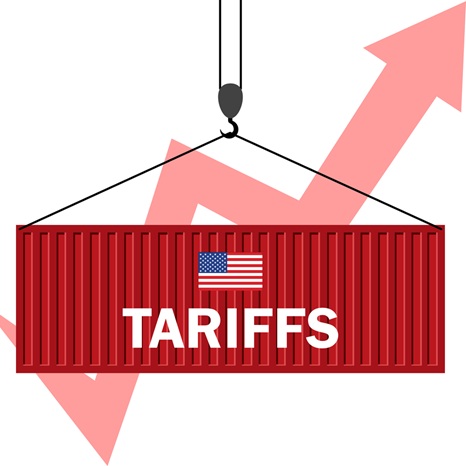 Trade policies remain a major source of disruption. Recent U.S. actions have led to significant tariffs, affecting everything from heavy trucks to auto parts, reaching as high as 50%.¹ These measures are contributing to higher costs and putting pressure on supply chains. Many businesses in Texas, fleets included, are experiencing planning difficulties because of these unpredictable tariff changes.¹
Fleet executives must now consider the risk of protectionism in their operational and financial plans. This affects not only the cost of new vehicles but also expectations for resale values, especially for imported compact cars and parts for electric vehicles.²
Electrification Trends: Private Sector Investment Despite Policy Changes
The government’s support for EV incentives has diminished somewhat. The U.S. administration’s changes to a large bill mean the end of federal tax credits for EVs ($7,500 for new, $4,000 for used) by September 2025, as well as the cancellation of programs like the NEVI charging initiative. Emissions rules in California have also been rolled back,³ and concerns have been raised that tariffs are increasing the costs of EV supply chains.⁴
 However, private companies are continuing to invest. PepsiCo, for example, has over 1,750 EVs, including more than 100 electric semi-trucks, many of which are Tesla Semis, used for local and regional deliveries.⁵ Meanwhile, GM is investing $3.5 billion in a battery plant in Indiana, switching to lithium-iron-phosphate (LFP) technology to lower costs and decrease reliance on Chinese suppliers.⁶
Canadian Perspective: Policies, Incentives, and Market Conditions
Canada presents a complex picture: ambitious policy objectives coupled with inconsistent market outcomes.
ZEV Mandate: Canada has mandated that all new light-duty vehicle sales must be zero-emission by 2035, with targets set for the years leading up to that.⁸
 Federal Incentives: Programs such as iZEV (for light-duty EVs) and iMHZEV (for medium- and heavy-duty EVs) continue to support adoption, with iMHZEV offering up to CA$200,000 per vehicle for commercial fleets.⁸
Infrastructure: Natural Resources Canada’s ZEVIP program continues to fund the installation of charging stations and hydrogen refueling facilities nationwide.⁸
Despite these efforts, the market shows a different reality. EV registrations fell to just 9.7% of new sales in the first quarter of 2025, a significant drop from 18.9% in the last quarter of 2024, showing how quickly adoption can change when incentives are reduced or consumer attitudes shift.⁷ Fleet managers should, therefore, be aware of potential changes in incentives when planning for the future.
Additionally, varying provincial policies create further complexity. Quebec and British Columbia are ahead with stronger incentives and more developed charging infrastructure, while other provinces are lagging, creating an uneven landscape for national fleets.
EV Market Outlook for North America: Steady Growth Expected
Forecasts suggest a continued, though moderate, growth in EV sales. In the U.S., sales of passenger EVs are projected to increase from about 1.6 million in 2025 to 4.1 million by 2030, although overall volume expectations are lower than previously estimated.⁹
 Across North America, the EV market—including vehicles, infrastructure, and related technologies—was valued at USD 32.5 billion in 2024 and is expected to reach close to USD 85 billion by 2034, with a growth rate of around 10% per year.¹⁰ Commercial fleets are predicted to be at the forefront of future adoption.
The EV fleet management sector alone grew from USD 23.5 billion in 2024 to USD 25 billion in 2025, specifically in North America. North America stands out as the largest region.¹¹ Simultaneously, the fleet management market overall is projected to reach approximately USD 10.9 billion in 2025 (around U.S. $8.65 billion and Canada $1.32 billion), anticipating growth near 13% CAGR.¹²
Telematics, AI, and Data Insights
 We are seeing more and more telematics. This captures things such as real-time vehicle diagnostics, insights into driver behavior, and how vehicles are being used. What’s interesting is that many fleets are now using AI to analyze this data. This helps them predict when maintenance might be needed, find more efficient routes, and ultimately reduce costs. Also, usage-based insurance is becoming popular, directly connecting safety and efficiency to financial results.¹³ ¹⁴
ELDs and Being Compliant
As of January 1, 2023, Canadian fleets regulated at the federal level must use certified ELDs. Because enforcement is in full swing,¹⁵ most are complying. Lots of fleets are choosing AI-enhanced ELDs, which work easily with telematics, making Hours-of-Service reporting simpler and cutting down on admin work.
Privacy and Data Security
 Canadian fleets operate under strict privacy rules. For example, Quebec’s Law 25 requires privacy impact assessments for data transfers across borders, like when telematics info is stored in the U.S.¹⁶ There’s even talk of proposed federal legislation (Bill C-27) that might increase these requirements.¹⁷ It’s crucial that fleet managers ensure their digital tools comply with both national and provincial laws.
Connectivity and Updates
With the spread of 5G networks across North America, over-the-air (OTA) updates should become more reliable, offering advanced diagnostics and real-time fleet visibility.¹⁸ This is great for managers. It means vehicles will be up and running more often, there will be fewer service problems, and deploying safety or performance upgrades will be faster.
 What Fleet Leaders Need to Do
Fleet managers in North America are really feeling the pressure to change quickly. If they want to stay competitive, they need to be good at figuring out the total cost of ownership, protect themselves from tariff risks, come up with a step-by-step plan for introducing EVs, and find partners for charging, financing, and telematics. Also, they need to make sure they’re following regulations and protecting data, all while getting ready to take advantage of 5G connectivity and future automation.
Conclusion
In 2025, fleet management in North America is a complex situation. Complicated stuff like tariffs, the ending of subsidies, and inflation all make it harder to get vehicles. Canada, even with its goals for zero emissions, demonstrates that adoption can change when incentives are altered. But, on the other hand, things like telematics, AI, and 5G are making things more efficient, safer, and easier to comply with regulations.
Innovative fleet leaders will address the problems they face now to create a better future. They will be sure to use data, form partnerships, create EV strategies, and stay aware of regulations to get through these changing times.
 About the author
Fleet marketing expert and consultant Ed Pierce is an editor at Fleet Management Weekly. He can reached at 484-957-1246 or [email protected].
Sources
- Express News – “Texas businesses bracing for tariff volatility” (July 2025)
- Black Book – “Breaking down the impact of tariffs on fleet management” (2025)
- Reuters – “Trump hits brakes on electric vehicle growth, for now” (July 28, 2025)
- AP News – “Industry warns tariffs will raise EV supply chain costs” (2025)
- Wall Street Journal – “PepsiCo Charges Ahead With Battery-Electric Big Rigs” (2025)
- Financial Times – “GM moves to ‘seize EV battery leadership’ for the U.S.” (2025)
- Electric Autonomy Canada – “Q1 2025 EV sales in Canada slump to 9.7%” (June 2025)
- Government of Canada – iZEV, iMHZEV, and ZEVIP program documentation (2025)
- BloombergNEF – “Global EV sales outlook” (2025)
- Nova One Advisor – “North America EV market forecast 2024–2034”
- The Business Research Company – “EV fleet management market report” (2025)
- Cognitive Market Research – “Fleet management market size by region” (2025)
- Fleetio – “State of Fleet Management 2025”
- Utilimarc – “How inflation and economic trends are impacting fleet management” (2025)
- Transport Canada – “Electronic Logging Device (ELD) mandate” (2023)
- Government of Quebec – “Law 25: Privacy protections” (2023–2025)
- Government of Canada – Bill C-27 (Consumer Privacy Protection Act, in progress)
- SAE International – “North American Charging Standard (SAE J3400)” (2025)