

By eDriving
September 17, 2025
For fleet managers, safety isn’t just another compliance box to check — it’s the heartbeat of an effective, sustainable operation. Every collision avoided represents more than reduced costs; it’s a person returning home safely, a vehicle kept on the road, and a business kept resilient in the face of rising risks. Yet, despite the critical importance of safety, many organizations struggle with where to begin or how to sustain meaningful improvement.
 That’s where eDriving’s new white paper, The Road to Driver Safety: Getting Started, comes in. This practical guide offers a clear framework for creating a crash-free culture and supporting drivers at every stage of their journey. Here are some of the most impactful takeaways.
Why Culture Comes First
Policies, procedures, and tools are essential — but they’re only as effective as the culture that supports them. The white paper emphasizes that driver safety must start with visible leadership commitment. When executives, fleet managers, and supervisors “walk the talk” by modeling safe behavior, drivers understand that safety isn’t negotiable.
A strong culture also thrives on collaboration. Departments such as Health and Safety, Human Resources, Legal, Procurement, and Insurance all play a role in shaping outcomes. Many organizations form Safe Driving Committees that bring these voices together, creating shared ownership of results.
Perhaps most importantly, drivers themselves must feel heard. They know better than anyone the risks they encounter on the road. Engaging drivers through regular training, feedback loops, and even appointing “safety captains” builds trust, accountability, and pride.
 Laying the Foundation: Policies and Procedures
Every effective program needs structure. Setting clear, measurable goals is step one — whether reducing collisions per million miles, lowering violation scores, or cutting preventable crashes. From there, organizations can craft policies that both support those goals and clarify expectations for everyone behind the wheel.
Some of the non-negotiables outlined in the white paper include:
- MVR checks to identify high-risk drivers early.
- Drug and alcohol policies that reinforce zero tolerance.
- Mandatory seat belt use for all occupants.
- Distracted driving policies that prohibit calls and texts while driving.
- Vehicle maintenance and inspections to keep assets roadworthy.
- Crash reporting and investigation for identifying root causes and preventing repeat incidents.
Just as crucial are the positive reinforcements: recognition programs, incentives, and continuous training that encourage safe habits and celebrate progress.
 Turning Data Into Action
Fleet managers are no strangers to data. But using it effectively can be a game-changer for safety. The white paper stresses the importance of establishing baselines — such as crashes per million miles — and measuring performance against them.
Other valuable metrics include:
- Preventable versus non-preventable crashes
- Average crash costs
- Maintenance spend
- Fuel consumption (often linked to risky driving behaviors)
- Driver turnover, which often decreases as drivers feel safer and supported
Telematics can add a deeper layer of insight, highlighting behaviors such as harsh braking, rapid acceleration, speeding, or distracted driving. By combining these data points with coaching and training, organizations can personalize interventions and drive meaningful change.
 Practical First Steps
Safety can feel overwhelming, but the key is starting simple. The white paper lays out a phased approach:
- Essential Level: Monitor license status and violations; introduce eLearning; conduct baseline assessments.
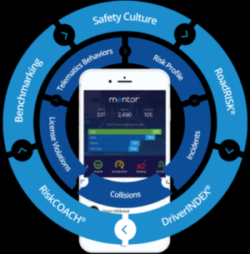
- Advanced Level: Incorporate comprehensive solutions such as eDriving’s Mentor Insight program, enabling managers to act on driver risk scores and predictive behavioral data.
- Premier Level: Layer in coaching tools, telematics, gamification, and advanced reporting with programs such as Mentor by eDriving.
No matter the level, success depends on consistent communication. Sharing the “why” behind safety initiatives, reinforcing expectations, and celebrating milestones all help keep momentum alive.
The Ripple Effect of Safer Driving
 While the immediate benefits of a driver safety program are clear — fewer crashes, lower costs, reduced liability — the ripple effects are just as powerful.
- Employee Retention: Drivers who feel valued and supported are more likely to stay.
- Operational Efficiency: Safer driving reduces downtime, maintenance, and insurance claims.
- Reputation and Trust: A strong safety culture signals to customers, partners, and communities that your organization prioritizes people over shortcuts.
At its heart, though, the goal is profoundly human: ensuring that every driver returns home safely at the end of each shift.
Your Roadmap Awaits
Creating a crash-free culture isn’t a one-time project — it’s an ongoing journey. But with the right structure, data, and culture in place, organizations can dramatically reduce risk and unlock new levels of performance.
 eDriving’s new white paper, The Road to Driver Safety: Getting Started, provides a step-by-step roadmap to launch or enhance your driver safety program. Whether you’re just beginning to explore safety initiatives or looking to strengthen an established program, this guide offers practical tools to move forward with confidence.
Download the full white paper and take the first step toward safer roads, healthier fleets, and a stronger organization.
