By Ed Pierce, Editor, Fleet Management Weekly
July 16, 2025

Josh Turley
Fleets often operate on thin margins, leaving little room for error. Small inefficiencies can make or break budgets, which is why it’s essential for fleets to have access to fleet management software that is both affordable and efficient. For over 45 years, RTA: The Fleet Success Company has provided fleet managers with software that delivers actionable data to ensure efficient operations. Under the leadership of CEO Josh Turley, RTA has evolved from a software-driven operation into a champion of practical consulting and thought leadership.
RTA provides customized consulting services to help fleets identify and solve specific management challenges. Lately, the company has become a leading source of customer support and educational resources, including training programs, a weekly podcast, and an annual event called RTA Connect. No longer satisfied just managing vehicles, RTA has equipped fleet professionals with the tools to create more efficient operations, stronger teams, and sustainable long-term success. From software provider to culture catalyst.
RTA’s Origins
The origins of RTA trace back to the 1970s, when Turley’s grandfather oversaw the fleet department at UPS. “He was an efficiency nut,” says Turley. “They were able to grow their fleet by 80% without hiring a single technician because of all the efficiencies he discovered along the way.”
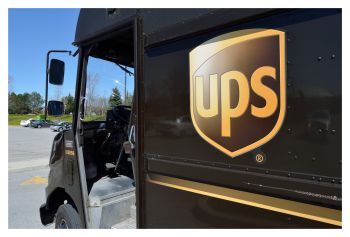 When Turley’s grandfather left UPS, he started working as a consultant, sharing his knowledge with companies eager to duplicate his success. He eventually developed a computer program based on the reports he had created, which became RTA’s core product.
The company has grown steadily over the past 45 years, and under Josh Turley’s leadership, it has experienced exponential growth in the last four years. The company has undertaken a re-platforming of its technology, developing a new, 360-degree web-based modern platform that is nearly complete. Beyond its core focus on software development and customized consulting services, RTA has allocated a significant portion of its workforce to thought leadership and education, positioning itself as an expert in fleet management education.
Remarkable Results
 The results have been remarkable for both RTA and its fleet clientele. The company’s solutions have been adopted by over 1,100 fleets, saving clients more than $270 million and working toward a goal of reaching $1 billion in savings within three years. In the last two years alone, the company’s workforce has nearly doubled, from 50 employees to 90, attracting expert consultants and analysts from companies like Mercury.
Turley attributes RTA’s momentum to its focus on developing the team’s culture. “Over the last few years, we’ve placed a lot of emphasis on what I call our culture magnet,” he says. “This magnet becomes strong enough, and suddenly, people flock to it. We have the best and brightest minds in the industry coming to work for our company without us having to recruit anyone.”
The Fleet Success Show Podcast
 One of RTA’s most successful and visible displays of thought leadership is its podcast, The Fleet Success Show. Over the past three years, the podcast has focused on practical, actionable content, emphasizing fleet fundamentals and best practices that help modern fleets achieve measurable success. Common topics include real-world challenges like technician shortages and asset availability, with expert hosts and guests providing actionable advice to address these issues.
One recurring theme is the “Four Pillars of Fleet Success: Stakeholder Satisfaction, Intentional Culture, Resource Efficiency, and Risk Management.” These concepts were developed by RTA experts, including industry veteran Steve Saltzgiver, who serve as a framework for each podcast episode and provide practical examples to fleet professionals.
Touting Successes
 “As often as we can, we highlight success stories, cautionary tales, and personal journeys, such as turning around a broken fleet in six months or navigating the leap from the budget cubicle to the fleet jungle,” says Turley. “Even with all the detailed fleet information, we manage to keep the podcast transparent, humorous, and honest.”
The hosts often share rookie mistakes and fleet horror stories to help others avoid common pitfalls. They also promote listener interaction by inviting feedback, questions, and guest requests, making the podcast more engaging. RTA has expanded its impact through consulting services, book clubs, and educational resources, solidifying its role as more than just a software vendor but a partner in fleet success.
The Art of Consulting
RTA provides its consulting services to a wide range of fleets, primarily focusing on municipal and quasi-governmental agencies. With about 70% of RTA’s clients being city, county, and public transit fleets, the company has tailored its efforts toward fleets that handle all their maintenance in-house and cannot afford enterprise-level solutions.
 The company discovered its target market through trial and error. While RTA initially partnered with larger trucking fleets, it soon realized that the narrow profit margins and high turnover made it unsustainable. “One of our challenges is that we were trying to be all things to all people for many years,” says Turley. “We were trying to compete on two very different fronts with the same product, which doesn’t work. So, we learned our lesson about two years ago, that we could only choose one. We went with the government.”
Many of RTA’s consultants are former Mercury employees, such as Tony Yankovich and Marc Canton. Several of them hold hybrid roles, dividing their time between consulting and developing analytics within the software platform. This enables them to create a comprehensive solution based on market observations rather than on the specific needs of any one customer.
Unlike other firms, RTA remains totally neutral regarding product referrals. “There’s a stigma associated with it,” says Turley. “You don’t want people to think that if you hire the RTA consultants, all we’re going to do is try to push you to the RTA product. We want to maintain professional integrity and credibility.”
How RTA Tackles Emerging Trends
 One of the ways RTA has established itself as a thought leader in the fleet industry is by examining major trends through its podcast, conferences, and consultations. Emerging telematics and AI solutions are disrupting the industry; however, many of these technologies are still out of reach for smaller fleets.
“It’s still too expensive for many of these small guys,” says Turley. “We’re trying to figure out how to control that. How do we establish our economies of scale to reduce costs and make them more accessible? The good thing about fleet is we’re tech laggards in this industry, so we can observe the rest of the world trying all these products, looking for a winner. Then we pick the winner and move forward with it.”
 RTA was an early adopter of AI to enhance internal workflows, marketing, and software development, leading to an 80% increase in productivity. However, when it comes to recommending AI to customers, their approach remains cautious. “It took about five years for governments to adopt smartphones,” says Turley. “AI is going to move faster than smartphone adoption, but it’s still going to be a slow rollout. We need to secure the area and set guardrails, but it’s coming. AI is one of the emerging trends that I most believe will revolutionize the world.”
According to Turley, telematics is another area soon to be reorganized. While telematics providers are open to working with anyone, OEMs have been reluctant to share their data. He highlights products like Ford Pro, Ford’s in-house telematics system, as an example of how OEMs are creating their own telematics systems that refuse to share data with other platforms.
 “Now you have this issue with all these OEM telematics,” says Turley. “Nobody wants to talk to each other, so you can’t build a platform to rule them all. I think we’re going to have to see some legislation, similar to what we’ve seen with Right to Repair, that gives you access to some of that data.”
EV Shift Prediction
The electric vehicle industry is another area where Turley predicts a shift. He cites economics and a lack of charging infrastructure as the main obstacles to adoption, pointing out decisions like California’s shutdown of nuclear power plants as a step in the wrong direction. However, he notes that urban areas are likely to be the first to see widespread EV adoption.
“It’s getting there,” says Turley. “The charging infrastructure will reach that point first, and it’ll be more reliable, with everything in place. You’re beginning to see the standardization around a single charging standard. It’s going to take time, but it’s inevitable.”
 One aspect of EV adoption that Turley believes its proponents haven’t fully addressed is that ICE vehicles likely won’t completely disappear. He cites examples in Florida where power companies must restore electricity after storms as evidence of the ongoing need for ICE vehicles in some situations.
“They’ve got to get the electricity back up and running,” he says. “You’re going to need ICE vehicles to get it to that point, and then you can run the rest. Therefore, there will always be a use case for conventionally fueled vehicles. Now, whether that shifts to hydrogen or something else, we don’t know. But it’s tough to surpass the thermal capacity of gasoline based on the energy per pound.”
The Future of Mobility
 Turley sees a lot of potential in the future of mobility. The rise of self-driving Waymo vehicles on the West Coast has brought autonomous cars into public discussion. For Turley, this means transportation in the future will look very different from today.
“My grandkids may not have to learn how to drive,” he says. “Just being able to order a car on an app and not having to own one is incredible. You think about how often your car just sits idle and is underutilized. So, I believe you’ll see that change. I’m not sure how soon, but it’s amazing.”
‘RTA Connect’ Conference
Since the late 1980s, RTA has hosted its fleet conference, RTA Connect. The conference continues to offer leadership and management training for fleet professionals, provided by some of the industry’s top thought leaders. This year’s conference, held in September, will include more hands-on training alongside expert speakers, such as leadership coach Mike Pitcher.
“We discuss the best practices for fleet,” says Turley. “How you need to build an intentional culture, like we’ve done at RTA with our culture magnet. We talk about how issues like technician and manager retention stem from a failure of culture.”
 RTA Connect kicks off with a series of keynote speakers leading detailed discussions on best practices for product fleet management. Discussions include topics like the five dysfunctions of a team, hiring and firing practices, and other leadership management areas.
The company’s expanding fleet marketing team then transforms this content into presentations, speaker proposals, and outreach opportunities. With over 30 presentations and a weekly podcast releasing clips, RTA is continually broadening its message to reach new audiences. “Just because you said something once doesn’t mean everyone has seen it,” says Turley. “It’s about going back and hitting that same message again, even if you get some repeat coverage, because you’re going to reach a whole new audience the second time.”
RTA’s evolution goes beyond just rebranding. It reflects the company’s strategy to stay ahead of the curve, both for itself and the fleets it partners with. By focusing on thought leadership activities and offering fleets actionable advice from industry experts, the company has grown from its origins as a software provider and consultant to become one of the most valuable partners in the fleet management industry.
Empowering Fleets through Data-Driven Software, Expert Consulting, and Training
RTA: The Fleet Success Company distinguishes itself in the fleet industry by combining innovative software, expert consulting, and industry-leading thought leadership to deliver measurable results for its clients.
 Over its 45-year history, RTA has grown from a software provider into a dedicated partner for fleet professionals, delivering actionable data, tailored consulting, and an extensive array of educational resources—including training programs, a weekly podcast, and the annual RTA Connect conference.
The company’s focus on municipal and public sector fleets, along with its neutral consulting approach, has allowed it to create customized solutions that tackle the specific challenges these organizations face. RTA’s emphasis on culture—both within its own team and in client organizations—has attracted top industry talent and built a reputation for integrity and innovation.
By proactively addressing emerging trends like AI, telematics, and electric vehicles, RTA ensures its clients are ready for the future of fleet management. Its thought leadership, exemplified by The Fleet Success Show podcast and its educational initiatives, positions RTA as more than just a technology provider — it is a trusted advisor and educator in the fleet industry.
Ultimately, RTA’s commitment to efficiency, culture, and continuous learning has led to significant savings for clients, a rapidly expanding workforce, and a reputation as a catalyst for fleet success. As the industry evolves, RTA remains dedicated to helping fleets build stronger teams, adopt best practices, and achieve sustainable long-term results.
 About the author
Fleet marketing expert and consultant Ed Pierce is an editor at Fleet Management Weekly. He can reached at 484-957-1246 or [email protected].