By Elbert Walters III, Executive Director, Powering Chicago
April 24, 2024
From Amazon and DHL to Comcast and IKEA, major corporations are transitioning away from gas-powered vehicles to electric utility fleets. And for good reason: electric utility vehicles (EUVs) offer numerous advantages – from money-saving and reputational benefits to environmental sustainability.

Elbert Walters III – Executive Director, Powering Chicago
But along with any technological revolution come questions from those charged with implementing change. The aim of this article is to shed light on some of the most pressing concerns utility fleet managers have when considering the switch to EUVs, drawing from my personal experience as a trained electrician and executive director of Powering Chicago. For more than 15 years, Powering Chicago members — IBEW Local 134 electricians and the Electrical Contractors Association of Chicago and Cook County – have been at the forefront of the steady electrification of transit.
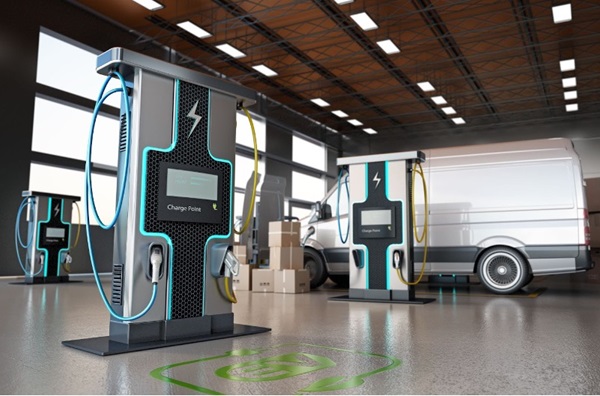
For example, in 2021, Powering Chicago member Connelly Electric completed a project at an industrial warehouse and distribution company. This company had a fleet of vans that needed level 2 and level 3 EV chargers. The project included twenty-six charging stations and required expansion of the electrical infrastructure, including a new service with the local power utility. The team planned for the current twenty-six chargers and the ability to expand significantly in the future. All twenty-six chargers were networked properly over a smart system.
EUVs Benefits
While the benefits of electrification are real for businesses, organizations and facilities of all types, there are specific benefits for electrified vehicle fleets. If you maintain a fleet, EVs can cost up to 40% less to maintain, due to a decreased need for ongoing maintenance such as oil changes. Additionally, the cost of electricity required to drive 15,000 miles is 70 percent less than the cost of gas.
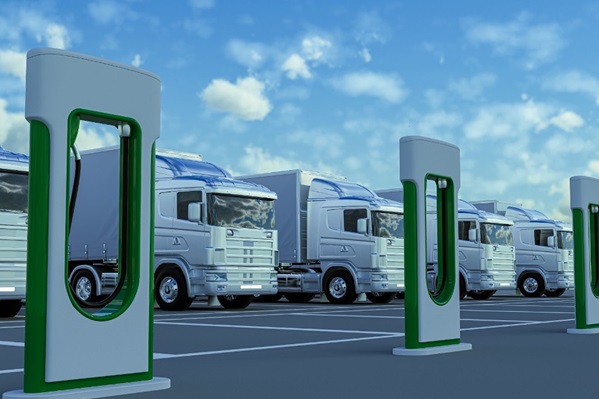 EVs benefit sustainability goals as well as employee health because they have no emissions. Plus, as more and more people become aware of industry’s impact on the environment and expect businesses to manage their carbon footprints, facilities can earn reputations for being environmentally friendly businesses.
Realizing the long-term savings and environmental benefits, companies, governments, and municipalities are moving quickly to adapt to EV fleets, as evidenced by President Biden’s pledge to replace nearly 650,000 federal fleet vehicles with electric models.
Approaching charging infrastructure installations
Selecting the appropriate infrastructure is a crucial aspect of transitioning to EUVs. To streamline this process, managers are encouraged to seek out qualified electrical contractors through reputable sources such as the National Electrical Contractors Association (NECA) search tool. For those in the Chicagoland area, using Powering Chicago’s find a contractor tool is recommended.
Local contractors have the expertise to guide managers through various considerations and can offer tailored solutions that meet the organization’s needs. By hiring a local contractor, you can also ensure they will be available to help you maintain your infrastructure investment and keep it up to code. Relying on licensed, qualified electrical contractors to service and maintain your investment, such as Powering Chicago members, will ensure compliance with local and national electrical code requirements.
 Among the factors to consider, long-term planning is essential. A qualified contractor will emphasize the importance of planning for future electrical capacity expansion, which can yield cost savings in the long run. Additionally, networking charging stations on a smart system is advised. This approach enables cost-saving measures such as load shifting, which allows for charging during low- or off-peak periods when electrical rates are less expensive, and peak shaving, which reduces the power flow to recharge batteries.
Financial planning
While transitioning to electric utility vehicles can yield substantial long-term cost savings, it’s important to consider the initial financial investment. From purchasing the necessary equipment to establishing a charging infrastructure, careful financial planning is essential.
Business owners should begin by seeking advice from financial experts, such as chief financial officers, to navigate this process and set realistic expectations. Additionally, the U.S. Department of Transportation provides valuable resources to aid in financial planning. Its online toolkit offers a range of calculators, software, datasets, and guidance. One particularly useful tool is the Dashboard for Rapid Vehicle Electrification, which enables users to compare conventional fleet vehicles with EV alternatives.
 It’s also crucial to research all available grants, rebates, and tax incentives to offset capital expenses. For instance, in Illinois, the Climate and Equitable Jobs Act offers incentives covering up to 80 percent of charging station installation costs. Be sure to check the U.S. Department of Energy’s database for the latest incentives and to confirm their availability as funding can vary.
For more information on the current EV landscape, benefits for fleets and a step-by-step guide to approaching the installation of Electric Vehicle Supply Equipment (EVSE), download our free e-book titled The Time is Now: Considerations for EV Charging Infrastructure.