By Hadley Benton, Executive Vice President of Business Development, Fleet Advantage
February 21, 2024
In the dynamic landscape of today’s modern logistics and supply chains, the efficient operation of heavy-duty truck transportation fleets is critical for ensuring timely deliveries, reducing costs, and enhancing overall productivity in our nation’s economy. One of the key challenges faced by transportation fleets is the effective management of risks associated with the transportation of goods over long distances. Telematics and advanced safety technologies have emerged as a game-changer in this regard, offering a comprehensive solution for improved risk management in heavy-duty transportation fleets.
The Ongoing Challenge with Recruiting Drivers
Successful risk management for these firms, however, continues to be challenged by a host of issues. Over the past decade, the trucking industry has continued to face a significant driver shortage issue for many reasons. Namely, driving a heavy-duty truck is a physically demanding job and one of the most dangerous jobs in America. According to the U.S. Bureau of Labor Statistics, truck driving is the seventh most dangerous job in America with around 900 fatalities annually. Moreover, the number of truck drivers dying on the job increased 6.6% over the last five years, proving conditions aren’t exactly improving behind the wheel of big rigs1.
 Today’s leading fleets are realizing that they can recruit and retain more drivers by fostering a culture that acknowledges safety and driver input, while leveraging telematics driven by sophisticated data analytics that can build a knowledge bridge between operations and finance. This has been helping companies reduce overall costs, while adhering to a long-term strategic asset management plan that helps organizations specify trucks with advanced safety features in mind. Fleets are taking a closer look at this because of the increased risks associated with the transportation of goods.
Safety Risks Continue to Escalate
This increased risk can be extremely costly for transportation fleets. In the most recent ATRI (American Transportation Research Institute) report on the Operational Costs of Trucking, large truck crashes declined from 2021 to 2022 by 2.5%, according to the Federal Motor Carrier Safety Administration. However, insurance industry experts expect commercial auto liability premiums to increase at greater rates in 2023, due to rising costs and poor performance in the previous policy year2.
For their part, private fleets have also faced risks associated with safety. This year, private fleets report 0.47 DOT Recordable Accidents per million miles, up slightly from last year’s all-time reported low of 0.40 accidents per million miles. Private fleet managers continue to aggressively manage safety through improved driver hiring and screening drivers, adopting new active safety technologies.
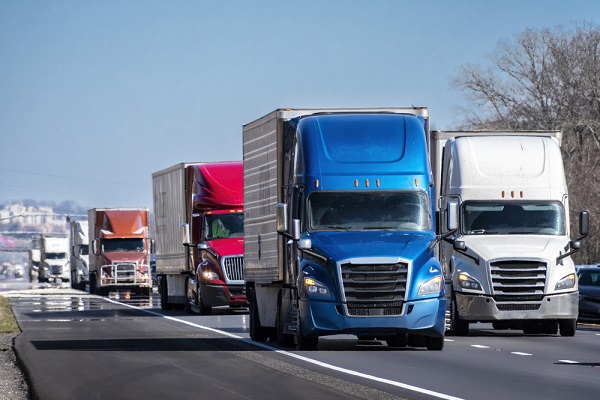 According to the National Private Truck Council 2023 Benchmarking Report, risky drivers are finally being trained up or trained out. Safety technologies, such as forward-facing event-recording cameras, provide private fleets with unheard of levels of visibility, tracking and analytics. Another benefit of these technologies is that they provide the information that private fleets need to challenge accidents on their record that are not their fault3.
How Technology & Data are Shaping Risk Management Today
Any good risk management and safety program today must start with the pre-hire process. Background checks and motor vehicle reports are obvious pre-screening starting points and provide a good basis for knowing who you are hiring. However, it is not wise to focus solely here, as a lot can happen without your knowledge in the time between a pre-hire screen and an annual follow-up.
Post-hire monitoring of driver behavior with an effective scoring system should also be the basis of an effective risk management system, as this is the only way to use predictive analytics for reducing risk.
 Fortunately, today’s technology gives us plenty of ways to score drivers. Telematics, forward- and rear-facing cameras, violations, collision history, and certain maintenance events can all be effective early warning indicators. Risk managers need to decide what events they want to collect, score, and report, and then decide how to go about it.
An effective scoring system needs to be event-based with the ability to automate as much as possible. Some of the most common events that fleets use for scoring are telematics events like speed, harsh breaking, harsh acceleration, harsh cornering, and seat belt usage. A good telematics system should capture these data points and provide timely reporting by driver, not just by asset. It’s important to decide how to score and weight each event for your overall risk profile of a driver.
Furthermore, the driver’s collision history should also be considered and incorporated into the scorecard, especially since at-fault collisions can be a key indicator of future risk.
Recently, fleet safety professionals have been inquiring more about identifying which ‘events’ should be considered for scoring drivers, as well as how best to aggregate and analyze data from disparate sources into a holistic analytics tool that predicts who is more likely to be involved in a collision. Technology- and vendor-agnostic platforms are a must in these data analytics environments.
Competitive Advantage of Upgrading into Newer Trucks
Upgrading aging heavy-duty trucks with newer units equipped with advanced safety features has emerged as a strategic, competitive move that not only prioritizes the well-being of drivers and other road users, but also significantly impacts the bottom-line finances of an organization. However, it is also important for companies to have a firm understanding of how this translates to the finance side of the business.
 One of the most compelling reasons to invest in modern heavy-duty trucks is the array of advanced safety features designed to prevent accidents. Collision mitigation systems, lane departure warnings, and automatic emergency braking, not only enhance the safety of the driver and other road users but also contribute to a substantial reduction in accident-related costs. In fact, according to settlement amounts of trucking cases settled between 2015 and 2023, the average truck accident settlement amount was recorded at $73,109, which includes cases where the defendant was operating a tractor trailer or other heavy/commercial truck4.
Furthermore, insurance companies increasingly reward organizations that prioritize safety. Upgrading to trucks equipped with advanced safety features not only reduces the likelihood of accidents but also positions the trucking organization as a lower risk for insurers. In the last decade, truck insurance premiums have witnessed a gradual but consistent rise, according to data from ATRI. Premiums have surged from 6.4 cents per mile in 2013 to 8.8 cents per mile in 2022. When viewed in terms of hourly costs, this represents an increase from $2.57 in 2013 to $3.57 in 20225.
As the transportation fleet industry continues to evolve, organizations that prioritize safety and risk management through technological advancements position themselves not only as leaders in the field, but as financially resilient entities prepared for the challenges of the road ahead. Understanding how each of these areas can impact an organization will enable operations, finance and risk management personnel to better communicate this importance to the C-level.
 About The Author
Hadley Benton is Executive Vice President of Business Development at Fleet Advantage, a leading innovator in truck fleet business analytics, equipment financing and lifecycle cost management. For more information visit www.FleetAdvantage.com.
1: https://getjerry.com/questions/how-dangerous-is-truck-driving
2: ATRI An Analysis of the Operational Costs of Trucking: 2023 Update
3: 2023 NPTC Benchmarking Survey Report
4: https://www.brownandcrouppen.com/blog/average-truck-accident-settlement-amounts/