Truemag

  • Newsletters
  • Thought Leadership
  • Mobility
  • Safety
  • Work Trucks
  • Videos
  • Home
  • Subscribe
  • Contact Us
  • Media Kit
  • Who We Are

University of Nebraska EV Safety Research to Aid Military, Public in Improving Guardrails

By Dave Bean, Content Editor, FMW

February 7, 2024

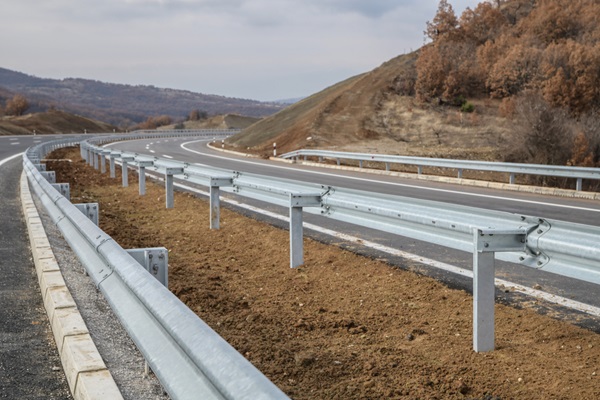
It appears that guardrails designed to keep vehicles from running off the road are having a tougher time doing their job when struck by electric vehicles (EVs). In a test performed last year by the Midwest Roadside Safety Facility at the University of Nebraska–Lincoln (UNL), a Rivian truck and Tesla Model 3 broke through and/or passed under traditionally designed U.S. highway guardrails – roadside barriers which usually withstand high-speed impact from gasoline powered vehicles.

ERDC Logo (Courtesy of U.S. Army Engineer Research and Development Center)

This issue not only presents a public safety challenge, but it has also gotten the attention of the U.S. Army Engineer Research and Development Center (ERDC), who are concerned that these same guardrails, which are also used for U.S. military defense, might be vulnerable to intentional penetration by hostile vehicles.

“The U.S. Army Corps of Engineers mission is to deliver vital engineering solutions, in collaboration with our partners, to secure our nation, energize our economy and reduce disaster risk,” said Genevieve Pezzola, a research civil engineer at the U.S. Army Engineer Research and Development Center.

There are more than 100,000 road accidents in the U.S. where vehicles crash into guardrails, resulting in thousands of deaths. According to research conducted by the Midwest Roadside Safety Facility, EVs have about the same rate of contact and speed with roadside barriers as internal combustion powered (ICE) vehicles. However, they break through these barriers in greater numbers, possibly a result of having as much as 50% more impact energy.
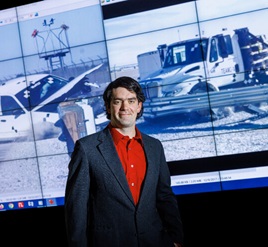
Cody Stolle (Photo Courtesy of UNL)

“There is some urgency to address this issue,” said Cody Stolle, assistant director of the Midwest Roadside Safety Facility. “As the percentage of EVs on the road increases, the proportion of run-off-road crashes involving EVs will increase, as well.”

As a result of the military’s interest in the University of Nebraska’s guardrail research, more crash tests are being developed, this time as a collaborative effort between the ERDC and the Midwest Roadside Safety Facility, among others. The goal of the enhanced research is to come up with a new guardrail design that can withstand contact from a variety of vehicles, including heavier EVs, bigger SUVs and pickup trucks, as well as smaller and lighter conventional cars.

To read more about the study, click here.

Feb 6, 2024Dave Bean
Pacific Pride: Fast, Easy, Efficient Way for Fleets to Fuel UpVehicle History Reports and What You Should Know About Them
Recent Posts
  • Why the Traditional Vehicle Ordering Cycle No Longer Works
  • DASH Breaks Ground on DC Metro Region’s First On-Route Electric Bus Chargers
  • IMPROVLearning: How Comedy, Behavioral Science and AI Improve Fleet Safety
  • Improving Productivity with AI: Turning Fleet Data into Faster Decisions
  • National Safety Council Projects Increased Traffic Crash Risk during Fourth of July Weekend
  • Keep Every Heavy-Duty Maintenance Inspection on Track — Free Fullbay Checklist
  • Gain Data-Driven Insights into Commercial Vehicle Market Trends at Executive Leadership Summit
  • Last Chance to Save: Register for NAFA’s Maintenance Workshop
  • License Plate Cameras Are About to Start Tracking a Lot More Than Just Your Car
  • America’s Heavy EV Problem May End with Drivers Paying More
ASSOCIATION NEWS
Last Chance to Save: Register for NAFA’s Maintenance Workshop
How AFLA Is Positioning Itself for the Future of Fleet Mobility
‘Raise Your Hand and Get Involved’
NAFA Names 2026 Class of Fellows, Honoring Leaders in Fleet Management
Award Winners Honored at NAFA I&E
2026 NAFA I&E Seeks to Change Perceptions, Invigorate Fleets
NAFA Announces Lineup for Media Day at I&E 2026: Industry Leaders to Showcase the Latest Innovations
TECHNOLOGY
Improving Productivity with AI: Turning Fleet Data into Faster Decisions
Fleet Operations Are Changing – The Industry Needs to Evolve With Them
AI-Powered Vehicle Inspections Move Beyond the Checklist
Motive’s New Workforce Capabilities Aim to Improve Performance, Automate Rewards
AI + Human Insight: Why Fleet Leaders Need Both to Win in 2026
NTSB Finds Automation Overreliance Contributed to Two Fatal Ford BlueCruise Crashes
New AI Assistants Automate Fleet Data Analysis, Decision Making and More
CONFERENCES & WEBINARS
2026 NETS Strength IN Numbers Conference: Early Bird Rates!
AFLA 2026 – Keynotes Announced!
Private Fleets Flex at National Private Truck Council Conference
Free NAFA Webinar: Manage Your Fuel Cost Volatility
Registration Now Open for NETS Annual Conference
Early Bird Pricing for AFLA 2026 – Ending June 1
NAFA Online Seminar: Essentials of Fleet Management
INDUSTRY ANNOUNCEMENTS
Union Leasing Becomes Moventum Fleet Management as 70-Year Company Accelerates into Next Phase
Fleetio Wins Innovations Award at NAFA’s 2026 Institute & Expo
WIFM is heading to NAFA!
Cox Automotive Unveils Cox Fleet, Setting a New Standard for Fleet Uptime Nationwide
AFLA Canadian Fleet Professional of the Year Award: Nominations Open!
NAFA Webinar: Kickoff the 2026 100 Best Fleets Contest on December 4!
Join NAFA’s Free Fleet 101 Live Course

Fleet Management Weekly Newsletter Archive
Access to back issues of the FMW newsletter.

FMW Mobility
How mobility is rapidly changing the fleet management landscape.

Newsletter

Subscribe

FMW Fleet Videos
Video clips of industry leaders speaking on a variety of engaging hot topics in fleet.

2014-2020 © Fleet Management Weekly