By
Obviously, EVs use electricity to power their engines, while gas-powered vehicles use gasoline. EVs are usually more efficient and produce fewer emissions than gas-powered cars, so they’re an important part of the solution for urban pollution and climate change. While they superficially resemble ICE vehicles, they can be very different under the sheet metal. Instead of fuel lines and gas tanks, EVs have high voltage wires and battery packs. Instead of an ICE engine, they have an inverter, electric motor, and a simpler transaxle (usually with just one gear).
If you tell an ICE mechanic to work on an EV, there are still many things they can do with their current skillsets. Brakes, suspension, CV joints, and most 12v electrical systems are familiar, but danger lurks in the high-voltage systems they’d be unfamiliar with.
Automotive dealerships and the manufacturers they buy cars from have programs to train existing mechanics in what they need to know to safely and effectively work on EVs, but what about independent mechanics, small shops, and other businesses without a program to turn to? Fortunately, options for training and certification are emerging, and FutureTech is one of them.
 Last year, FutureTech proudly unveiled its pioneering EVPro+ training program. This innovative automotive aftermarket distributor provides Electrified Vehicle Systems and Technologies instruction, software-driven diagnostic tools, and support products to help you stay ahead of the competition in this rapidly evolving industry.
EVPRO+ offers a one-stop blended learning training program for Automotive – Transportation Service Professionals, from technicians and service advisors to instructors, students, engineers and managers. This comprehensive education resource covers Electric, Hybrid (HEV), Plug-In technology systems as well as other Electrified Vehicle Technology offerings.
The program has four levels:
- Level 1 – High Voltage Vehicle Safety Systems and Architecture
- Level 2 – Energy Management – High Voltage Battery Packs and Diagnostics
- Level 3 – Three-Phase Systems (Regen, Power Inverters, e-Trans/Drive Units)
- Level 4 – HVAC, dc-dc, Power Electronics Cooling, Levels 1-2-3 Charging Systems
These levels have online components (with quizzes), in-person training components, and an optional certification test that nets the student an SAE-ITC certificate that’s good for five years. So, it can help the student get an actual job in the field.
Now, the program is hitting the road and they’ll be offering several in-person class sessions in 2023 for the first and second levels of certification.
Sites and dates for Level 1 certification will be:
- March 27-29, 2023, Spokane Transit Authority at 1230 W Boone Ave, Spokane, Washington, 99201
- May 15-17, 2023, MACS Training Facility at 225 S Broad Street Lansdale, PA 19446
- May 31-June 2,, Northland College at 13892 Airport Drive, Thief River Falls, MN 56701
- July 19-21, 2023, Portland Community College at 12000 SW 49th Ave, Portland, OR 97219
- August 16-18, 2023, Lake Superior College at 2101 Trinity Rd, Duluth, MN 55806
Level 2 Program dates and locations will be:
- June 26-29, 2023, Portland Community College at 12000 SW 49th Ave, Portland, OR 97219
- August 21-24, Lake Superior College at 2101 Trinity Rd, Duluth, MN 55806
Fees for the Level 1 program start at $1700 without certification, and fees for the Level 2 program start at $2900 (also without certification).
 The training provider gives several reasons students should consider it for their training needs. FutureTech says many professionals in the automotive industry who work or teach diagnostics and service of Battery Electric Vehicles (BEV), Plug-In Hybrid Electric Vehicles (PHEV), and Hybrid Electric Vehicles (HEV) may not be well versed in Vehicle Architectures and High Voltage electrical power fundamentals that influence how these systems operate. Furthermore, their training related to safety measures like Personal Protective Equipment (PPE) for handling high voltage vehicles as well as other protecting strategies can potentially be inadequate for various reasons.
This seems weird from a customer perspective, because dealer service professionals are supposed to be the experts, but some manufacturer training programs are very narrowly tailored to specific EVs, PHEVs, and hybrids, and don’t teach more widely to create a more well-rounded professional.
How On Earth Can They Teach This Stuff in 3-4 Days?
When I first read about this program, I was skeptical. It didn’t seem like a 3-4 day program could possibly make for a skilled worker in this field. So, I dug a little deeper to see what all was involved. Fortunately, that’s not what they’re actually doing here.
According to the course website, the classroom training starts two months before the in-person event. They send a link to training materials you have to complete, and you do those on your own time before the event. To attend, you have to finish all of the online training in advance. It’s broken down into one-hour modules, so it should be pretty easy to fit into spare time.
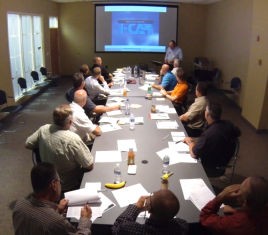 The in-person event comes next, and that’s where students see in-person demonstrations of what they learned about online, and then some hands-on work to drive it all home. I flipped through the course outline, and it’s lengthy. They cover a lot of ground in-person at these courses.
Finally, students who paid for the certification test take an in-person proctored test and have to pass with a minimum of 80% to get the five-year certification.
So, this does appear to be a legitimate offering, but I couldn’t tell you for sure about the quality unless I got to check it out in person. But, SAE-ITC must have checked on the quality of the offering, so it’s probably the real deal.
Training The Trainers
Another thing they offer is to help instructors to teach this content to more students. They want you to get the certification first to prove you know what you’re doing, but this seems to make sense for an automotive shop that wants to train more technicians and get them certified.
An In-Demand Skillset, But This Can’t Cover Everything An EV Mechanic Needs To Know
I can’t say for 100% certain whether this course is the best one out there for an aspiring EV technician, and you might be better to go with a longer program like you’d find at a community college or mechanic school to be more well-rounded in all things automotive. But, if you’ve already got that kind of training, this could be a good way to expand into the EV world. Or, this could be a way to get started with plans to learn on the job or in another general automotive program.