
Truemag

  • Newsletters
  • Thought Leadership
  • Mobility
  • Safety
  • Work Trucks
  • Videos
  • Home
  • Subscribe
  • Contact Us
  • Media Kit
  • Who We Are

Collisions: Dangerous for Drivers and Powerful Catalysts for Skyrocketing Nuclear Verdicts

By Pierre Sarnow, Lead Data Scientist, Omnitracs

Collisions — dangerous for drivers and powerful catalysts for skyrocketing nuclear verdicts.

Prioritizing driver safety is paramount. In today’s digital and connected age, a severe collision could spell disaster for your business reputation. Although collisions may appear random, they often aren’t. Various factors, including congested traffic in urban areas and dangerous driving habits, are driving indicators that lead to many collisions.

To analyze collision insights for our customers, I explored our comprehensive culmination of SmartDrive data, which is comprised primarily of Class 8 and other vehicles. Here’s what I uncovered!

Top urban collision areas
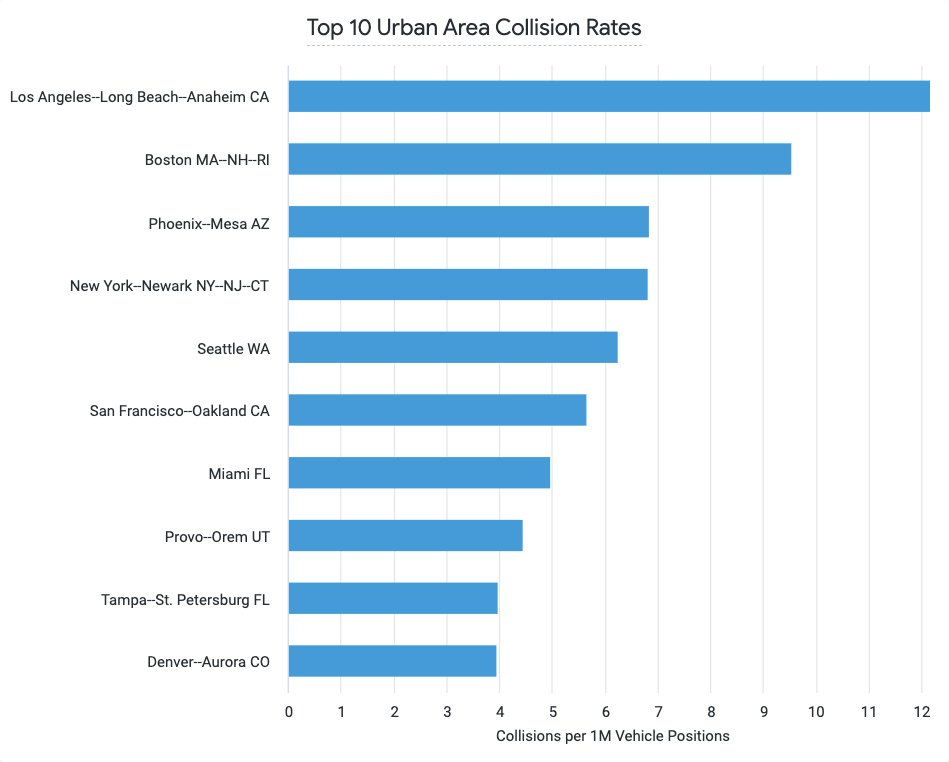
Anyone who has frequented Los Angeles is probably not surprised that the Los Angeles metroplex is home to the highest frequency of urban collisions. Boston, Phoenix, New York City, and Seattle share the other top slots, respectively.

Highly-populated cities, like the cities included in the above figure, are — unsurprisingly — home to many cars, leading to congestion and all the accompanying components, such as cars driving bumper-to-bumper and stressed drivers.
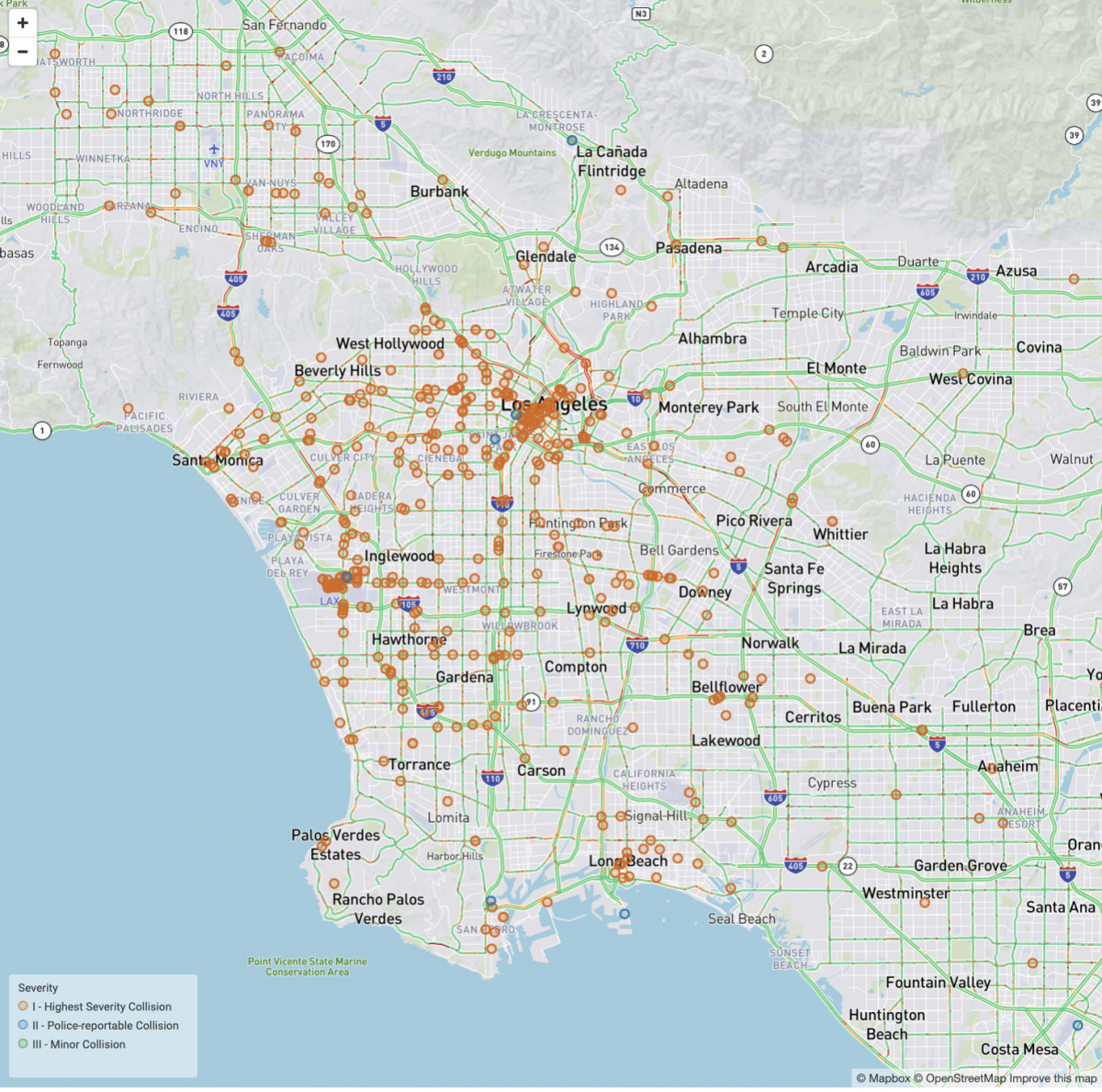
Highest Collision Conflict Types

There are so many ways vehicles can collide — and some of those ways don’t even involve other vehicles.
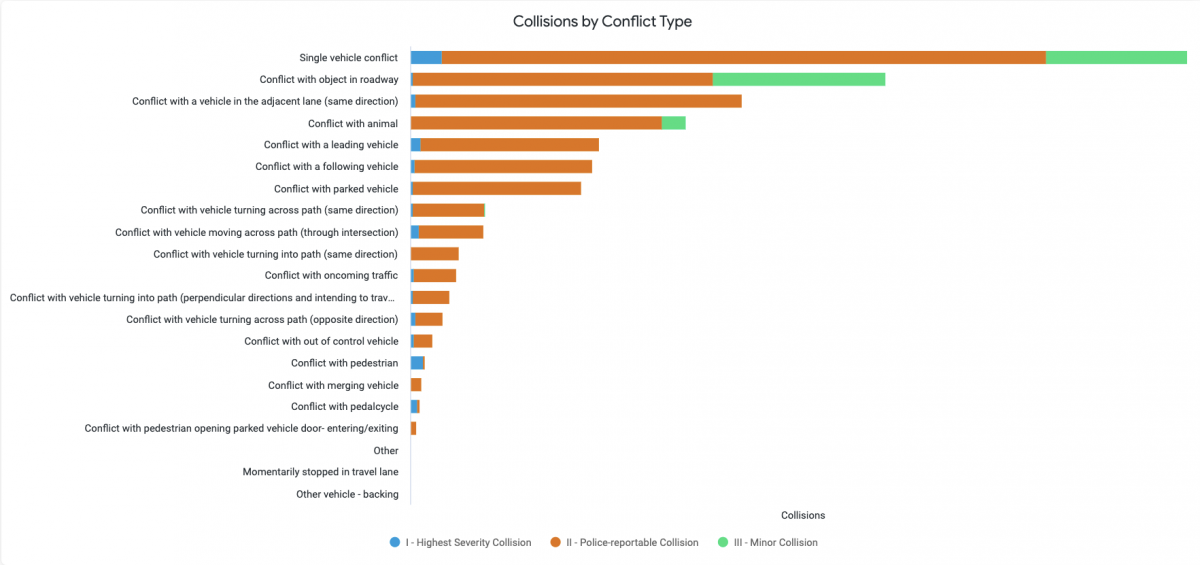
However, a single-vehicle conflict is still the highest collision type. Conflicts with objects in the roadway and animals are examples of leading conflict types that don’t involve other vehicles. The overwhelming majority of conflict types involve other vehicles, from vehicles in the adjacent lane to parked vehicles.

An important callout is a substantial majority of these collisions are police reportable. High-severity collisions are the lowest types of collisions, although they pose a serious risk to your operation.

Secure your operation and protect drivers

Safety managers can utilize industry-leading safety, security, and video solutions to eliminate risky driving behaviors with proactive coaching. Here’s how that works:

  1.     Video technology and in-cab sensors are installed in the cab.
  2.     As the driver continues along their journey, your back-office team is alerted to risky driving behaviors in near real-time, including harsh braking and swerving.
  3.     Your driver receives a proactive alert to notify them of risky behavior, so they can correct their approach before it leads to a hazardous collision.


Additionally, you can gain converged and insightful data from current and previous trips to understand how safely drivers operate and which drivers to reward and train for a more holistic safety culture.


Omnitracs Road Ahead Blog


Sep 19, 2021Janice
Silent Sound of the Police: Ford Mustang Mach-E GT Gets the Cop Car TreatmentWork Truck Week 2022 Returns to Indianapolis With Expanded Content
Recent Posts
  • IMPROVLearning: How Comedy, Behavioral Science and AI Improve Fleet Safety
  • Improving Productivity with AI: Turning Fleet Data into Faster Decisions
  • National Safety Council Projects Increased Traffic Crash Risk during Fourth of July Weekend
  • Keep Every Heavy-Duty Maintenance Inspection on Track — Free Fullbay Checklist
  • Gain Data-Driven Insights into Commercial Vehicle Market Trends at Executive Leadership Summit
  • Last Chance to Save: Register for NAFA’s Maintenance Workshop
  • License Plate Cameras Are About to Start Tracking a Lot More Than Just Your Car
  • America’s Heavy EV Problem May End with Drivers Paying More
  • Trends in U.S. Drivers’ Perceptions and Attitudes Toward Vehicle Automation, 2019–2025
  • 2026 NETS Strength IN Numbers Conference: Early Bird Rates!
ASSOCIATION NEWS
Last Chance to Save: Register for NAFA’s Maintenance Workshop
How AFLA Is Positioning Itself for the Future of Fleet Mobility
‘Raise Your Hand and Get Involved’
NAFA Names 2026 Class of Fellows, Honoring Leaders in Fleet Management
Award Winners Honored at NAFA I&E
2026 NAFA I&E Seeks to Change Perceptions, Invigorate Fleets
NAFA Announces Lineup for Media Day at I&E 2026: Industry Leaders to Showcase the Latest Innovations
TECHNOLOGY
Improving Productivity with AI: Turning Fleet Data into Faster Decisions
Fleet Operations Are Changing – The Industry Needs to Evolve With Them
AI-Powered Vehicle Inspections Move Beyond the Checklist
Motive’s New Workforce Capabilities Aim to Improve Performance, Automate Rewards
AI + Human Insight: Why Fleet Leaders Need Both to Win in 2026
NTSB Finds Automation Overreliance Contributed to Two Fatal Ford BlueCruise Crashes
New AI Assistants Automate Fleet Data Analysis, Decision Making and More
CONFERENCES & WEBINARS
2026 NETS Strength IN Numbers Conference: Early Bird Rates!
AFLA 2026 – Keynotes Announced!
Private Fleets Flex at National Private Truck Council Conference
Free NAFA Webinar: Manage Your Fuel Cost Volatility
Registration Now Open for NETS Annual Conference
Early Bird Pricing for AFLA 2026 – Ending June 1
NAFA Online Seminar: Essentials of Fleet Management
INDUSTRY ANNOUNCEMENTS
Union Leasing Becomes Moventum Fleet Management as 70-Year Company Accelerates into Next Phase
Fleetio Wins Innovations Award at NAFA’s 2026 Institute & Expo
WIFM is heading to NAFA!
Cox Automotive Unveils Cox Fleet, Setting a New Standard for Fleet Uptime Nationwide
AFLA Canadian Fleet Professional of the Year Award: Nominations Open!
NAFA Webinar: Kickoff the 2026 100 Best Fleets Contest on December 4!
Join NAFA’s Free Fleet 101 Live Course

Fleet Management Weekly Newsletter Archive
Access to back issues of the FMW newsletter.

FMW Mobility
How mobility is rapidly changing the fleet management landscape.

Newsletter

Subscribe

FMW Fleet Videos
Video clips of industry leaders speaking on a variety of engaging hot topics in fleet.

2014-2020 © Fleet Management Weekly