By Andrew Boada, Editor at Large
If you’ve been considering buying hybrid vehicles for your fleet, chances are you’ve been focusing on their excellent fuel economy and reliability, characteristics that make them among the lowest operating cost vehicles on the road today. Here in the U.K. where I live, I’ve owned a hybrid for a few months now, and on the basis of my experience driving one, I suspect fleet managers will discover they reduce fleet costs in another way: by nudging drivers’ behavior toward a more defensive driving style that will reduce the frequency, severity and cost of accidents. Here’s why.
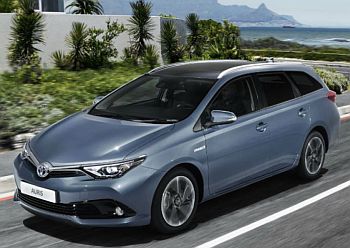
Most hybrids are engineered specifically to get good fuel economy. One thing that destroys good fuel economy is a powerful engine that delivers lots of acceleration. Hybrids don’t do that. The performance of my Toyota Auris (a.k.a. “Corolla) is typical of vehicles of its kind: from a full stop, with my foot pressing the gas pedal to the floor, it takes almost 11 seconds for it to reach 60 mph.
This leisurely rate of acceleration has had an immediate impact on my driving behavior. I now almost never even consider passing other motorists on a two-lane road. Without the power I need to pick up speed quickly, I have to spend more time driving in the same lane as oncoming traffic, and the more time I spend doing that, the more the risk-reward balance tips toward risk.
Another change: I now wait for much larger gaps in traffic before I pull out into an intersection than I used to, back when I drove a more fire-breathing machine. My hybrid doesn’t dart anywhere quickly or rapidly accelerate to the speed of fast-moving traffic, so I don’t bother even trying. In other words, I do what the principles of defensive driving dictate: I wait until I have an opportunity to cross an intersection that minimizes probability that driving error or another unforeseen event, like an unfortunately timed blown tire, will get T-boned.
Driving a car that delivers acceleration reminiscent of a freight train might sound like a dull driving experience. In fact, during my test drive, even the Toyota salesman was quick to warn me that if I’m looking for a car that is going to arouse passionate feelings, the Toyota Auris hybrid isn’t the car for me — and I can certainly see what he’s talking about. But I’ve found that when I accept my Auris on its own terms – as a highly efficient machine that reliably gets me from A to B – it actually is satisfying to drive.
And that’s because, surprisingly enough, I find it entertaining to drive. Obviously, driving it like a rally car is off the table. But maximizing its ability to do what it’s good at — covering large distances using very little fuel — is sort of fun. With the dashboard display showing me in real time whether I’m driving in a fuel-economizing manner or not, and tracking my average performance over time, my car has turned getting good fuel economy into a game that I find myself trying to get better at every time I take it for a drive. More changes in my driving behavior have ensued.
For example, I look further down the road than I used to for things like red lights, traffic that has come to a stop, motorists who look as though they’re considering pulling out in front of me, and other indications that I will need to slow down or potentially stop. So, instead of hitting the brakes harder later, I begin decelerating, either by coasting or by braking lightly, in as gradual a manner as possible.
I also look for changes in the grade of the road so that I can maintain a constant speed by coasting while heading down hills. Every time I remember to drive this way, my fuel economy reading immediately rewards me. So does my regenerative braking energy info. And in the longer run, I am rewarded again by using regenerative braking instead of causing wear and tear to the car’s mechanical brakes.
One other change to my driving behavior that I’m surprised at, given my lead-footed instincts, is that I now pay a lot more attention to speed limits because — wouldn’t you know it? — you really can save gas by driving 65 or 70 mph on the highway instead of 80 or 85 mph.
These and other little changes I’ve made to how I drive have resulted in a steadier, smoother style of driving at speeds. This type of driving – strictly observing the speed limits – keeps my car insurance company happy. The fact that this has helped me increase my average fuel economy from 48 up to 56 mpg makes me happy, since I’m winning at the game and I’m saving money at the pump. And I’m doing all this while reducing my risk of getting myself and others I share the road with into an accident. With the exception of the body repair shop, it’s a win for everyone.
Am I saying the hybrids like my Auris are going to turn everyone into a perfect driver? No. It’s still possible to drive recklessly in these things, and they aren’t going to do anything for someone who’s falling asleep behind the wheel or texting when they should be watching the road, or doing any one of a whole laundry list of things people do that get them into trouble on the road. But if my experience with it is indicative — and anecdotal evidence from hybrid owner message boards suggest it may be — hybrids will provide a nudge toward a style of driving that is more economical, environmentally friendly and safer, even for drivers who don’t take a personal interest in the hyper gas mileage game.
As fleet managers and regular readers of this publication, you’re no doubt aware of the enormous direct and hidden costs accidents impose in fleets and their parent companies. Given the numbers involved, even a nudge in the direction of a safer fleet can have a significant impact on the bottom line.