By Mark Boada, Senior Editor
Billions of dollars have been spent and billions more have been committed to pursuing the ultimate goal of automotive safety: zero accidents. Whether that goal – literally, not a single crash ever again – is practical, no one denies that future technology will produce a dramatic reduction in collisions, save lives and lessen injuries.
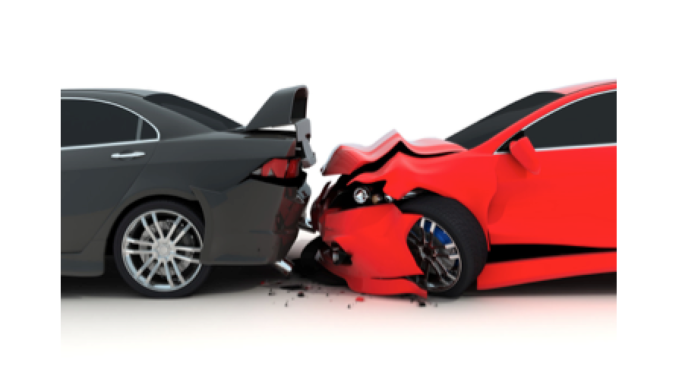
The proof of concept is the success that some of the driver-assist systems that have already been deployed. To date, the most effective system is forward crash avoidance with automatic emergency braking — call it FCA/AEB for short. According to the Insurance Institute for Highway Safety, it has proven to reduce rear-end collisions by 40 percent. That’s a remarkable result, especially given that rear-end collisions are the most frequent kind, accounting for some 34 percent of all roadway accidents.
To put that in perspective, there are about 6 million police-reported traffic accidents a year, of which about 2 million are rear-enders. So, if every vehicle on the road were equipped with FCA/AEB, we could see some 800,000 fewer accidents. In addition, the system reduces the severity of the rear-enders that still occur.
Take that down to the level of a fleet with 1,000 vehicles and a 20 percent accident rate.
Installing FCA/AEB on every vehicle could prevent 27 accidents a year (1,000 X 20% X 34% X 40%). At NHTSA’s average fleet cost of $24,000 per crash, that’s a saving of $648,000, year after year, not to mention the lives saved and injuries avoided, against an investment of, say, $1.5-2 million to equip every fleet vehicle.
What’s wrong with this picture? Not much, but one nagging question remains: what about the other 60 percent, the rear-enders the technology doesn’t prevent? More to the point: what about the victims of rear-enders, the vehicle that’s hit from behind? After all, the “F” in FCA stands for “forward,” meaning the system offers no, i.e., zero protection against being hit from behind. What about those?
Well, what I’m familiar with are tips fleets tell their drivers: when stopped or moving slowly, always watch your rear-view mirror, and when you see someone barreling toward you from behind, go for an escape route. Hardly infallible. Maybe of no use at all, practically speaking, most of the time. The success of this approach relies on your constant vigilance, some pre-planning, and luck that the driver behind you doesn’t take the same evasive route you’ve chosen to avoid the crash.
Welcome, then, is a solution that addresses the problem. It’s low-tech, inexpensive and, in the handful of applications it’s been put to the test, remarkably effective. It’s from a company called Pulse Protects, owned by Safety F1rst, a vehicle safety company based in Phoenix, Arizona.
The solution – dubbed, aptly enough, “Pulse” — is elegant: it’s a patented voltage regulator that causes the third brake light to pulse four times when you step on the brake pedal (the pulsing doesn’t repeat on any subsequent application of the brakes for five seconds so as not to annoy trailing drivers in stop and go traffic). The company cites research that says drivers are 69 percent more likely to pay attention to a pulsing light than a steady one, and that the effect improves their reaction time by 50 percent.
Note: The U.S. Department of Transportation prohibits flashing brake lights, those that turn completely on and off. Pulse oscillates between dim and bright, and the company says it’s the only such device that is DOT-compliant.
The product’s results with a Houston, Texas plumbing, heating and air conditioning company with a fleet of 273 vehicles appears to confirm the research. Before the device was installed, the fleet averaged 5.5 rear-enders per year. In the year after installation, it had none. The cost to install the device: $32,487. The savings, according to PulseProtects: $68,750 (at costs of $12,500, all-in, per crash), for a one-year ROI of more than 100 percent. Using NHTSA’s $24,000 figure, the savings come to $132,000.
To be fair, the device isn’t a panacea. At two other similarly-sized fleets, a combined total of three rear-enders did occur — but the number was 24 the year before they deployed PulseProtects. That’s still a home run or two.
Perhaps when we all travel in self-driving vehicles, there won’t be a market for niche solutions to preventing accidents. From where I sit, that’s a long way off. In the meantime, it just might pay for fleet managers to consider this one low-tech, low-cost solution to accident prevention that so far has flown below the radar.