Truemag

  • Newsletters
  • Thought Leadership
  • Mobility
  • Safety
  • Work Trucks
  • Videos
  • Home
  • Subscribe
  • Contact Us
  • Media Kit
  • Who We Are

Is Your (Auto) Job About to be Automated

Hoping to calm criticism, ride-hailing service Uber this month announced that it plans to have at least 1 million women drivers in place by the end of the decade.

But those jobs might be short-lived. A new study by Oxford University warns that as much as 47% of all U.S. jobs could be automated out of existence over the next 20 years.

Uber and rival Lyft are already giving serious thought to turning to fully driverless vehicles – as is Google, the tech giant already putting together a fleet of autonomous vehicles that will be used in a test program near its Silicon Valley headquarters.

Over the last quarter century we’ve seen a sharp shift in manufacturing where large numbers of traditional jobs have been replaced by machine.

The range of jobs that are vulnerable may come as a surprise, robots or simply algorithms taking over everything from customer service to table service at restaurants. Several technology firms are even developing automated news services that take raw data input – say, an automaker’s earnings report – and punch out neat and tidy stories.

Some of the biggest cuts could come in the auto industry and in jobs related to motor vehicles, stressed Michael Osbourne, a co-director of the Oxford Martin Programme on Technology and Employment. The group used its own research algorithm and U.S. Bureau of Statistics data as the basis of the study.

Of course, automation has long been a force in the auto industry. And, in early years, it helped create jobs by helping pioneers like Henry Ford bring the cost of a car down to the point where it could be affordable to the average American. By the 1970s, it was widely estimated, one in seven U.S. jobs was linked with the auto industry, much of that work along the assembly line.

But that began to shift with the arrival of robots and ever-smaller and more powerful computers. Assembly lines like the one at the Ford Rouge complex in Dearborn, Michigan, once would require as many as 5,000 workers to turn out perhaps 200,000 cars annually. Today, some plants are rolling out almost twice that volume with less than half the workforce.

The automation revolution is set to extend beyond the factory, emphasizes the new Oxford study. We’ve already begun to see that in the office, where word processors have replaced the secretarial pool, and desktop computers trim the need for accountants and other number-crunchers.

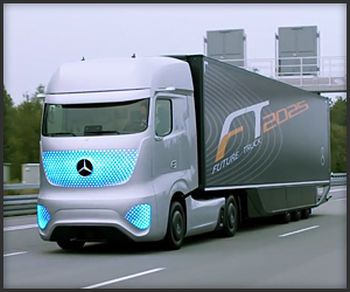
What’s next? “Forklift drivers, truck drivers, agricultural vehicle drivers,” Osbourne noted during a conference in which the report’s findings were revealed. “Those jobs could be gone very soon.”

Even local delivery services could be impacted. Consider Amazon’s interest in using drones.

How much further might this go?

To see the original story go to The Detroit Bureau.

Mar 20, 2015connieshedron
Clean Energy Opens Newest Public Natural Gas Station in OrlandoSummit Fleet Celebrates 10,000th Vehicle Contract -- Thanks to Miles from Sofico
Recent Posts
  • Why the Traditional Vehicle Ordering Cycle No Longer Works
  • DASH Breaks Ground on DC Metro Region’s First On-Route Electric Bus Chargers
  • IMPROVLearning: How Comedy, Behavioral Science and AI Improve Fleet Safety
  • Improving Productivity with AI: Turning Fleet Data into Faster Decisions
  • National Safety Council Projects Increased Traffic Crash Risk during Fourth of July Weekend
  • Keep Every Heavy-Duty Maintenance Inspection on Track — Free Fullbay Checklist
  • Gain Data-Driven Insights into Commercial Vehicle Market Trends at Executive Leadership Summit
  • Last Chance to Save: Register for NAFA’s Maintenance Workshop
  • License Plate Cameras Are About to Start Tracking a Lot More Than Just Your Car
  • America’s Heavy EV Problem May End with Drivers Paying More
ASSOCIATION NEWS
Last Chance to Save: Register for NAFA’s Maintenance Workshop
How AFLA Is Positioning Itself for the Future of Fleet Mobility
‘Raise Your Hand and Get Involved’
NAFA Names 2026 Class of Fellows, Honoring Leaders in Fleet Management
Award Winners Honored at NAFA I&E
2026 NAFA I&E Seeks to Change Perceptions, Invigorate Fleets
NAFA Announces Lineup for Media Day at I&E 2026: Industry Leaders to Showcase the Latest Innovations
TECHNOLOGY
Improving Productivity with AI: Turning Fleet Data into Faster Decisions
Fleet Operations Are Changing – The Industry Needs to Evolve With Them
AI-Powered Vehicle Inspections Move Beyond the Checklist
Motive’s New Workforce Capabilities Aim to Improve Performance, Automate Rewards
AI + Human Insight: Why Fleet Leaders Need Both to Win in 2026
NTSB Finds Automation Overreliance Contributed to Two Fatal Ford BlueCruise Crashes
New AI Assistants Automate Fleet Data Analysis, Decision Making and More
CONFERENCES & WEBINARS
2026 NETS Strength IN Numbers Conference: Early Bird Rates!
AFLA 2026 – Keynotes Announced!
Private Fleets Flex at National Private Truck Council Conference
Free NAFA Webinar: Manage Your Fuel Cost Volatility
Registration Now Open for NETS Annual Conference
Early Bird Pricing for AFLA 2026 – Ending June 1
NAFA Online Seminar: Essentials of Fleet Management
INDUSTRY ANNOUNCEMENTS
Union Leasing Becomes Moventum Fleet Management as 70-Year Company Accelerates into Next Phase
Fleetio Wins Innovations Award at NAFA’s 2026 Institute & Expo
WIFM is heading to NAFA!
Cox Automotive Unveils Cox Fleet, Setting a New Standard for Fleet Uptime Nationwide
AFLA Canadian Fleet Professional of the Year Award: Nominations Open!
NAFA Webinar: Kickoff the 2026 100 Best Fleets Contest on December 4!
Join NAFA’s Free Fleet 101 Live Course

Fleet Management Weekly Newsletter Archive
Access to back issues of the FMW newsletter.

FMW Mobility
How mobility is rapidly changing the fleet management landscape.

Newsletter

Subscribe

FMW Fleet Videos
Video clips of industry leaders speaking on a variety of engaging hot topics in fleet.

2014-2020 © Fleet Management Weekly