Truemag

  • Newsletters
  • Thought Leadership
  • Mobility
  • Safety
  • Work Trucks
  • Videos
  • Home
  • Subscribe
  • Contact Us
  • Media Kit
  • Who We Are

Toyota Aims to Bring Crash-Prevention Technology to Mainstream

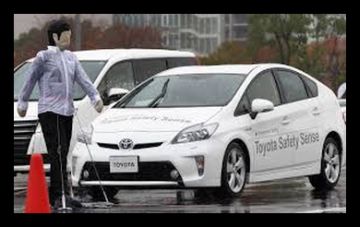
Toyota Motor Corp. will introduce less-costly crash-prevention systems to most of the vehicles it sells in its biggest markets starting next year, in a bid to usher the new technology into the mainstream.

The Japanese auto maker will offer two crash-prevention technologies for new cars in the U.S., Japan and Europe by the end of 2017, said Moritaka Yoshida, a Toyota senior managing officer who oversees safety technologies.

Toyota said the new technologies use both a camera and radar to detect objects near the car and alert drivers. The technologies also can slow down or brake a vehicle automatically to prevent collisions.

The automotive industry has been working to develop so-called active technologies that help drivers prevent accidents or drive more safely. Those efforts would join existing passive safety technologies that are intended to mitigate damages in an accident.

Mr. Yoshida said the new systems seek to provide “high safety performance to as many users as possible for an affordable price.”

Toyota is chasing rivals, including Ford Motor Co. of the U.S. and Hyundai Motor Co. of South Korea, that already offer automatic braking systems in mass-market models for the U.S.

While many auto makers already offer such technologies, many of them rely either on a camera or radar, and combining both is rare, said Toyota engineer Yukinori Yamada.

Toyota has developed two new crash-prevention systems, one for midsize and high-end cars and one for compact cars.

The system for midsize and high-end cars, called Toyota Safety Sense P, will consist of a single-lens video camera on the windshield near the rearview mirror and a millimeter-wave radar placed behind the Toyota emblem on the front.

Toyota Safety Sense P will be less expensive than crash-prevention systems in similar cars, Mr. Yoshida said. Currently, the system on the Lexus NX compact crossover sport-utility vehicle, consisting just of a millimeter-wave radar, costs about ¥60,000 ($500) in Japan.

The system for compact cars, called Toyota Safety Sense C, will consist of a single-lens camera and laser radar, placed on the windshield near the rearview mirror. It will cost about the same as crash-prevention systems on minicars in Japan, or roughly ¥50,000, Mr. Yoshida said.

Along with crash-prevention technologies, Toyota will also offer other functions such as an alert that helps vehicles travel in the center of the lane.

Continue reading the original article in WSJ.

Dec 1, 2014connieshedron
The Hot New Car Color is ... BrownTelogis' Kevin Moore: Fleets and The Connected Vehicle
Recent Posts
  • IMPROVLearning: How Comedy, Behavioral Science and AI Improve Fleet Safety
  • Improving Productivity with AI: Turning Fleet Data into Faster Decisions
  • National Safety Council Projects Increased Traffic Crash Risk during Fourth of July Weekend
  • Keep Every Heavy-Duty Maintenance Inspection on Track — Free Fullbay Checklist
  • Gain Data-Driven Insights into Commercial Vehicle Market Trends at Executive Leadership Summit
  • Last Chance to Save: Register for NAFA’s Maintenance Workshop
  • License Plate Cameras Are About to Start Tracking a Lot More Than Just Your Car
  • America’s Heavy EV Problem May End with Drivers Paying More
  • Trends in U.S. Drivers’ Perceptions and Attitudes Toward Vehicle Automation, 2019–2025
  • 2026 NETS Strength IN Numbers Conference: Early Bird Rates!
ASSOCIATION NEWS
Last Chance to Save: Register for NAFA’s Maintenance Workshop
How AFLA Is Positioning Itself for the Future of Fleet Mobility
‘Raise Your Hand and Get Involved’
NAFA Names 2026 Class of Fellows, Honoring Leaders in Fleet Management
Award Winners Honored at NAFA I&E
2026 NAFA I&E Seeks to Change Perceptions, Invigorate Fleets
NAFA Announces Lineup for Media Day at I&E 2026: Industry Leaders to Showcase the Latest Innovations
TECHNOLOGY
Improving Productivity with AI: Turning Fleet Data into Faster Decisions
Fleet Operations Are Changing – The Industry Needs to Evolve With Them
AI-Powered Vehicle Inspections Move Beyond the Checklist
Motive’s New Workforce Capabilities Aim to Improve Performance, Automate Rewards
AI + Human Insight: Why Fleet Leaders Need Both to Win in 2026
NTSB Finds Automation Overreliance Contributed to Two Fatal Ford BlueCruise Crashes
New AI Assistants Automate Fleet Data Analysis, Decision Making and More
CONFERENCES & WEBINARS
2026 NETS Strength IN Numbers Conference: Early Bird Rates!
AFLA 2026 – Keynotes Announced!
Private Fleets Flex at National Private Truck Council Conference
Free NAFA Webinar: Manage Your Fuel Cost Volatility
Registration Now Open for NETS Annual Conference
Early Bird Pricing for AFLA 2026 – Ending June 1
NAFA Online Seminar: Essentials of Fleet Management
INDUSTRY ANNOUNCEMENTS
Union Leasing Becomes Moventum Fleet Management as 70-Year Company Accelerates into Next Phase
Fleetio Wins Innovations Award at NAFA’s 2026 Institute & Expo
WIFM is heading to NAFA!
Cox Automotive Unveils Cox Fleet, Setting a New Standard for Fleet Uptime Nationwide
AFLA Canadian Fleet Professional of the Year Award: Nominations Open!
NAFA Webinar: Kickoff the 2026 100 Best Fleets Contest on December 4!
Join NAFA’s Free Fleet 101 Live Course

Fleet Management Weekly Newsletter Archive
Access to back issues of the FMW newsletter.

FMW Mobility
How mobility is rapidly changing the fleet management landscape.

Newsletter

Subscribe

FMW Fleet Videos
Video clips of industry leaders speaking on a variety of engaging hot topics in fleet.

2014-2020 © Fleet Management Weekly