Truemag

  • Newsletters
  • Thought Leadership
  • Mobility
  • Safety
  • Work Trucks
  • Videos
  • Home
  • Subscribe
  • Contact Us
  • Media Kit
  • Who We Are

More Cars Earn Top Ratings in Avoiding Crashes with Autobrake

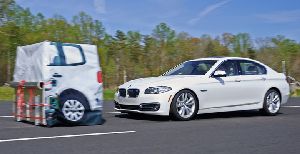
New ratings for systems that help drivers avoid front-to-rear crashes were released by the Insurance Institute for Highway Safety.

Auto manufacturers are making strides in adopting the most beneficial systems with automatic braking capabilities and are offering the features on a wider variety of models. Twenty-one of 24 cars and SUVs, all 2014 models unless noted, earn an advanced or higher rating in the latest round of IIHS evaluations.

“We are already seeing improvements from automakers since the initial launch of our ratings last September,” says David Zuby, IIHS executive vice president and chief research officer. “BMW and Lexus, for example, have added more braking capability to their systems, which has paid off in higher ratings.”

Large family cars and large luxury cars make up the bulk of the test group. IIHS also tested four midsize luxury/near luxury cars, three midsize luxury SUVs and a midsize SUV.

Four vehicles earn perfect scores when equipped with certain options. They are the BMW 5 series large luxury car, BMW X5 midsize luxury SUV, 2015 Hyundai Genesis large luxury car and Mercedes-Benz E-Class large luxury car. In all, eight models earn the highest rating of superior, 13 earn advanced, and three earn a basic rating.

In addition to familiar luxury brands, consumers will find mainstream nameplates among the newest rated vehicles, including Buick, Chevrolet, Dodge and Toyota.

The Institute rates vehicles as basic, advanced or superior for front crash prevention depending on whether they offer autobrake and, if so, how effective it is in tests at 12 and 25 mph.

Forward collision warning systems that meet performance criteria set by the National Highway Traffic Safety Administration and autobrake systems that provide only minimal speed reduction in IIHS tests earn a basic rating.

Vehicles that combine the warning with moderate speed reductions earn an advanced rating. It is possible to qualify for an advanced rating with an autobrake system that doesn’t first warn the driver before taking action. Models that offer a warning and provide major speed reduction in IIHS tests earn a superior rating.

Some models have multiple ratings because they are available with different versions of front crash prevention systems and their test performance varies. In the current group, this is the case with the BMW 3 series, 5 series and X5.

The rating system is based on HLDI research indicating that forward collision warning and automatic braking systems help drivers avoid front-to-rear crashes.

“We know that this technology is helping drivers avoid crashes,” Zuby says. “The advantage of autobrake is that even in cases where a crash can’t be avoided entirely, the system will reduce speed. Reducing the speed reduces the amount of damage that occurs to both the striking and struck cars and reduces injuries to people in those cars.”

Return to Fleet Management Weekly

May 31, 2014admin
NAFA’s 2014 Conference Reports Largest Fleet Manager Attendance In Fleet IndustryConsumer Reports Blasts Honda Accord Hybrid MPG Claim
Recent Posts
  • IIHS Crashworthiness Tests Save Nearly 50,000 Lives Since Program’s Launch
  • Hyundai Unveils New ‘Plasma Care UVC’ Cabin Sanitizer
  • Right-To-Repair Is Already Rewriting What American Owners Are Allowed To Fix
  • New Guide from Utilimarc: Are You Replacing Vehicles at the Right Time?
  • IMPROVLearning: How Comedy, Behavioral Science and AI Improve Fleet Safety
  • Launch of RoadFlex Direct Puts Fleets in Control of Their Fuel Data With a New Open API Platform
  • Why the Traditional Vehicle Ordering Cycle No Longer Works
  • Improving Productivity with AI: Turning Fleet Data into Faster Decisions
  • JD Power: New Vehicle Quality Scores Improve; Some Connectivity Issues
  • NHTSA Launches Commonsense Updates to Brake Pedal Requirements for AVs
ASSOCIATION NEWS
How AFLA Is Positioning Itself for the Future of Fleet Mobility
Last Chance to Save: Register for NAFA’s Maintenance Workshop
‘Raise Your Hand and Get Involved’
NAFA Names 2026 Class of Fellows, Honoring Leaders in Fleet Management
Award Winners Honored at NAFA I&E
2026 NAFA I&E Seeks to Change Perceptions, Invigorate Fleets
NAFA Announces Lineup for Media Day at I&E 2026: Industry Leaders to Showcase the Latest Innovations
TECHNOLOGY
Hyundai Unveils New ‘Plasma Care UVC’ Cabin Sanitizer
Improving Productivity with AI: Turning Fleet Data into Faster Decisions
Fleet Operations Are Changing – The Industry Needs to Evolve With Them
AI-Powered Vehicle Inspections Move Beyond the Checklist
Motive’s New Workforce Capabilities Aim to Improve Performance, Automate Rewards
AI + Human Insight: Why Fleet Leaders Need Both to Win in 2026
NTSB Finds Automation Overreliance Contributed to Two Fatal Ford BlueCruise Crashes
CONFERENCES & WEBINARS
2026 NETS Strength IN Numbers Conference: Early Bird Rates!
AFLA 2026 – Keynotes Announced!
Private Fleets Flex at National Private Truck Council Conference
Free NAFA Webinar: Manage Your Fuel Cost Volatility
Registration Now Open for NETS Annual Conference
Early Bird Pricing for AFLA 2026 – Ending June 1
NAFA Online Seminar: Essentials of Fleet Management
INDUSTRY ANNOUNCEMENTS
Union Leasing Becomes Moventum Fleet Management as 70-Year Company Accelerates into Next Phase
Fleetio Wins Innovations Award at NAFA’s 2026 Institute & Expo
WIFM is heading to NAFA!
Cox Automotive Unveils Cox Fleet, Setting a New Standard for Fleet Uptime Nationwide
AFLA Canadian Fleet Professional of the Year Award: Nominations Open!
NAFA Webinar: Kickoff the 2026 100 Best Fleets Contest on December 4!
Join NAFA’s Free Fleet 101 Live Course

Fleet Management Weekly Newsletter Archive
Access to back issues of the FMW newsletter.

FMW Mobility
How mobility is rapidly changing the fleet management landscape.

Newsletter

Subscribe

FMW Fleet Videos
Video clips of industry leaders speaking on a variety of engaging hot topics in fleet.

2014-2020 © Fleet Management Weekly