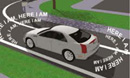
Improving safety and easing traffic and key points brought up in many transportation sectors, whether that be federal safety regulations and testing driverless cars. The U.S. Dept. of Transportation and the University of Michigan Transportation Research Institute (UMTRI) will soon be conducting the largest experiment ever on connected vehicles using wireless signals to talk to one another. The objectives are improving highway safety while also easing traffic.
• This advanced vehicle communicated technology could foster a breakthrough safety improvement – National Highway Traffic Safety Administration says improved technology could help prevent as many as three out of every four highway deaths.
• It will be a year-long project that UMTRI will conduct in Ann Arbor, Mich., where about 3,000 cars, trucks, and buses equipped with vehicle-to-vehicle and vehicle-to-infrastructure communication devices will “talk” to each other and to highway infrastructure systems.
• Highway traffic and safety is impacted by a number of factors, from multi-car collision pileups, distracted driving, workforce schedules, sporting and entertainment events, and commercial vehicle delivery and transport road trips. The tested technology will have potential advantages for both passenger vehicle and heavy duty trucks, says Scott Belcher, president of the Intelligent Transportation Society of America. This association recently presented an award to suburban Detroit supplier MeritorWabco for developing smart safety systems for commercial trucks.
• Even though budgets for highway departments all over the U.S. are feeling the squeeze, the new federal highway bill includes funding for research on connected vehicles and the infrastructure that should foster growth and development, Belcher said.