Truemag

  • Newsletters
  • Thought Leadership
  • Mobility
  • Safety
  • Work Trucks
  • Videos
  • Home
  • Subscribe
  • Contact Us
  • Media Kit
  • Who We Are

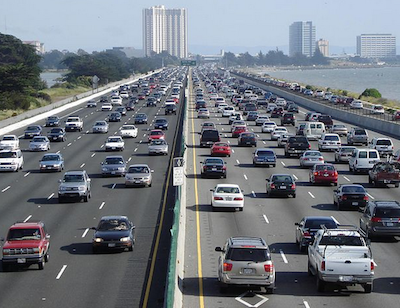
Traffic Congestion Costs Americans $124 Billion a Year, Report Says

Population growth, GDP growth, decline in fuel prices, and an increase in car ownership. These are the main factors that, according to a report released today by Seattle-based INRIX and the Centre for Economics and Business Research will lead, in the next sixteen years, to a 50 percent rise in gridlock costs in the U.S. In short, this means that if, in 2013 traffic congestion cost Americans $124 billion in direct and indirect losses, this number will rise to $186 billion in 2030.

Assuming, of course, all things remain equal and nothing is done to address the situation. Well, these are impressive numbers, data that most probably will be quoted in the coming years by experts and politicians to legitimate one transportation policy or another, so it’s a worth spending a little time trying to understand how researchers were able to calculate them.

Data about delays caused by congestions were based on the INRIX index: the company – whose mission is simply ‘solve traffic worldwide’ (no less) – collects data from more than 180 million vehicles and devices out on the road every day, in a number of ways: from satellite navigation systems, GPS in cars and trucks, information gathered by cellular carriers, and also through a devoted smartphone application.”

“We take all of this anonymous data and process it together to figure out what’s happening on the roadways across 40 different countries in the world – the company’s CEO, Bryan Mistele says.”

As for current estimates, the CEBR used these data to establish the burden imposed on households by peak traffic congestion, considering three main sources of direct cost: time wasted whilst delayed in congested traffic; fuel wasted and the effect of traffic congestion on the environment. It also considered indirect costs, given that it is more expensive and time-consuming to transport goods or attend meetings in traffic congested cities.

Evaluating both direct and indirect costs, the study found that in 2013, $78 billion resulted from time and fuel wasted in traffic (direct costs) and $45 billion was the sum of indirect costs businesses passed onto American consumers. Los Angeles is the real Carmaggedon, the most auto-centric city in the States, which accounts for nearly 20 percent of the country’s total congestions costs.

The study is not limited to the United States, anyway, but also takes into account the economic and environmental costs associated with road congestion in the UK, France and Germany as well as the most congested cities in each of these countries.

But it’s the extension to the USA that’s the real news, as the other three nations were already covered in a previous study by CEBR commissioned by INRIX, although data and forecasts have been updated. Enough with the methodology. Now, let’s ask ourselves: what can be done to improve the situation? The first thing that springs to mind is improving mass transit; but that’s not likely to be an universal panacea.

Read the Entire Story on Forbes.com

Oct 19, 2014admin
New Content, New WebsiteElement Fleet Management's Michele Cunningham: 'The Best of the Best'
Recent Posts
  • IMPROVLearning: How Comedy, Behavioral Science and AI Improve Fleet Safety
  • Improving Productivity with AI: Turning Fleet Data into Faster Decisions
  • National Safety Council Projects Increased Traffic Crash Risk during Fourth of July Weekend
  • Keep Every Heavy-Duty Maintenance Inspection on Track — Free Fullbay Checklist
  • Gain Data-Driven Insights into Commercial Vehicle Market Trends at Executive Leadership Summit
  • Last Chance to Save: Register for NAFA’s Maintenance Workshop
  • License Plate Cameras Are About to Start Tracking a Lot More Than Just Your Car
  • America’s Heavy EV Problem May End with Drivers Paying More
  • Trends in U.S. Drivers’ Perceptions and Attitudes Toward Vehicle Automation, 2019–2025
  • 2026 NETS Strength IN Numbers Conference: Early Bird Rates!
ASSOCIATION NEWS
Last Chance to Save: Register for NAFA’s Maintenance Workshop
How AFLA Is Positioning Itself for the Future of Fleet Mobility
‘Raise Your Hand and Get Involved’
NAFA Names 2026 Class of Fellows, Honoring Leaders in Fleet Management
Award Winners Honored at NAFA I&E
2026 NAFA I&E Seeks to Change Perceptions, Invigorate Fleets
NAFA Announces Lineup for Media Day at I&E 2026: Industry Leaders to Showcase the Latest Innovations
TECHNOLOGY
Improving Productivity with AI: Turning Fleet Data into Faster Decisions
Fleet Operations Are Changing – The Industry Needs to Evolve With Them
AI-Powered Vehicle Inspections Move Beyond the Checklist
Motive’s New Workforce Capabilities Aim to Improve Performance, Automate Rewards
AI + Human Insight: Why Fleet Leaders Need Both to Win in 2026
NTSB Finds Automation Overreliance Contributed to Two Fatal Ford BlueCruise Crashes
New AI Assistants Automate Fleet Data Analysis, Decision Making and More
CONFERENCES & WEBINARS
2026 NETS Strength IN Numbers Conference: Early Bird Rates!
AFLA 2026 – Keynotes Announced!
Private Fleets Flex at National Private Truck Council Conference
Free NAFA Webinar: Manage Your Fuel Cost Volatility
Registration Now Open for NETS Annual Conference
Early Bird Pricing for AFLA 2026 – Ending June 1
NAFA Online Seminar: Essentials of Fleet Management
INDUSTRY ANNOUNCEMENTS
Union Leasing Becomes Moventum Fleet Management as 70-Year Company Accelerates into Next Phase
Fleetio Wins Innovations Award at NAFA’s 2026 Institute & Expo
WIFM is heading to NAFA!
Cox Automotive Unveils Cox Fleet, Setting a New Standard for Fleet Uptime Nationwide
AFLA Canadian Fleet Professional of the Year Award: Nominations Open!
NAFA Webinar: Kickoff the 2026 100 Best Fleets Contest on December 4!
Join NAFA’s Free Fleet 101 Live Course

Fleet Management Weekly Newsletter Archive
Access to back issues of the FMW newsletter.

FMW Mobility
How mobility is rapidly changing the fleet management landscape.

Newsletter

Subscribe

FMW Fleet Videos
Video clips of industry leaders speaking on a variety of engaging hot topics in fleet.

2014-2020 © Fleet Management Weekly