Truemag

  • Newsletters
  • Thought Leadership
  • Mobility
  • Safety
  • Work Trucks
  • Videos
  • Home
  • Subscribe
  • Contact Us
  • Media Kit
  • Who We Are

More Cars Getting Stop-Start Despite Driver Resistance

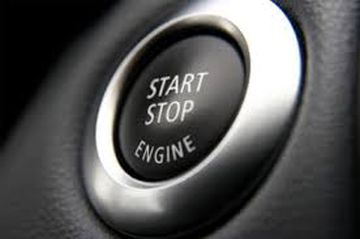
Gas-saving stop-start systems, which turn off the engine when the vehicle isn’t moving and restart it when the brake pedal is released, will be standard on more cars and trucks than ever before — whether drivers like it or not.

Automotive industry analysts say the technology improves fuel economy an average of 3.5 percent — and as much as 10-15 percent in cities and heavy stop-and-go traffic.

Detractors say the feature is annoying and makes them think their cars have stalled when the engine shuts off at a light or stop sign. Southfield-based forecasting firm IHS Automotive says 7 percent of vehicles sold today in the U.S. have stop-start, compared to 60-70 percent in Europe.

John Fisher, a 24-year-old from Plymouth, was confused and surprised the first time he experienced the stop-start feature on his 2014 Chevy Malibu. “I thought something was wrong,” he said. “I thought maybe it stalled, but then the engine came back on.”

But strict federal fuel economy mandates have forced automakers to add stop-start to more vehicles, says Devin Lindsay, senior analyst of North American powertrain forecasting for IHS. He predicts 57 percent of vehicles sold here in 2020 will have the gas-saving technology.

Detroit’s Big Three automakers already are increasing use of the technology in their car and truck lineups.

  • Stop-start is available as a $295 option on the 1.5-liter EcoBoost engine of Ford’s 2014 Fusion, and the automaker expects to offer it in 40 percent of its lineup — including the 2015 F-150 pickup — by 2017. And because it will be offered on popular models, it could account for 70 percent of total sales. “About 10 years from now, there won’t be a (new) vehicle that doesn’t have stop-start,” said Paul Seredynski, Ford’s manager of global powertrain technology communications.
  • Chrysler Group LLC uses stop-start in its Chrysler 200 and the 2015 Jeep Cherokee SUV, and the automaker says it improves fuel economy up to 3 percent. Chrysler debuted the feature in its Ram 1500 pickup. “It’s a great technology, very smooth implementation,” Jim Morrison, Jeep marketing director, said in an interview. He said stop-start added a mile per gallon to the Cherokee’s total, which is 29 miles per gallon highway on its V-6 engine.
  • General Motors Co. offers stop-start technology in its Chevrolet Malibu and Impala. Chad Lyons, Chevrolet communications manager, said 95 percent of Malibus sold have stop-start.


How it works

  • Stop-start technology saves gas by shutting off the engine when the car is stopped. Here’s how it works:
  • When the car comes to a stop, fuel flow is cut off and the engine cuts off.
  • The rest of the car’s systems — radio, lights, air conditioning, etc. — remain on.
  • When the driver lifts a foot from the brake pedal, the engine automatically restarts within a fraction of a second — before the foot even reaches the gas pedal.
Oct 12, 2014connieshedron
Small and Medium Business Uses for GPS Fleet ManagementCar Fuel Efficiency Hits Historic High with Mazda, Nissan Leading Way
Recent Posts
  • IMPROVLearning: How Comedy, Behavioral Science and AI Improve Fleet Safety
  • Improving Productivity with AI: Turning Fleet Data into Faster Decisions
  • National Safety Council Projects Increased Traffic Crash Risk during Fourth of July Weekend
  • Keep Every Heavy-Duty Maintenance Inspection on Track — Free Fullbay Checklist
  • Gain Data-Driven Insights into Commercial Vehicle Market Trends at Executive Leadership Summit
  • Last Chance to Save: Register for NAFA’s Maintenance Workshop
  • License Plate Cameras Are About to Start Tracking a Lot More Than Just Your Car
  • America’s Heavy EV Problem May End with Drivers Paying More
  • Trends in U.S. Drivers’ Perceptions and Attitudes Toward Vehicle Automation, 2019–2025
  • 2026 NETS Strength IN Numbers Conference: Early Bird Rates!
ASSOCIATION NEWS
Last Chance to Save: Register for NAFA’s Maintenance Workshop
How AFLA Is Positioning Itself for the Future of Fleet Mobility
‘Raise Your Hand and Get Involved’
NAFA Names 2026 Class of Fellows, Honoring Leaders in Fleet Management
Award Winners Honored at NAFA I&E
2026 NAFA I&E Seeks to Change Perceptions, Invigorate Fleets
NAFA Announces Lineup for Media Day at I&E 2026: Industry Leaders to Showcase the Latest Innovations
TECHNOLOGY
Improving Productivity with AI: Turning Fleet Data into Faster Decisions
Fleet Operations Are Changing – The Industry Needs to Evolve With Them
AI-Powered Vehicle Inspections Move Beyond the Checklist
Motive’s New Workforce Capabilities Aim to Improve Performance, Automate Rewards
AI + Human Insight: Why Fleet Leaders Need Both to Win in 2026
NTSB Finds Automation Overreliance Contributed to Two Fatal Ford BlueCruise Crashes
New AI Assistants Automate Fleet Data Analysis, Decision Making and More
CONFERENCES & WEBINARS
2026 NETS Strength IN Numbers Conference: Early Bird Rates!
AFLA 2026 – Keynotes Announced!
Private Fleets Flex at National Private Truck Council Conference
Free NAFA Webinar: Manage Your Fuel Cost Volatility
Registration Now Open for NETS Annual Conference
Early Bird Pricing for AFLA 2026 – Ending June 1
NAFA Online Seminar: Essentials of Fleet Management
INDUSTRY ANNOUNCEMENTS
Union Leasing Becomes Moventum Fleet Management as 70-Year Company Accelerates into Next Phase
Fleetio Wins Innovations Award at NAFA’s 2026 Institute & Expo
WIFM is heading to NAFA!
Cox Automotive Unveils Cox Fleet, Setting a New Standard for Fleet Uptime Nationwide
AFLA Canadian Fleet Professional of the Year Award: Nominations Open!
NAFA Webinar: Kickoff the 2026 100 Best Fleets Contest on December 4!
Join NAFA’s Free Fleet 101 Live Course

Fleet Management Weekly Newsletter Archive
Access to back issues of the FMW newsletter.

FMW Mobility
How mobility is rapidly changing the fleet management landscape.

Newsletter

Subscribe

FMW Fleet Videos
Video clips of industry leaders speaking on a variety of engaging hot topics in fleet.

2014-2020 © Fleet Management Weekly