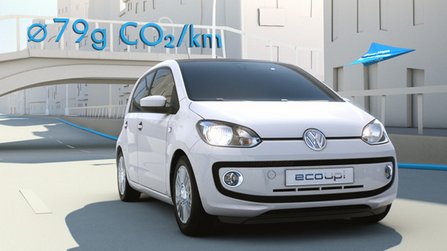
While Toyota was able to take on the role of green car leadership with the success of its Prius hybrid, Volkswagen AG is taking on the challenge through a new strategy to meet its CO2 targets. It comes through a two-year discussion between Volkswagen and environmental group Greenpeace. CEO Martin Winterkorn has held his first direct meeting with Greenpeace chief executive Brigitte Behrens on Volkswagen Group reaching the emissions target set by European Union legislation of an average of 95 grams of carbon dioxide (CO2) per kilometer by 2020.
Adopting this emissions standard applies to Volkswagen Group’s fleet of manufactured vehicles. The automaker has been emphasizing high-mileage products like its Volkswagen XL1, which will get 261 miles per gallon. Winkertorn said the company is very committed to reaching the target, but it is dependent on customers accepting the automaker’s advanced alternative powertrains.
Behrens said she supports the targets set by Volkswagen as a decision in favor of climate protection. Volkswagen’s declaration is also a signal for stricter exhaust emissions regulations in the growth markets of the US and China, she said. Volkswagen and Greenpeace have been through many dialogues over the past two years, some of it confrontational. Both sides did agree on reduction of CO2 emissions in road traffic as a key factor in climate protection. Volkswagen has been slow to launch battery-based vehicles, but its brands have begun to ramp up product offerings including the new Audi A3 e-Tron plug-in hybrid and the Volkswagen XL1 micro-hybrid with its potentially world-record setting 261 mpg when it comes to market about a year from now.