Truemag

  • Newsletters
  • Thought Leadership
  • Mobility
  • Safety
  • Work Trucks
  • Videos
  • Home
  • Subscribe
  • Contact Us
  • Media Kit
  • Who We Are

Self-Driving Cars Could Eliminate Urban Crashes

CNN Money

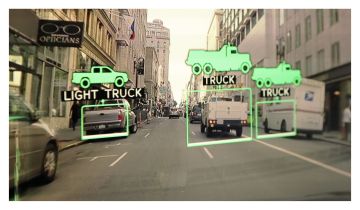
As the auto and tech industries pour millions into developing autonomous vehicles, some of the biggest gains will be realized by those who aren’t even riding in self-driving cars.

Transportation experts see the dawning era of autonomous transportation as a chance to tame speeding cars and trucks, creating a vastly safer world for drivers, passengers, pedestrians and cyclists.

Speed is a factor in every crash, experts say. The faster a driver is going, the less time they have to react, and the more space their vehicle will need to stop.

“The link between speed and safety is very clear,” said Corinne Kisner, the director of policy at the National Association of City Transportation Officials. This summer, the group called for autonomous vehicles to be limited to 25 mph on city streets.

The technology already exists to electronically restrict cars and trucks to the speed limit. Millions of dollars in damage and many lives would be saved. The federal government government has even proposed speed limits on large commercial trucks, but no one is calling for such a move on passenger vehicles.

“It would be a tough sell to make,” said Jeffrey Wishart, an automotive systems professor at Arizona State. “People like the freedom.”

Even if speeds were brought down by only a few miles per hour, it would have a huge impact on safety.

Getting struck by a car moving at 30 mph is eight times as likely to be deadly for a pedestrian as being hit by a vehicle going 20 mph, according to the U.S. Department of Transportation. A person struck by a vehicle moving at 31 mph has twice the risk of suffering a severe injury as a pedestrian struck by a vehicle going 23 mph, according to AAA research.

Cities are starting to catch on and take some steps to limit speed. This November, Seattle dropped the speed limit on arterial streets to 25 mph and residential streets to 20 mph. Boston officials have pushed this year to lower their speed limit from 30 to 25 mph.

Of course, drivers routinely flout speed limits, blunting the best intentions of transportation officials.

So we find ourselves in what Wishart calls an unfortunate arm’s race, as drivers choose larger and more powerful vehicles to protect themselves from high-speed crashes.

“I can’t have a lighter vehicle because if we get in an accident, your big vehicle is going to demolish my little vehicle,” Wishart said. “I must have least least as much protection.”

Autonomous vehicles are the chance to rein in this urge. Self-driving cars could be designed with slimmed down engines and frames that are designed to never go above 25 mph in the city. These vehicles wouldn’t need to be sturdy enough to survive a high-speed crash.

Of course, that’s not a future everyone will want to live in.

“For certain people,” Wishart said. “They’ll say — ‘You’ll take the steering wheel out of my cold, dead hands.'”


Dec 4, 2016connieshedron
Apple Gives Feedback on Autonomous Vehicle Regulationsgfleet Acquires the Motiva Group
Recent Posts
  • IMPROVLearning: How Comedy, Behavioral Science and AI Improve Fleet Safety
  • Improving Productivity with AI: Turning Fleet Data into Faster Decisions
  • National Safety Council Projects Increased Traffic Crash Risk during Fourth of July Weekend
  • Keep Every Heavy-Duty Maintenance Inspection on Track — Free Fullbay Checklist
  • Gain Data-Driven Insights into Commercial Vehicle Market Trends at Executive Leadership Summit
  • Last Chance to Save: Register for NAFA’s Maintenance Workshop
  • License Plate Cameras Are About to Start Tracking a Lot More Than Just Your Car
  • America’s Heavy EV Problem May End with Drivers Paying More
  • Trends in U.S. Drivers’ Perceptions and Attitudes Toward Vehicle Automation, 2019–2025
  • 2026 NETS Strength IN Numbers Conference: Early Bird Rates!
ASSOCIATION NEWS
Last Chance to Save: Register for NAFA’s Maintenance Workshop
How AFLA Is Positioning Itself for the Future of Fleet Mobility
‘Raise Your Hand and Get Involved’
NAFA Names 2026 Class of Fellows, Honoring Leaders in Fleet Management
Award Winners Honored at NAFA I&E
2026 NAFA I&E Seeks to Change Perceptions, Invigorate Fleets
NAFA Announces Lineup for Media Day at I&E 2026: Industry Leaders to Showcase the Latest Innovations
TECHNOLOGY
Improving Productivity with AI: Turning Fleet Data into Faster Decisions
Fleet Operations Are Changing – The Industry Needs to Evolve With Them
AI-Powered Vehicle Inspections Move Beyond the Checklist
Motive’s New Workforce Capabilities Aim to Improve Performance, Automate Rewards
AI + Human Insight: Why Fleet Leaders Need Both to Win in 2026
NTSB Finds Automation Overreliance Contributed to Two Fatal Ford BlueCruise Crashes
New AI Assistants Automate Fleet Data Analysis, Decision Making and More
CONFERENCES & WEBINARS
2026 NETS Strength IN Numbers Conference: Early Bird Rates!
AFLA 2026 – Keynotes Announced!
Private Fleets Flex at National Private Truck Council Conference
Free NAFA Webinar: Manage Your Fuel Cost Volatility
Registration Now Open for NETS Annual Conference
Early Bird Pricing for AFLA 2026 – Ending June 1
NAFA Online Seminar: Essentials of Fleet Management
INDUSTRY ANNOUNCEMENTS
Union Leasing Becomes Moventum Fleet Management as 70-Year Company Accelerates into Next Phase
Fleetio Wins Innovations Award at NAFA’s 2026 Institute & Expo
WIFM is heading to NAFA!
Cox Automotive Unveils Cox Fleet, Setting a New Standard for Fleet Uptime Nationwide
AFLA Canadian Fleet Professional of the Year Award: Nominations Open!
NAFA Webinar: Kickoff the 2026 100 Best Fleets Contest on December 4!
Join NAFA’s Free Fleet 101 Live Course

Fleet Management Weekly Newsletter Archive
Access to back issues of the FMW newsletter.

FMW Mobility
How mobility is rapidly changing the fleet management landscape.

Newsletter

Subscribe

FMW Fleet Videos
Video clips of industry leaders speaking on a variety of engaging hot topics in fleet.

2014-2020 © Fleet Management Weekly