By Dave Bean, FMW Associate Editor
August 23, 2023
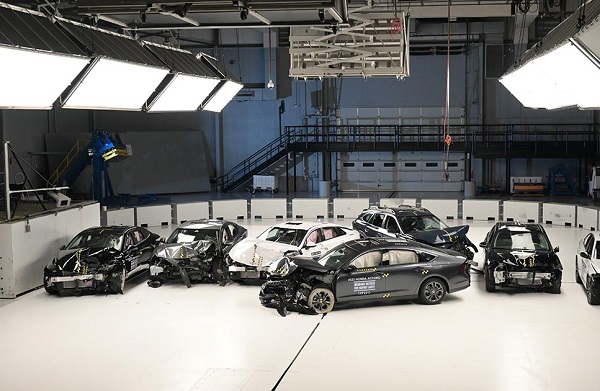
When The Insurance Institute for Highway Safety (IIHS) initiated its revised ‘Moderate Overlap Front Test’ in 2022, it revealed that belted passengers in the rear of newer midsize cars were now in more danger of death in road accidents than those seated up front. The quandary is not that the seats in the rear had suddenly become less safe, but rather that seats in the front were now equipped with upgraded safety equipment, including better air bags and improved seat belts. These improvements have not yet made it to the rear passenger compartments of most newer midsize cars.
What was it that revealed the disparity between back seat and front seat safety? The IIHS added a test dummy seated right behind the driver’s seat which was equipped with instrumentation that would calculate the types of injuries that might occur to that passenger as a result of a front-end collision. Vehicles earning a ‘good’ rating ensured that injuries to the head, neck, chest, or thigh were minimized. These types of injuries often occur when an occupant in the rear is ‘submarined’ under the safety belt upon impact or when the head is thrust forward into the back of the front seat.
 “In most of the midsize cars we tested, the rear dummy slid forward, or ‘submarined,’ beneath the lap belt, causing it to ride up from the pelvis onto the abdomen and increasing the risk of internal injuries,” IIHS President David Harkey said. “In the three poor-rated vehicles, measurements taken from the rear dummy also indicated likely injuries to the head or neck as well as to the chest.”
Despite these revelations, the safest place for young kids to be seated still remains in the rear compartment, where they can avoid contact with an expanding front seat airbag, which often is the biggest danger to children.
So, how did individual midsize models fare in IIHS rear seat testing? Well, only the Honda Accord rated ‘good’ in the updated moderate overlap front crash assessment. Suburu Outback rated ‘acceptable’, and both Nissan Altima and Toyota Camry earned ‘marginal’ ratings. ‘Poor’ grades were issued to Hyundai Sonata, Kia K5 and Volkswagen Jetta.
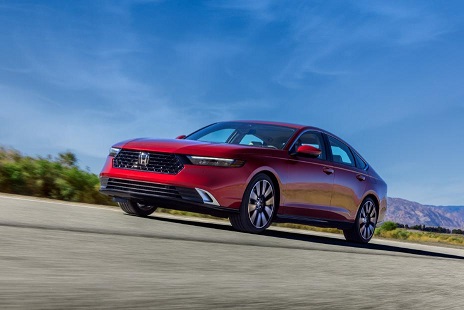 What did the 2023 Honda Accord do that the others didn’t? It furnished superb security for rear seat passengers. Assessment of test dummy data showed there was no increased risk of injury and the rear safety belts held its cargo firmly in place.
Even with the disparity in individual model performance, there was positive news for the segment overall. Each of the seven midsize cars tested demonstrated good safety prospects in the front seat in the event of front-end collision.
For more details about the IIHS midsize car moderate overlap front crash test, click here.