Truemag

  • Newsletters
  • Thought Leadership
  • Mobility
  • Safety
  • Work Trucks
  • Videos
  • Home
  • Subscribe
  • Contact Us
  • Media Kit
  • Who We Are

Charging Pads Let Electric Car Owners Cut the Cord

The Detroit News

Electric-vehicle charging cords could soon go the way of the cassette tape, floppy disk and landline telephone.

Suppliers like Qualcomm Inc. and a handful of after-market companies offer wireless charging that requires no cords or physical contact. Some automakers are beginning to implement it on their fleets, although it will likely first be available mostly on high-end luxury makes. Mercedes-Benz, for example, will offer wireless charging on its S550e plug-in hybrid next year.

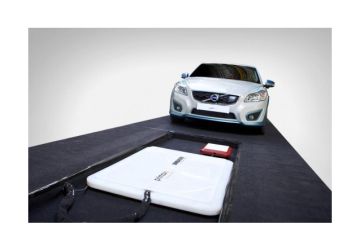
Inductive charging uses two coils of wire in two objects — in this case, a pad on the car connected to its battery and a separate pad on the ground — to create an electromagnetic field.

When the objects come in close contact with one another, an electric current travels over the open space to create a charge. It’s the same way you wirelessly charge an electric toothbrush, video game controller or cellphone.

In the future, suppliers envision a world where wireless chargers would be built directly into roadways so the car would charge while you drive, eliminating range anxiety. The coils could be built into designated highway lanes, or at places where cars often idle, such as stoplights and on-street parking spots. If wireless charging is implemented in parking garages or lots, autonomous EVs could one day park themselves over the pads and, when fully charged, move another vehicle in to charge.

“It’s so easy, that’s the big selling feature for it. It’s so convenient,” said John Currie, manager of business development for Qualcomm Halo. “You don’t have to remember to plug or unplug or handle those cables anymore. The car can just charge automatically where you normally park.”

Currie recently demonstrated the Qualcomm system with a hybrid Honda Accord over a small, rectangular black mat on the ground. To start charging, Currie hit a button on the car’s touchscreen, and a circular graphic on the screen showed the car was properly aligned and was charging. A wall-mounted box connected to the ground mat completes the system.

Qualcomm Halo has wireless EV charging systems with 3.3 kilowatts and 7 kilowatts charging capacity and has demonstrated power transfers of up to 20 kilowatts, said Chris Borroni-Bird, vice president of strategic development from Qualcomm Technologies Inc.

Qualcomm has licensed its Halo wireless EV charging technology to three suppliers: Southfield-based Lear Corp., U.K.-based Ricardo and Switzerland-based BRUSA Elektronik AG. Ricardo, an engineering firm with offices in Van Buren Township, plans to hit the marketplace in about three years.

But some challenges remain. Drivers don’t always drive straight over the charging pad to perfectly align the two coils. SUVs and vehicles that sit higher above the ground have a tougher time picking up a charge. And charging stops if an object or animal ends up on the pad.

Read more of the original article in The Detroit News

Aug 2, 2016connieshedron
NAFA Webinar: Reduce Costs, Decrease Downtime, and Extend Asset Life with Onsite Oil AnalysisDriving While Distracted: It's Not Just Texting Anymore
Recent Posts
  • Why Case Studies Close More Deals Than Product Brochures
  • California Just Became the Best Place to Buy a Brand-New EV
  • AFLA Membership Growth: Mary Saunders on Engagement, Volunteerism, and the Value of Connection
  • The Fleet Manager’s Breaking Point: Why AI Must Do More Than Advise
  • Four More Models Take Home Top Safety Pick+ Awards in Latest IIHS Ratings
  • Ford Can Now Stop Some Vehicles Starting, Even with the Key
  • All New Cars in the EU Now Need to Have a Camera Aimed at the Driver’s Face in the Latest Privacy Nightmare
  • WEX Grows EV Charging Network with Greenlane, Synop, and QuickCharge CPO Integrations
  • Moventum Fleet Management is Here!
  • WEX DriverDash Adds CITGO to Mobile Fuel Payments for Fleets
ASSOCIATION NEWS
AFLA Membership Growth: Mary Saunders on Engagement, Volunteerism, and the Value of Connection
How AFLA Is Positioning Itself for the Future of Fleet Mobility
Last Chance to Save: Register for NAFA’s Maintenance Workshop
‘Raise Your Hand and Get Involved’
NAFA Names 2026 Class of Fellows, Honoring Leaders in Fleet Management
Award Winners Honored at NAFA I&E
2026 NAFA I&E Seeks to Change Perceptions, Invigorate Fleets
TECHNOLOGY
The Fleet Manager’s Breaking Point: Why AI Must Do More Than Advise
All New Cars in the EU Now Need to Have a Camera Aimed at the Driver’s Face in the Latest Privacy Nightmare
The Grid Was Melting Down in Last Week’s Heat – Until EVs Came to the Rescue
Improving Productivity with AI: Turning Fleet Data into Faster Decisions
Hyundai Unveils New ‘Plasma Care UVC’ Cabin Sanitizer
Fleet Operations Are Changing – The Industry Needs to Evolve With Them
AI-Powered Vehicle Inspections Move Beyond the Checklist
CONFERENCES & WEBINARS
For The Leaders In The Room
2026 NETS Strength IN Numbers Conference: Early Bird Rates!
AFLA 2026 – Keynotes Announced!
Private Fleets Flex at National Private Truck Council Conference
Free NAFA Webinar: Manage Your Fuel Cost Volatility
Registration Now Open for NETS Annual Conference
Early Bird Pricing for AFLA 2026 – Ending June 1
INDUSTRY ANNOUNCEMENTS
Union Leasing Becomes Moventum Fleet Management as 70-Year Company Accelerates into Next Phase
Fleetio Wins Innovations Award at NAFA’s 2026 Institute & Expo
WIFM is heading to NAFA!
Cox Automotive Unveils Cox Fleet, Setting a New Standard for Fleet Uptime Nationwide
AFLA Canadian Fleet Professional of the Year Award: Nominations Open!
NAFA Webinar: Kickoff the 2026 100 Best Fleets Contest on December 4!
Join NAFA’s Free Fleet 101 Live Course

Fleet Management Weekly Newsletter Archive
Access to back issues of the FMW newsletter.

FMW Mobility
How mobility is rapidly changing the fleet management landscape.

Newsletter

Subscribe

FMW Fleet Videos
Video clips of industry leaders speaking on a variety of engaging hot topics in fleet.

2014-2020 © Fleet Management Weekly