By Aaron Howell, Questar
July 22, 2026
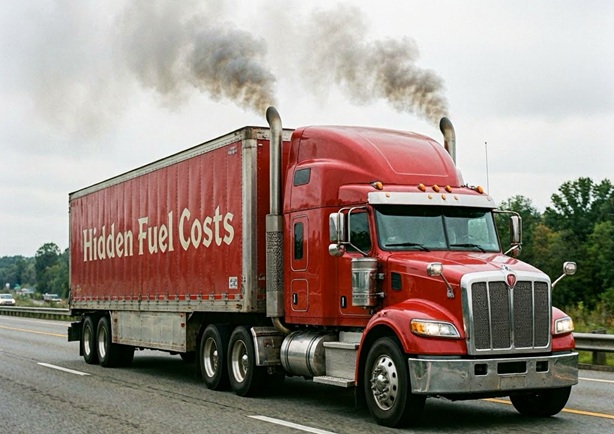
For years, fleet managers have accepted that mechanical problems eventually lead to higher operating costs. What has been more difficult to determine is exactly how much those problems cost—and which components have the greatest financial impact before a failure occurs.
 New developments in fleet analytics and artificial intelligence are beginning to provide answers.
Recent research on heavy-duty commercial vehicles indicates that emissions aftertreatment systems, including diesel particulate filters (DPFs) and selective catalytic reduction (SCR) systems, can significantly affect fuel consumption long before warning lights illuminate or vehicles break down.
The findings reflect a broader trend emerging across the fleet industry: the use of AI-driven analysis to transform vehicle data into measurable business intelligence.
Looking Beyond Traditional Diagnostics
Dozens of variables influence fuel economy. Vehicle type, engine size, driver behavior, terrain, load weight, weather conditions, speed, and idling habits all affect fuel consumption.
Because of these variables, isolating the effect of mechanical condition has historically required extensive engineering analysis.
 Advances in machine learning are changing that process. Modern fleet intelligence platforms can analyze thousands of vehicle operating days and hundreds of sensor inputs simultaneously, building predictive models that estimate a vehicle’s fuel consumption under specific operating conditions.
By comparing expected fuel usage with actual consumption, analysts can identify what some researchers call a “fuel gap”- a difference that may be due to mechanical degradation rather than driving conditions.
Separate models for driving efficiency and idle consumption provide an even clearer picture, helping fleets distinguish operational factors from maintenance-related issues.
After-treatment Systems Emerged as a Major Factor
Industry veterans have long known that clogged DPFs and malfunctioning SCR systems reduce efficiency. What has been missing is the ability to quantify that impact.
 Recent analysis indicates that vehicles with degraded aftertreatment systems consistently consumed more fuel than comparable vehicles under similar conditions.
Among the findings:
- Increased fuel burn while driving compared with healthy vehicles.
- Higher idle fuel consumption even when engines are performing minimal work.
- Daily fuel losses can add up to substantial annual expenses across larger fleets.
For trucks operating typical daily routes, the additional fuel consumption can translate into meaningful costs when multiplied across multiple vehicles.
While the exact numbers vary by application, duty cycle, and fuel prices, the research reinforces a message that many fleet professionals already understand: the health of emissions systems affects far more than compliance.
Why DPF and SCR Conditions Matter
The underlying mechanics are relatively straightforward.
 A restricted diesel particulate filter increases exhaust back pressure, forcing the engine to work harder. Likewise, SCR-related issues can trigger more frequent regeneration events, which require additional fuel to burn accumulated soot.
Over time, these effects create a steady efficiency penalty.
Interestingly, researchers found that excess fuel consumption was detectable even during idle periods. Because idle conditions involve fewer variables, abnormal fuel use at idle may be one of the clearest indicators that a mechanical issue is developing.
A New Form of Early Warning
One of the most intriguing implications for fleet managers is the ability to detect problems before traditional diagnostics can.
Historically, maintenance teams have relied on fault codes, warning lights, and driver complaints. AI-driven analytics add another layer of visibility by monitoring changes in fuel performance.
 A vehicle that begins consuming more fuel than comparable units under similar conditions may be signaling the early stages of an aftertreatment issue—even before a diagnostic trouble code is set.
This approach could enable fleets to:
- Identify developing problems sooner.
- Prioritize maintenance resources more effectively.
- Reduce unplanned downtime.
- Validate whether repairs restored expected performance.
In effect, fuel consumption itself becomes another diagnostic tool.
The Broader Shift Toward Predictive Fleet Intelligence
The significance of this trend extends beyond emissions systems.
Industry experts increasingly view AI as a means to uncover hidden economic impacts across the vehicle lifecycle.
Similar analytical techniques could eventually be applied to:
- Tire degradation.
- Brake wear.
- Transmission efficiency losses.
- Cooling system performance.
- Battery health and EV component monitoring.
Rather than waiting for components to fail, fleets are moving toward continuously measuring how asset condition affects operating costs.
The approach marks a shift from reactive maintenance to predictive maintenance—and from isolated vehicle data to enterprise-level operational intelligence.
Recommended Actions for Fleet Managers
 As predictive analytics become more accessible, fleet leaders may want to:
- Review aftertreatment maintenance practices. DPF cleaning intervals and SCR inspections may have a greater impact on fuel budgets than previously recognized.
- Monitor idle performance. Unexpected increases in idle fuel consumption may signal emerging mechanical issues.
- Integrate maintenance and fuel data. Combining these datasets can reveal relationships that are difficult to identify when examined separately.
- Evaluate predictive analytics capabilities. Many telematics and maintenance platforms are expanding their AI-powered diagnostic features.
- Measure repair outcomes. Tracking fuel performance before and after repairs can help determine whether maintenance investments are delivering the expected results.
Turning Data into Decisions
Commercial vehicles already generate enormous amounts of operational data. The challenge facing fleets is no longer collecting information—it is extracting actionable intelligence from that data.
As AI-powered fleet analytics mature, the industry’s focus is shifting from simply identifying failures to understanding the hidden costs that arise long before failures occur.
For fleet managers under constant pressure to control costs, that shift may prove just as valuable as the data itself.
 About the author
As Questar Vice President for Sales, North America, Aaron Howell is leading the AI fleet maintenance developer in its newly established NA division. Howell is an industry veteran known for his contributions to fleet management and telematics companies that have become segment frontrunners.
To find out how Questar’s AI-powered predictive analytics can help improve the health of your fleet, click here.