By Ed Pierce, Fleet Management Weekly
July 1, 2026
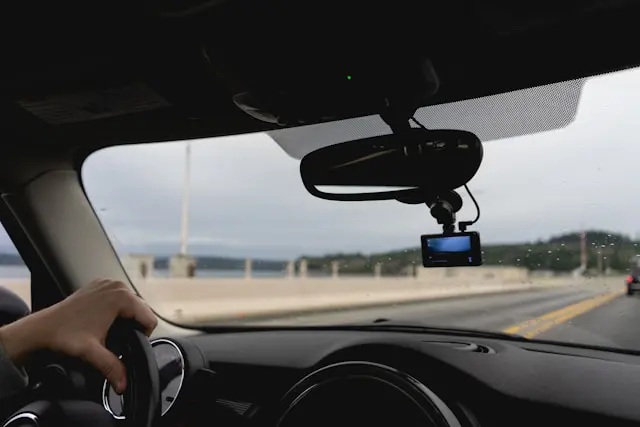
Fleet dashcams have become nearly ubiquitous. They record collisions, exonerate drivers, support coaching programs, and provide critical evidence when claims arise.
Yet despite millions of cameras operating on North American roads every day, most fleets still learn about many crashes the old-fashioned way: through a phone call from a driver hours—or sometimes days—after the incident occurs.
That delay carries a significant cost.
Storage fees accumulate. Tow charges increase. Critical evidence can disappear. Witnesses become harder to locate. Liability investigations start later. Vehicles remain out of service longer than necessary.
 A new artificial intelligence platform developed by InsureVision aims to change that equation by transforming dashcam footage from a passive recording into an active source of crash intelligence.
The company’s VisionScore™ technology is designed to identify crashes, estimate severity, and initiate First Notice of Loss (FNOL) notifications within minutes of an incident—using the video itself rather than traditional vehicle sensors.
 The technology recently took a major step toward widespread adoption when InsureVision announced that its VisionScore platform had been licensed by Waylens, a provider of AI video telematics solutions. Through a cloud-based integration, the capability is being deployed across approximately 150,000 fleet cameras throughout North America without requiring fleets to install new hardware.
For fleet operators increasingly focused on safety, liability management, and rising insurance costs, the development could signal the next evolution of video telematics.
The Costly Gap Between a Crash and a Claim
The challenge InsureVision seeks to address is surprisingly common.
According to industry data cited by the company, only about 9% to 13% of policyholders provide notice of a loss while still at the accident scene. In many cases, insurers are not notified for five to ten days after an incident occurs.
That lag creates a costly blind spot.
 Research from Agero estimates that storage and secondary towing expenses average approximately $950 per claim, contributing an estimated $3 billion in annual costs across the insurance industry. With vehicle storage fees commonly running $50 to $60 per day, delays alone can add hundreds of dollars to the cost of a claim before any repairs begin.
For commercial fleets, the impact extends beyond direct claim expenses.
Every hour between an accident and notification creates additional operational risk. Damaged vehicles may remain stranded longer than necessary. Fleet managers lose valuable time to secure evidence and document the scene. Safety departments have fewer opportunities to investigate incidents while information is still fresh. In severe cases, legal exposure can increase before decision-makers even know a crash has occurred.
The result is a problem that affects insurers, fleet operators, and drivers alike.
Why Traditional Crash Detection Misses Important Events
Many fleets assume their video telematics systems already solve this challenge.
 In reality, most existing crash-detection platforms rely heavily on accelerometers and G-force thresholds to determine whether an accident has occurred.
While effective in some situations, that approach has limitations.
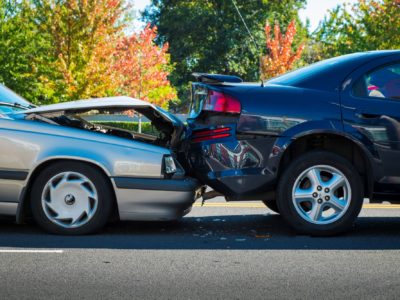
A severe pothole strike or abrupt braking maneuver can trigger a false alert. Meanwhile, low-speed parking lot collisions, backing accidents, sideswipes, and other incidents may generate relatively little deceleration and go completely undetected.
Fleet safety managers are often forced into a difficult balancing act.
Increase sensitivity and the system produces large numbers of alerts that require review but , for the most part, provide little operational value. Lower the threshold and the platform may miss incidents that carry meaningful financial consequences.

Mark Miller
According to InsureVision founder and CEO Mark Miller, the issue is not a process failure but a technology limitation.
“We worked with a large fleet whose own team told us only about 30% of their crashes were showing up in the system. So where are the other 70%? They’d turned the sensitivity right down to stop the flood of alerts, which means it now takes a real shake to trigger anything. But you don’t need a big jolt to have a serious incident. Nudge a cyclist at low speed, and there’s almost no deceleration, while the person on the bike is badly hurt. That’s exactly the kind of event a sensor threshold misses, and the video catches.”
Rather than relying primarily on motion sensors, VisionScore analyzes the actual dashcam footage.
 The system uses advanced transformer-based artificial intelligence models to examine what occurred before, during, and after an event. By interpreting visual information directly from the video stream, the platform can determine whether a crash occurred and estimate severity based on what it sees rather than what an accelerometer detects.
The goal is to provide fleets and insurers with confirmation of an incident within minutes instead of days.
No Replacement of Hardware
Gurinder Dillon, Founder and CEO of Otto Cars, which supports private hire drivers across the UK with flexible ownership and rental plans and is one of InsureVision’s customer, said “we already had cameras in every vehicle, so the appeal was putting a software layer over what we owned rather than replacing hardware.
 In dense urban driving the events that matter most often carry very little force, so to catch them you run at full sensitivity, and the volume explodes. We have gone from around 500 road-facing clips a day to as many as 30,000. No team could watch that. Having every clip scored automatically, with the serious ones pushed to the top, is the only thing that makes it workable. That feeds into the thing we care about most: getting passengers home safely.”
Moving Beyond Telematics to “Enviromatics”
The company’s broader vision extends well beyond crash detection.
InsureVision describes its approach as “enviromatics”—a combination of traditional telematics data and environmental context captured through video.
 Traditional telematics systems excel at measuring vehicle activity. They can identify speeding, hard braking, rapid acceleration, aggressive cornering, and other driving behaviors. What they often struggle to determine is whether those actions represent poor driving decisions or appropriate responses to real-world conditions.
A harsh braking event may indicate distracted driving. It may also reflect a driver successfully avoiding a pedestrian, animal, or unexpected hazard.
Without context, both events can appear identical in the data.
Video changes that equation.
By analyzing roadway conditions, surrounding traffic, vehicle interactions, and driver behavior, AI can provide a more nuanced understanding of risk than conventional telematics metrics alone.
That distinction is becoming increasingly important as fleets seek more effective ways to identify elevated-risk drivers before accidents occur and as insurers search for better tools to predict claims exposure.
Turning Footage Into Actionable Intelligence
The promise of video telematics has always extended beyond simply recording events.
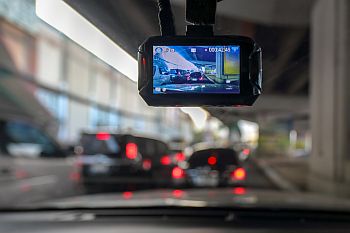 Fleet operators have long invested in cameras because they provide objective evidence when incidents occur. However, reviewing footage remains a largely reactive process. Someone must first know an event happened before the video becomes useful.
InsureVision’s approach seeks to reverse that sequence.
Instead of waiting for a manager, safety professional, or insurer to review footage after an incident, the system analyzes video continuously and automatically identifies potential crashes.
For fleets, that could translate into faster vehicle recovery, quicker claims handling, reduced administrative workload, and improved communication between drivers, fleet managers, and insurers.
The implications are particularly significant in an environment where insurance costs continue to rise and litigation remains a growing concern.
 Commercial auto insurance has struggled with profitability for much of the past decade, while large jury verdicts have increased the financial stakes associated with serious accidents. As claims severity rises, insurers and fleets are both searching for ways to improve risk management and accelerate claims resolution.
Earlier access to accurate crash information may be one of the most practical opportunities available.
Validation and Early Results
InsureVision’s technology has undergone independent review by transportation safety and behavioral science experts, including Dr. Neale Kinnear and Dr. Johnathon Ehsani.
 The company reports that trials involving approximately 2,850 professional drivers demonstrated a threefold improvement in predicting at-fault claims compared with traditional telematics approaches. According to InsureVision, combining video-based environmental analysis with conventional telematics data generated substantially greater predictive value than relying on harsh-braking events and similar metrics alone.
While broader industry adoption and long-term results remain to be seen, the findings suggest that video may offer insights into risk that traditional sensor-based systems cannot capture independently.
That possibility has attracted attention from insurers, telematics providers, and fleet operators seeking more accurate ways to assess risk.
What Fleet Managers Should Watch
For fleet professionals evaluating emerging technology, the most important question may not be whether artificial intelligence can identify a crash.
The more relevant question is whether it can help fleets make better decisions faster.
- Can it reduce storage and towing expenses?
- Can it accelerate claims investigations?
- Can it shorten vehicle downtime?
- Can it identify emerging driver-risk patterns before accidents occur?
- Can it help insurers price risk more accurately and reward safer fleet operations?
Those are the metrics that ultimately matter.
 Adds Mark, “If you run a fleet, ask your provider two questions. First, does the system throw false positives? Almost everyone admits it does. Second, do your driver safety scores actually predict claims? Run them against your own loss history. With enough vehicles, most fleets find the honest answer is no. These are good compliance tools, but a score that doesn’t track who actually crashes isn’t measuring risk.”
The deployment of VisionScore across Waylens’ installed camera base provides one of the industry’s first opportunities to test those questions at significant scale.
The Next Chapter for Video Telematics
The commercial fleet industry has spent the past decade installing cameras.
The next decade may be defined by what fleets can learn from the footage those cameras already collect.
 As artificial intelligence becomes more sophisticated, the role of the dashcam appears to be expanding from witness to analyst—from a device that records events to a platform that interprets them.
If technologies such as VisionScore deliver measurable operational and financial benefits, fleet managers may soon evaluate camera systems not by the quality of the video they capture, but by the quality of the decisions they help organizations make.
For an industry facing rising insurance costs, mounting litigation exposure, and increasing pressure to improve safety performance, that shift could prove far more valuable than the camera itself.
To learn more about InsureVision and VisionScore, click here.
 About the author
Fleet marketing expert and consultant Ed Pierce is a contributing editor at Fleet Management Weekly. He can be reached at 484-957-1246 or [email protected].