(Photo: Scott Davidson, LinkedIn)
By Fleet Management Weekly Staff
November 6, 2024
Fleets choose to electrify for many different reasons: sustainability goals, regulatory compliance, and cost savings, to name a few. But the process of electrification is more straightforward than said or done. Specific vehicles are better suited to swap out with EVs than others, and navigating the labyrinth of vehicles, chargers, and solutions can be challenging.
Revolv can help fleet electrification transition by reducing operational complexities and risks, minimizing upfront costs while maximizing long-term savings, and ensuring a smooth and timely transition. Their holistic approach to electrification takes the burden off of fleets and gives them the freedom to electrify confidently.
 While environmental considerations initially drove electrification, the evolution of EV technology and increased regulations make it an essential economic solution for the future. We asked Scott Davidson, CEO of Revolv to detail the company’s role in the electrification transition:
What does the company do, and why does it matter to fleets?
Revolv is focused on helping commercial fleets across the United States move more quickly and confidently toward electrification. We do that by borrowing a proven business model in the solar industry where businesses purchase performance instead of products. For fleets that means measuring success in terms of cost savings, operational effectiveness, and environmental impact.
We bundle all of the hardware, software, and services into a complete full-service solution so that fleets can focus on their daily operations. We reduce the cost, complexity, and risk of deploying EVs.
You have deployed 20 different EV sites in 10 California counties. Tell me about some of the lessons that you have learned from them.
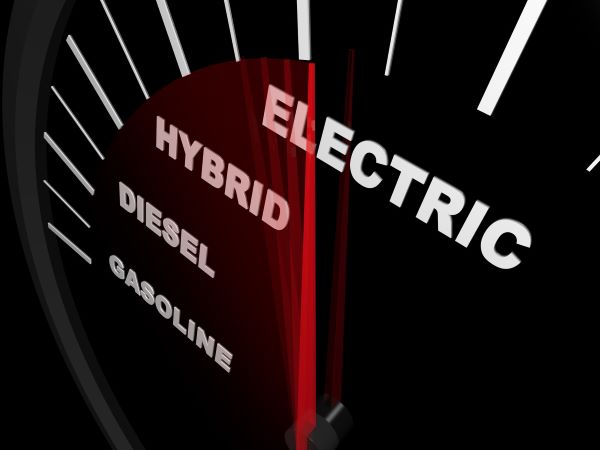 I think we’ve learned four things. One is that moving slowly towards electrification has a cost that is rising. The second is that successful fleet programs essentially take a systems-level approach. Third, it takes a village of people to bring these projects to life–both external partners and internal stakeholders. The last thing we’ve learned is that while many people think that putting vehicles into operation is the end, it’s just the beginning.
It sounds like you have found your sweet spot is medium-duty for fleets.
We have found that medium-duty applications are ideally suited for electrification for a few reasons. First, these carry light payloads using predictable return-to-base routes. A smaller battery size reflects fewer charging needs. The difference between an EV medium-duty vehicle and an ICE B2 vehicle is narrower than in large class seven or eight categories.
These factors combine to create a compelling economic opportunity for fleets to transition faster without compromising on cost or daily operations. The fact that they are zero emissions has to be an ancillary benefit, not the core reason why they electrify.
Tell us more about the systems-based approach.
Many people in the marketplace only sell parts of the solution – vehicles, chargers, services. What fleets care about is performance, particularly economic and operational performance.
 To do that, you have to consider the space between the solutions as the most valuable piece. Integrating solutions in the landscape is where EVs traditionally have suffered the most friction. We’re increasingly going to start hearing fleets talk about how a systematic approach is the most important thing to realize in their electrification objectives.
What might we expect when considering decarbonization over the next decade?
To date, the benefits of electrification have been mainly talked about through the environmental lens. What will quickly change over the next two to three years is the realization that they’re a better economic and operational solution for fleets. We’re seeing this from large fleets like Amazon, UPS, and Pepsi – they’re investing in electrification as a core capability of their business because they know EVs will be a better economic solution in the near future.
I’ll tell you how that will come to life. Currently, EVs are more expensive in capital cost, and their performance is less than that of an ICE vehicle. We’re seeing a dramatic reduction in the cost of batteries, spurred by many different sectors. Technology is also increasing in performance, and the cost of alternatives is rising due to increased regulations. So, you have both sticks in the form of regulation and carrots in the form of incentives.
 Those forces are starting to come together in an accelerated timeframe, which means we can deliver cost parity today in specific applications and vehicles. The market is expanding quickly and will arrive much faster than fleets anticipate. Right now, a lot of buying behavior is driven by sustainability. Still, it’s assumed the market will switch to the point where people buy because it’s in their economic interest. That will lead to an acceleration across all markets in a very orderly fashion.
Do you have a success story that you can share with us?
Our success is reflected in that 80% of our customers have bought from us a second time, some over multiple sites. We’ve learned that we’re competing primarily against fleets, trying to do it independently. Most of our customers have done this and recognized that it’s more complicated than it looks, so they fully value what we’re bringing to the table for them.
We’re most proud of starting with small vehicle pilot projects and quickly scaling. Our largest customer started with a 2-vehicle project and quickly expanded to over 60 vehicles across 9 projects throughout California. We’ve shown our fleet customers how they can focus on their business and allow us to help them achieve their objectives.
 Many fleets recognize the need to electrify, but it requires a skillset they don’t have the resources to build internally. Success comes when we sit on the same side of the table as our customers, helping them achieve their goals and objectives because our incentives are aligned with theirs. That’s the thing I’m personally most proud of – what we’ve built over the last four years. I think the wind is behind us and will only build over time.