By Rachael Plant, Senior Content Marketing Specialist, Fleetio
April 24, 2024
Expanding a business requires meticulous planning and strategic decision-making, as growth comes with its fair share of challenges, particularly when it comes to a business’s fleet. Yet, as businesses expand their operations, the need to scale their fleets becomes increasingly important. As companies set their sights on growth, labor and operational costs across the entire organization need to be considered, and fleet is one of — if not the — largest of these expenses.
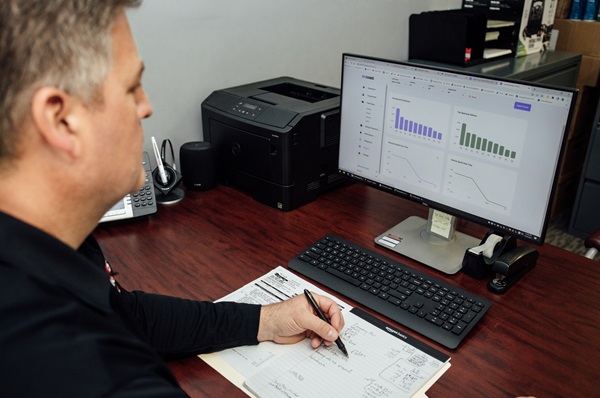
Businesses can use historical fleet data during growth planning to determine the number of assets needed — whether vehicles, equipment, or labor — to match growth projections.
Considerations When Growth Planning
Ideally, growth planning should align with short- and long-term business goals as well as with industry demand to help promote productive and sustainable growth. Analyzing revenue projections and market trends can help businesses forecast demand more accurately when evaluating the scope of resources needed to support growth, including employees, fleet assets, equipment, and supporting software systems.
 While each of these components plays a vital role in facilitating expansion and meeting the demands of a growing operation, balancing the costs of acquiring and maintaining these resources against projected revenue increases is essential to ensure financial viability and avoid overextension. When scaling a business, there are several factors to consider, including:
- Analyzing growth projections: Analyzing revenue projections and capacity needs involves forecasting demand, identifying market trends, and projecting revenue growth over time. Consider economic factors — such as projected consumer spending in the market you serve — as well as how to tailor growth to the business’s goals.
- Determining the scope of resources needed: Scaling a business requires a careful assessment of resources, from employees and fleet assets to supporting software. Historical productivity data can help shine light on current operational inefficiencies caused by understaffing, high demand, poor communication, and more. Taking stock of current inefficiencies allows businesses to get a better idea of where support is needed for sustainable growth.
- Assessing the cost of growth resources: Businesses should weigh the expenses associated with acquiring and maintaining resources against projected revenue increases to ensure financial viability.
Fleet Costs and Scaling
From asset maintenance and fuel costs to driver behavior and downtime, managing a fleet can quickly become a financial burden if not carefully monitored and optimized. Fortunately, businesses can leverage historical fleet data to gain valuable insights into their operations and identify areas for improvement, growth, and budgetary flexibility.
 One way to do this is by optimizing asset maintenance schedules and lifecycles based on historical service data. This helps reduce downtime and extends the useful life of fleet assets, decreasing service costs and extending replacement schedules. Similarly, monitoring fuel consumption trends and addressing driver behavior issues can help minimize fuel waste and reduce overall operating costs. These types of cost reductions allow for budgetary flexibility during growth.
When looking to optimize fleet operations and understand where and how to cut fleet costs responsibly, consider the following:
- Historical fleet data analysis: Historical fleet data serves as a valuable tool for assessing high-cost areas and operational inefficiencies by analyzing such metrics as maintenance costs, fuel consumption, productivity, downtime, and total cost of ownership. This data can surface assets with the highest and lowest return on investment (ROI) to ensure the fleet is procuring high-value assets and avoiding high-cost scenarios.
- Asset maintenance optimization: Leveraging historical service data enables businesses to optimize asset maintenance schedules. Identifying patterns and trends in maintenance needs can help fleets proactively address issues, reduce downtime, and extend the lifespan of their fleet assets.
- Fuel consumption monitoring: Fuel costs are a significant expense for fleets. Through historical fuel use analysis, businesses can monitor fuel consumption trends, identify discrepancies, and implement strategies to improve fuel efficiency, such as route optimization, driver training programs, or improved preventive maintenance (PM) schedules.
- Driver behavior improvement: Historical driver behavior data provides insights into cost-increasing actions, such as speeding, harsh braking and acceleration, and excessive idling. Fleets can minimize fuel waste and misuse, reduce asset wear and tear, and better control fuel spend by addressing these behaviors.
Making Room in the Budget
 During growth planning, businesses can optimize budgetary flexibility by evaluating high-cost centers within their fleet operations. Identifying areas of inefficiency or overspending allows for correction, after which fleets can reallocate resources to more productive initiatives or invest in technologies and solutions that drive long-term cost savings, like fleet management software (FMS). FMS integrates with other fleet and business solutions and automatically collects, consolidates, and aggregates data for robust operational insights and precision cost management.
Business and fleet growth require a data-driven approach that leverages historical data to inform decision-making and drive sustainability. By analyzing past performance, identifying areas for improvement, and optimizing resource allocation, businesses can position themselves for responsible growth and long-term success.
About the Author
Rachael Plant is a senior content marketing specialist for Fleetio, a fleet management software company that helps organizations track, analyze, and improve their fleet operations. For more info, visit fleetio.com.