
Truemag

  • Newsletters
  • Thought Leadership
  • Mobility
  • Safety
  • Work Trucks
  • Videos
  • Home
  • Subscribe
  • Contact Us
  • Media Kit
  • Who We Are

40 years after OPEC oil embargo – and the problem hasn’t been solved yet

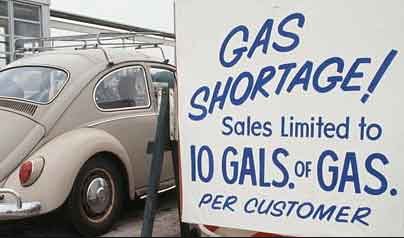
October 17th saw the 40th anniversary of the oil embargo by the Organization of the Petroleum Exporting Countries (OPEC) – a six month embargo that cut the supply of oil to the US and skyrocketed gasoline prices. The days of 25 cents per gallon gasoline were over and the coming years would see desperate attempts to solve the problem. The 1973 embargo started right after the Yom Kippur war was launched, and was spurred by US support for Israel; the second gasoline crisis in 1979, again driving up pump prices and forcing drivers to wait in long lines to fill their tanks, was triggered by another Middle East crisis – the takeover of the US embassy in Iran.

For Keith Crain, editor-in-chief of Automotive News, it was the end of innocence – when automakers had been competing to provide the biggest and best cars to drivers and mileage didn’t really matter at all. The OPEC oil embargo changed all of that; General Motors president Ed Cole vowed to raise the automakers corporate average fuel economy (CAFE) by 50% from 12 mpg to 18 mpg within a decade. The US Congress thought it was very good idea and raised the bar even higher – CAFE was to be 27.5 mpg by the 1985 model year, though that did not happen. For Peter Ward, then with the California Energy Commission, the 1973 oil embargo was the watershed, defining moment illustrating the power of the oil cartel on global economics and clarifying the necessity for alternative fuels.

There were other watershed moments taking place after the initial OPEC embargo….

• “Non-OPEC” oil field drilling started to break dependence on OPEC supply, led by drilling in the North Sea and Alaska.
• The Keystone XL pipeline fight had a predecessor with Alaska’s Prudhoe Bay oil field. It had been stopped by environmentalists in the late 1960s, but Congress approved the pipeline that would eventually add up two million barrels a day to the US supply.
• Alternatives to oil took off – nuclear power and coal became important in electric power stations. Solar energy saw a startup phase that didn’t take hold until very recently.
• Import cars stated being taken seriously in the Detroit 3-dominated US market. Japanese small cars provided the fuel economy, and owners started expecting their cars to be more reliable and long lasting from their experience with these cars.
• In 2008, the US (and the rest of the world) once again experienced the power of oil on the economy. Oil and transportation fuel prices skyrocketed in August 2008; within a month, the Lehman Brothers debacle spurred the Great Recession, and the dramatic oil price increase from the previous month was thought to be instrumental in the recession’s tipping point being passed in September.
• There’s a still a long ways to go, but oil supply disruption and skyrocketing pump prices continue to be a very motivating force.

Oct 26, 2013tedroberts
Truck Makers in Federal Appeals Court Over EPA ComplianceNADA Commercial Vehicle Market Update - October 2013
Recent Posts
  • IIHS Crashworthiness Tests Save Nearly 50,000 Lives Since Program’s Launch
  • Hyundai Unveils New ‘Plasma Care UVC’ Cabin Sanitizer
  • Right-To-Repair Is Already Rewriting What American Owners Are Allowed To Fix
  • New Guide from Utilimarc: Are You Replacing Vehicles at the Right Time?
  • IMPROVLearning: How Comedy, Behavioral Science and AI Improve Fleet Safety
  • Launch of RoadFlex Direct Puts Fleets in Control of Their Fuel Data With a New Open API Platform
  • Why the Traditional Vehicle Ordering Cycle No Longer Works
  • Improving Productivity with AI: Turning Fleet Data into Faster Decisions
  • JD Power: New Vehicle Quality Scores Improve; Some Connectivity Issues
  • NHTSA Launches Commonsense Updates to Brake Pedal Requirements for AVs
ASSOCIATION NEWS
How AFLA Is Positioning Itself for the Future of Fleet Mobility
Last Chance to Save: Register for NAFA’s Maintenance Workshop
‘Raise Your Hand and Get Involved’
NAFA Names 2026 Class of Fellows, Honoring Leaders in Fleet Management
Award Winners Honored at NAFA I&E
2026 NAFA I&E Seeks to Change Perceptions, Invigorate Fleets
NAFA Announces Lineup for Media Day at I&E 2026: Industry Leaders to Showcase the Latest Innovations
TECHNOLOGY
Hyundai Unveils New ‘Plasma Care UVC’ Cabin Sanitizer
Improving Productivity with AI: Turning Fleet Data into Faster Decisions
Fleet Operations Are Changing – The Industry Needs to Evolve With Them
AI-Powered Vehicle Inspections Move Beyond the Checklist
Motive’s New Workforce Capabilities Aim to Improve Performance, Automate Rewards
AI + Human Insight: Why Fleet Leaders Need Both to Win in 2026
NTSB Finds Automation Overreliance Contributed to Two Fatal Ford BlueCruise Crashes
CONFERENCES & WEBINARS
2026 NETS Strength IN Numbers Conference: Early Bird Rates!
AFLA 2026 – Keynotes Announced!
Private Fleets Flex at National Private Truck Council Conference
Free NAFA Webinar: Manage Your Fuel Cost Volatility
Registration Now Open for NETS Annual Conference
Early Bird Pricing for AFLA 2026 – Ending June 1
NAFA Online Seminar: Essentials of Fleet Management
INDUSTRY ANNOUNCEMENTS
Union Leasing Becomes Moventum Fleet Management as 70-Year Company Accelerates into Next Phase
Fleetio Wins Innovations Award at NAFA’s 2026 Institute & Expo
WIFM is heading to NAFA!
Cox Automotive Unveils Cox Fleet, Setting a New Standard for Fleet Uptime Nationwide
AFLA Canadian Fleet Professional of the Year Award: Nominations Open!
NAFA Webinar: Kickoff the 2026 100 Best Fleets Contest on December 4!
Join NAFA’s Free Fleet 101 Live Course

Fleet Management Weekly Newsletter Archive
Access to back issues of the FMW newsletter.

FMW Mobility
How mobility is rapidly changing the fleet management landscape.

Newsletter

Subscribe

FMW Fleet Videos
Video clips of industry leaders speaking on a variety of engaging hot topics in fleet.

2014-2020 © Fleet Management Weekly