by Jon LeSage
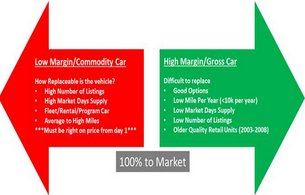
In the remarketing side of the business, there’s a balance point dealers are always working on achieving determining which cars are “commodity cars” and which are “gross cars.” Pricing is the key and that’s fluctuating by area markets and their supply of pre-owned models that might be getting strong demand.
Steve Miner of FirstLook examined four parts of making the pricing process work for remarketers.
1. Show me the data:
Looking at key data from current market inventory and historical market data – items like Market Days Supply and how the listings and their pricing trends are going in your market.
2. Unit cost does not matter:
In this day of transparent data from the internet, customers don’t care what you paid for the car. Making the right moves for gross margins and deciding whether or not you charge for reconditioning come into play.
3. Not all used cars are created equal:
Here’s where the classic question of determining whether “commodity cars” or “gross cars” determine pricing.
4. Price to sell:
The benchmark on the commodity side becomes “probability of sale,” while maximizing gross margins in those spaces where there’s not much competition for a particular make and model.