
Truemag

  • Newsletters
  • Thought Leadership
  • Mobility
  • Safety
  • Work Trucks
  • Videos
  • Home
  • Subscribe
  • Contact Us
  • Media Kit
  • Who We Are

Volvo Trucks May Have Created Historic Moment in Alternative Fuel Vehicles

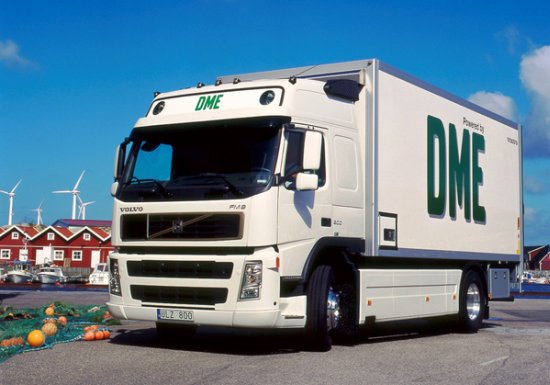
This could be a pivotal moment in the history of alternative fuel vehicles, up there with the Toyota Prius coming to America in 2000, and the Nissan Leaf and Chevrolet Volt being launched in late 2010. Volvo Trucks is commercializing dimethyl ether (DME)-powered heavy duty trucks in North America, and here are a few things you should know about it:

1. It has the performance qualities and energy efficiency of diesel but can lower CO2 emissions by 95%. Natural gas reduces greenhouse gas/C02 emissions 20% to 25% compared to diesel.
2. It produces no soot, which is a commonly referenced downside of diesel (including clean diesel). Because it produces no soot, no diesel particulate filter is necessary.
3. The fuel comes from a variety of domestic, sustainable sources such as biogas from food and animal waste, wasterwater treatment facilities, and landfills.
4. The fuel can also be tapped and converted from North America’s vast supply of natural gas. This would address the distribution, storage, and fueling challenges faced by natural gas vehicles – dealing with what NGVs face and also contributing to solutions, along with benefiting from a domestic fuel source that doesn’t have to be imported from a hostile overseas market.
5. The fuel is stored in lighter, simpler fuel tanks and lower psi systems than what’s needed for LNG and CNG systems. It’s similar to propane-powered vehicles in that regard.
6. DME has been on the market for years as an aerosol propellant in cosmetics and other household products. It’s a clean, non-toxic fuel.

It’s part of Volvo’s “Blue Power” alternative fuel strategy, and has been through ongoing US customer field testing of trucks powered by DME. It was demonstrated to an audience after being announced recently in Sacramento at the California state capitol building. The DME technology will be available in a Volvo D13 engine, the top-selling heavy-duty engine in the world.

Volvo Trucks is still committed to CNG and LNG offerings as well – its lineup already includes CNG-powered Volvo VNM and VNL model daycabs. The company is also producing its own proprietary LNG engine in VNL daycabs and sleepers next year.

Blue Power was started in 2007 in Brussels when Volvo showcased seven commercial vehicles powered by seven different CO2-neutral fuels, one of which was DME. More recently, Oberon Fuels has developed small-scale production units that can cost-effectively convert biogas and natural gas into DME. The first of Oberon’s innovative production units will go online in June in California’s Imperial Valley region.

Will DME fuel and technology makes its way to light-duty passenger vehicles? There’s no word on that yet. AB Volvo split between cars and heavy trucks in 1999 when Ford bought the car division. Chinese company Geely Automobile bought Volvo Cars from Ford in 2010. Perhaps Volvo Trucks and Volvo/Geely could work together on it.

Jun 13, 2013tedroberts
Creating & Delivering a Great Customer Experience!Researchers See Aggressive Driving Takes Away Green Vehicle MPG Benefits
Recent Posts
  • IIHS Crashworthiness Tests Save Nearly 50,000 Lives Since Program’s Launch
  • Hyundai Unveils New ‘Plasma Care UVC’ Cabin Sanitizer
  • Right-To-Repair Is Already Rewriting What American Owners Are Allowed To Fix
  • New Guide from Utilimarc: Are You Replacing Vehicles at the Right Time?
  • IMPROVLearning: How Comedy, Behavioral Science and AI Improve Fleet Safety
  • Launch of RoadFlex Direct Puts Fleets in Control of Their Fuel Data With a New Open API Platform
  • Why the Traditional Vehicle Ordering Cycle No Longer Works
  • Improving Productivity with AI: Turning Fleet Data into Faster Decisions
  • JD Power: New Vehicle Quality Scores Improve; Some Connectivity Issues
  • NHTSA Launches Commonsense Updates to Brake Pedal Requirements for AVs
ASSOCIATION NEWS
How AFLA Is Positioning Itself for the Future of Fleet Mobility
Last Chance to Save: Register for NAFA’s Maintenance Workshop
‘Raise Your Hand and Get Involved’
NAFA Names 2026 Class of Fellows, Honoring Leaders in Fleet Management
Award Winners Honored at NAFA I&E
2026 NAFA I&E Seeks to Change Perceptions, Invigorate Fleets
NAFA Announces Lineup for Media Day at I&E 2026: Industry Leaders to Showcase the Latest Innovations
TECHNOLOGY
Hyundai Unveils New ‘Plasma Care UVC’ Cabin Sanitizer
Improving Productivity with AI: Turning Fleet Data into Faster Decisions
Fleet Operations Are Changing – The Industry Needs to Evolve With Them
AI-Powered Vehicle Inspections Move Beyond the Checklist
Motive’s New Workforce Capabilities Aim to Improve Performance, Automate Rewards
AI + Human Insight: Why Fleet Leaders Need Both to Win in 2026
NTSB Finds Automation Overreliance Contributed to Two Fatal Ford BlueCruise Crashes
CONFERENCES & WEBINARS
2026 NETS Strength IN Numbers Conference: Early Bird Rates!
AFLA 2026 – Keynotes Announced!
Private Fleets Flex at National Private Truck Council Conference
Free NAFA Webinar: Manage Your Fuel Cost Volatility
Registration Now Open for NETS Annual Conference
Early Bird Pricing for AFLA 2026 – Ending June 1
NAFA Online Seminar: Essentials of Fleet Management
INDUSTRY ANNOUNCEMENTS
Union Leasing Becomes Moventum Fleet Management as 70-Year Company Accelerates into Next Phase
Fleetio Wins Innovations Award at NAFA’s 2026 Institute & Expo
WIFM is heading to NAFA!
Cox Automotive Unveils Cox Fleet, Setting a New Standard for Fleet Uptime Nationwide
AFLA Canadian Fleet Professional of the Year Award: Nominations Open!
NAFA Webinar: Kickoff the 2026 100 Best Fleets Contest on December 4!
Join NAFA’s Free Fleet 101 Live Course

Fleet Management Weekly Newsletter Archive
Access to back issues of the FMW newsletter.

FMW Mobility
How mobility is rapidly changing the fleet management landscape.

Newsletter

Subscribe

FMW Fleet Videos
Video clips of industry leaders speaking on a variety of engaging hot topics in fleet.

2014-2020 © Fleet Management Weekly