Truemag

  • Newsletters
  • Thought Leadership
  • Mobility
  • Safety
  • Work Trucks
  • Videos
  • Home
  • Subscribe
  • Contact Us
  • Media Kit
  • Who We Are

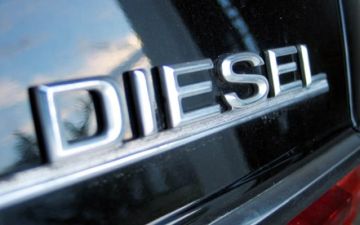
As the World Embraces Diesels, Americans Still Play Hard to Get

Looking to increase his fuel economy, Roderick Smith of Woonsocket, R.I., who works in information technology, bought a new Volkswagen Golf at the beginning of the year. Unlike most Americans, Mr. Smith opted for a model equipped with a diesel, rather than a gasoline, engine.

“It’s the quietest car I’ve ever owned,” he said.

“Quiet” and “diesel” are two words not usually seen together. When American consumers think of diesel-engine vehicles — if they think about them at all — other words most likely come to mind, like “noisy,” “smoky” and “slow.”

But that has changed. Today’s diesel engines run as clean as gasoline engines, get significantly better fuel economy and may even save their owners money in the long run. And, as Mr. Smith discovered, they are quiet, too.

Diesel-power vehicles have traditionally been offered by European manufacturers; about half of the passenger vehicles sold in Europe run on diesel fuel, compared with less than 1 percent in the United States. With gasoline still costing more than $6 per United States gallon in Britain, any solution that can increase fuel economy is welcomed.

So given a diesel’s improved fuel economy, lower emissions and better acceleration, why the anemic sales in the United States?

Price, for one. Diesel-power cars often cost a few thousand dollars more than their gasoline-power counterparts. Audi’s front-wheel-drive diesel A3, for example, is $2,700 more than its 1.8-liter gasoline equivalent. And Chevrolet’s diesel Cruze costs roughly $1,900 more than its equivalent with a gasoline engine.

Then there is the price of the fuel itself. Diesel usually costs more, and the price can vary widely within a few miles, often as much as one dollar per gallon. The reasons for higher prices vary: higher federal taxes, lower refining capacity or the competition for its use as heating oil.

In addition to the fuel’s higher price, many diesel vehicles, to keep emissions down, also require the periodic addition of an additive called AdBlue, typically through a filler hole next to the fuel line.

Despite the fuel savings, American consumers remain reluctant to buy diesel cars. But a recent study found that they might be missing out on savings in the long run. The University of Michigan Transportation Research Institute found in a study that once the total costs of ownership — including fuel, repairs and the residual value of the vehicle after a certain number of years — are factored in, diesel vehicles typically came out ahead.

Over a three-year period, for example, VW Jetta owners saved $3,128, while a VW Golf owner would save more than $5,000, according to the study, which was financed by the Robert Bosch company, a major auto supplier.

To see the original article, go to New York Times.

Feb 6, 2015connieshedron
New Vehicle Designs Make Zero Highway Deaths a Real PossibilityToyota to Debut Special Editions at Chicago Auto Week
Recent Posts
  • IMPROVLearning: How Comedy, Behavioral Science and AI Improve Fleet Safety
  • Improving Productivity with AI: Turning Fleet Data into Faster Decisions
  • National Safety Council Projects Increased Traffic Crash Risk during Fourth of July Weekend
  • Keep Every Heavy-Duty Maintenance Inspection on Track — Free Fullbay Checklist
  • Gain Data-Driven Insights into Commercial Vehicle Market Trends at Executive Leadership Summit
  • Last Chance to Save: Register for NAFA’s Maintenance Workshop
  • License Plate Cameras Are About to Start Tracking a Lot More Than Just Your Car
  • America’s Heavy EV Problem May End with Drivers Paying More
  • Trends in U.S. Drivers’ Perceptions and Attitudes Toward Vehicle Automation, 2019–2025
  • 2026 NETS Strength IN Numbers Conference: Early Bird Rates!
ASSOCIATION NEWS
Last Chance to Save: Register for NAFA’s Maintenance Workshop
How AFLA Is Positioning Itself for the Future of Fleet Mobility
‘Raise Your Hand and Get Involved’
NAFA Names 2026 Class of Fellows, Honoring Leaders in Fleet Management
Award Winners Honored at NAFA I&E
2026 NAFA I&E Seeks to Change Perceptions, Invigorate Fleets
NAFA Announces Lineup for Media Day at I&E 2026: Industry Leaders to Showcase the Latest Innovations
TECHNOLOGY
Improving Productivity with AI: Turning Fleet Data into Faster Decisions
Fleet Operations Are Changing – The Industry Needs to Evolve With Them
AI-Powered Vehicle Inspections Move Beyond the Checklist
Motive’s New Workforce Capabilities Aim to Improve Performance, Automate Rewards
AI + Human Insight: Why Fleet Leaders Need Both to Win in 2026
NTSB Finds Automation Overreliance Contributed to Two Fatal Ford BlueCruise Crashes
New AI Assistants Automate Fleet Data Analysis, Decision Making and More
CONFERENCES & WEBINARS
2026 NETS Strength IN Numbers Conference: Early Bird Rates!
AFLA 2026 – Keynotes Announced!
Private Fleets Flex at National Private Truck Council Conference
Free NAFA Webinar: Manage Your Fuel Cost Volatility
Registration Now Open for NETS Annual Conference
Early Bird Pricing for AFLA 2026 – Ending June 1
NAFA Online Seminar: Essentials of Fleet Management
INDUSTRY ANNOUNCEMENTS
Union Leasing Becomes Moventum Fleet Management as 70-Year Company Accelerates into Next Phase
Fleetio Wins Innovations Award at NAFA’s 2026 Institute & Expo
WIFM is heading to NAFA!
Cox Automotive Unveils Cox Fleet, Setting a New Standard for Fleet Uptime Nationwide
AFLA Canadian Fleet Professional of the Year Award: Nominations Open!
NAFA Webinar: Kickoff the 2026 100 Best Fleets Contest on December 4!
Join NAFA’s Free Fleet 101 Live Course

Fleet Management Weekly Newsletter Archive
Access to back issues of the FMW newsletter.

FMW Mobility
How mobility is rapidly changing the fleet management landscape.

Newsletter

Subscribe

FMW Fleet Videos
Video clips of industry leaders speaking on a variety of engaging hot topics in fleet.

2014-2020 © Fleet Management Weekly