Truemag

  • Newsletters
  • Thought Leadership
  • Mobility
  • Safety
  • Work Trucks
  • Videos
  • Home
  • Subscribe
  • Contact Us
  • Media Kit
  • Who We Are

U.S. DOT Proposes Speed Limiters for Large Commercial Vehicles

NHTSA.gov

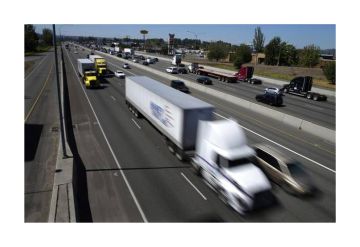
U.S. Transportation Secretary Anthony Foxx announced that the Department’s National Highway Traffic Safety Administration (NHTSA) and Federal Motor Carrier Safety Administration (FMCSA) propose equipping heavy-duty vehicles with devices that limit their speeds on U.S. roadways, and requiring those devices be set to a maximum speed, a safety measure that could save lives and more than $1 billion in fuel costs each year.

“There are significant safety benefits to this proposed rulemaking,” Foxx said. “In addition to saving lives, the projected fuel and emissions savings make this proposal a win for safety, energy conservation, and our environment.”

The Department’s proposal would establish safety standards requiring all newly manufactured U.S. trucks, buses, and multipurpose passenger vehicles with a gross vehicle weight rating more than 26,000 pounds to come equipped with speed limiting devices.

The proposal discusses the benefits of setting the maximum speed at 60, 65, and 68 miles per hour, but the Agencies will consider other speeds based on public input.

“This is basic physics,” said NHTSA Administrator Mark Rosekind. “Even small increases in speed have large effects on the force of impact. Setting the speed limit on heavy vehicles makes sense for safety and the environment.”

“Safe trucking moves our economy and safe bus operations transport our loved ones,” said FMCSA Administrator T.F. Scott Darling III. “This proposal will save lives while ensuring that our nation’s fleet of large commercial vehicles operates efficiently.”

Motor carriers operating commercial vehicles in interstate commerce would be responsible for maintaining the speed limiting devices at or below the designated speed for the service life of the vehicle under the proposal. While the maximum set travel speed will be determined in the final rule, estimates included in the proposal demonstrate that limiting heavy vehicles will save lives.

Requiring speed limiting devices could also save an estimated $1.1 billion in fuel costs and millions of gallons of fuel annually. The public is encouraged to submit their comments on the proposed rule at www.regulations.gov.

Aug 28, 2016connieshedron
One Curious Effect of the Recession May Bolster the Case for Driverless CarsStrictest and Most Lenient States on High Risk Drivers
Recent Posts
  • IMPROVLearning: How Comedy, Behavioral Science and AI Improve Fleet Safety
  • Improving Productivity with AI: Turning Fleet Data into Faster Decisions
  • National Safety Council Projects Increased Traffic Crash Risk during Fourth of July Weekend
  • Keep Every Heavy-Duty Maintenance Inspection on Track — Free Fullbay Checklist
  • Gain Data-Driven Insights into Commercial Vehicle Market Trends at Executive Leadership Summit
  • Last Chance to Save: Register for NAFA’s Maintenance Workshop
  • License Plate Cameras Are About to Start Tracking a Lot More Than Just Your Car
  • America’s Heavy EV Problem May End with Drivers Paying More
  • Trends in U.S. Drivers’ Perceptions and Attitudes Toward Vehicle Automation, 2019–2025
  • 2026 NETS Strength IN Numbers Conference: Early Bird Rates!
ASSOCIATION NEWS
Last Chance to Save: Register for NAFA’s Maintenance Workshop
How AFLA Is Positioning Itself for the Future of Fleet Mobility
‘Raise Your Hand and Get Involved’
NAFA Names 2026 Class of Fellows, Honoring Leaders in Fleet Management
Award Winners Honored at NAFA I&E
2026 NAFA I&E Seeks to Change Perceptions, Invigorate Fleets
NAFA Announces Lineup for Media Day at I&E 2026: Industry Leaders to Showcase the Latest Innovations
TECHNOLOGY
Improving Productivity with AI: Turning Fleet Data into Faster Decisions
Fleet Operations Are Changing – The Industry Needs to Evolve With Them
AI-Powered Vehicle Inspections Move Beyond the Checklist
Motive’s New Workforce Capabilities Aim to Improve Performance, Automate Rewards
AI + Human Insight: Why Fleet Leaders Need Both to Win in 2026
NTSB Finds Automation Overreliance Contributed to Two Fatal Ford BlueCruise Crashes
New AI Assistants Automate Fleet Data Analysis, Decision Making and More
CONFERENCES & WEBINARS
2026 NETS Strength IN Numbers Conference: Early Bird Rates!
AFLA 2026 – Keynotes Announced!
Private Fleets Flex at National Private Truck Council Conference
Free NAFA Webinar: Manage Your Fuel Cost Volatility
Registration Now Open for NETS Annual Conference
Early Bird Pricing for AFLA 2026 – Ending June 1
NAFA Online Seminar: Essentials of Fleet Management
INDUSTRY ANNOUNCEMENTS
Union Leasing Becomes Moventum Fleet Management as 70-Year Company Accelerates into Next Phase
Fleetio Wins Innovations Award at NAFA’s 2026 Institute & Expo
WIFM is heading to NAFA!
Cox Automotive Unveils Cox Fleet, Setting a New Standard for Fleet Uptime Nationwide
AFLA Canadian Fleet Professional of the Year Award: Nominations Open!
NAFA Webinar: Kickoff the 2026 100 Best Fleets Contest on December 4!
Join NAFA’s Free Fleet 101 Live Course

Fleet Management Weekly Newsletter Archive
Access to back issues of the FMW newsletter.

FMW Mobility
How mobility is rapidly changing the fleet management landscape.

Newsletter

Subscribe

FMW Fleet Videos
Video clips of industry leaders speaking on a variety of engaging hot topics in fleet.

2014-2020 © Fleet Management Weekly