Truemag

  • Newsletters
  • Thought Leadership
  • Mobility
  • Safety
  • Work Trucks
  • Videos
  • Home
  • Subscribe
  • Contact Us
  • Media Kit
  • Who We Are

Toyota Sees Role for Hydrogen Power in Heavy-Duty Truck Segment

The Detroit Bureau

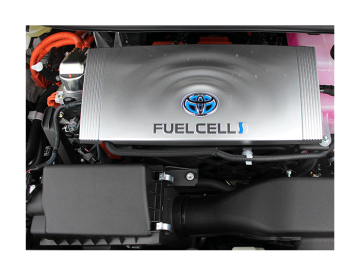
With the little Mirai model, Toyota is now one of three automakers selling fuel-cell vehicles in the U.S. market.

Now, the automaker is looking into potential heavier duty applications, including the possible of using hydrogen to fuel a fleet of zero-emissions trucks.

Such an approach could create a vast new market for hydrogen technology – and solve the problem that clean air proponents have had trying to figure out how to clean up truck emissions. Because of their size and weight, as well as range issues, current battery technology does not appear to be a good fit for large, long-haul trucks.

“Toyota has long maintained that hydrogen fuel cell technology could be a zero emission solution across a broad spectrum of vehicle types,” the Japanese maker said in a brief statement. “The scalability of this technology is enabling the automaker to explore a semi-trailer truck application for a California-based feasibility study.”

Fuel-cell vehicles rely on a system called a “stack” to combine pure hydrogen with oxygen from the air. That generates a flow of current that can be used to run the same motors found in a battery-electric vehicle.

The concept was first conceived in the 1850s, through fuel-cell technology only found serious application more than a century later, providing electricity for the Apollo moon craft. Automakers have been tinkering with hydrogen power for decades, but the recent launch of the Toyota Mirai, Honda Clarity and Hyundai Tucson Fuel-Cell Vehicle has kicked off the first serious effort at commercialization.

Toyota last month said it will begin selling hydrogen buses and will work with the Tokyo Metropolitan Government  to get a fleet of those vehicles into service ahead of the 2020 Olympics which will be held in the Japanese capital.

The latest announcement could take things a significant step further, Toyota saying it has formed a unit within its U.S. research and development facility to see if hydrogen power could be used on heavy-duty trucks.

Such a move could have significant advantages in terms of reducing air pollution across the U.S. According to the Union of Concerned Scientists, medium- and heavy-duty trucks produce about 20% of the greenhouse gases from the transportation sector. And though federal regulations have clamped down in recent years, trucks also produce a disproportionate amount of smog-causing oxides of nitrogen and particulates.

There are technical challenges, however, that Toyota will have to address, including the scalability of fuel-cell technology. The good news is that electric motors produce large amounts of load-pulling torque.

Read more of the original article at The Detroit Bureau.

Nov 20, 2016connieshedron
The Path to Results is Not a Straight LineFord Move, Cited as Victory by Trump, Has No Effect on U.S. Jobs
Recent Posts
  • IMPROVLearning: How Comedy, Behavioral Science and AI Improve Fleet Safety
  • Improving Productivity with AI: Turning Fleet Data into Faster Decisions
  • National Safety Council Projects Increased Traffic Crash Risk during Fourth of July Weekend
  • Keep Every Heavy-Duty Maintenance Inspection on Track — Free Fullbay Checklist
  • Gain Data-Driven Insights into Commercial Vehicle Market Trends at Executive Leadership Summit
  • Last Chance to Save: Register for NAFA’s Maintenance Workshop
  • License Plate Cameras Are About to Start Tracking a Lot More Than Just Your Car
  • America’s Heavy EV Problem May End with Drivers Paying More
  • Trends in U.S. Drivers’ Perceptions and Attitudes Toward Vehicle Automation, 2019–2025
  • 2026 NETS Strength IN Numbers Conference: Early Bird Rates!
ASSOCIATION NEWS
Last Chance to Save: Register for NAFA’s Maintenance Workshop
How AFLA Is Positioning Itself for the Future of Fleet Mobility
‘Raise Your Hand and Get Involved’
NAFA Names 2026 Class of Fellows, Honoring Leaders in Fleet Management
Award Winners Honored at NAFA I&E
2026 NAFA I&E Seeks to Change Perceptions, Invigorate Fleets
NAFA Announces Lineup for Media Day at I&E 2026: Industry Leaders to Showcase the Latest Innovations
TECHNOLOGY
Improving Productivity with AI: Turning Fleet Data into Faster Decisions
Fleet Operations Are Changing – The Industry Needs to Evolve With Them
AI-Powered Vehicle Inspections Move Beyond the Checklist
Motive’s New Workforce Capabilities Aim to Improve Performance, Automate Rewards
AI + Human Insight: Why Fleet Leaders Need Both to Win in 2026
NTSB Finds Automation Overreliance Contributed to Two Fatal Ford BlueCruise Crashes
New AI Assistants Automate Fleet Data Analysis, Decision Making and More
CONFERENCES & WEBINARS
2026 NETS Strength IN Numbers Conference: Early Bird Rates!
AFLA 2026 – Keynotes Announced!
Private Fleets Flex at National Private Truck Council Conference
Free NAFA Webinar: Manage Your Fuel Cost Volatility
Registration Now Open for NETS Annual Conference
Early Bird Pricing for AFLA 2026 – Ending June 1
NAFA Online Seminar: Essentials of Fleet Management
INDUSTRY ANNOUNCEMENTS
Union Leasing Becomes Moventum Fleet Management as 70-Year Company Accelerates into Next Phase
Fleetio Wins Innovations Award at NAFA’s 2026 Institute & Expo
WIFM is heading to NAFA!
Cox Automotive Unveils Cox Fleet, Setting a New Standard for Fleet Uptime Nationwide
AFLA Canadian Fleet Professional of the Year Award: Nominations Open!
NAFA Webinar: Kickoff the 2026 100 Best Fleets Contest on December 4!
Join NAFA’s Free Fleet 101 Live Course

Fleet Management Weekly Newsletter Archive
Access to back issues of the FMW newsletter.

FMW Mobility
How mobility is rapidly changing the fleet management landscape.

Newsletter

Subscribe

FMW Fleet Videos
Video clips of industry leaders speaking on a variety of engaging hot topics in fleet.

2014-2020 © Fleet Management Weekly