By Ed Pierce, Contributing Editor
All fleet managers can find value in the recently published Top Ten list of commercial fleet management trends that will impact asset tracking, operational efficiency, driver safety this year and in the years ahead. Developed by Rastrac, a leading provider of GPS tracking devices and remote asset tracking systems, the trends include:
1. Adoption of Electric Fleet Vehicles
With the auto industry and people now embracing electric vehicles (EVs), it is only a matter of time before some fleets begin using electric cars and trucks.
One of the biggest concerns for fleet management companies is the cost of phasing out old vehicles and bringing in new electric vehicles. Most experts forecast that EVs will be priced competitively with gasoline-powered cars in the next few years.
While there will still be an upfront cost, the amount of money saved on fuel will eventually make up for it. According to AAA, in January 2021, national fuel prices averaged $2.40 per gallon. Meanwhile, the national average cost of electricity was just $0.14 kWh. That kind of savings will quickly add up.
2. Advancements in Autonomous Vehicles
Autonomous vehicle (AV) technology is becoming a reality, too. While experts say we are still decades from wide-spread usage of AVs, they are still on many fleet managers’ radar because AV technology will increase driving hours, productivity, and profitability.
3. Increase in Remote Fleet Management
When COVID struck in early 2020, all but essential employees went into lockdown to help stop the spread of the disease. With software that provides real-time visibility across operations to monitor productivity and constant contact, remote fleet management can be an effective (and cost-effective) way to manage drivers.
4. Improved Safety & Sanitation
Since scientists predict more pandemics are coming, the current pandemic is helping is better prepared for the next one. Preparation for fleets means implementation of safety protocols. Measures such as adding sanitization measures on vehicle inspections and ensuring drivers have personal protection equipment (PPE) will help keep drivers, passengers, and customers safe, mitigating risks and avoiding exposure.
5. Expansion of 5G Technology

5G technology continues to roll out in 2021, and it’s poised to have a significant impact on fleet management, improving the speed of data transfer and response times, lowering costs, and boosting connectivity numerous applications, especially…
• More Efficient Routing. Fleet managers will be able to quickly alert drivers to emergency road conditions and re-route them through their fleet management software with no delays or downtime. Artificial intelligence (AI) will also be on hand to help.
• More Responsive Networks. This will improve fleet-wide communication between drivers, managers, and customers.
• Improved Sensors. Internet of Things (IoT) sensors will improve safety by keeping drivers in their lanes, helping them avoid collisions, and automatically calling 911 should an accident occur.
• Improved Vehicle Maintenance. 5G will be able to provide faster transmission between vehicle parts and software for real-time diagnostics.
• Real-time V2V Applications. These apps have the potential to significantly reduce the number of – and severity of – crashes. Every fleet vehicle will be able to share data on routes, speeds, and traffic, making every truck responsive to its surroundings.
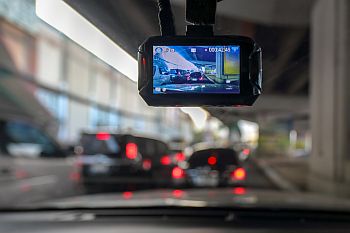
6. Improved Driving Monitoring with Dash-Cams
The National Highway Traffic Safety Administration (NHTSA) reports that in 2018 alone, there were 2,841 vehicular fatalities due to distracted driving.
Companies operating fleets have an enormous responsibility to increase the safety and efficiency of drivers to avoid serious incidents.
One way that companies and government agencies are trying to fight distracted driving is through the use of dashboard cameras. Using dash cams are a valuable tool towards maintaining driver accountability so that fleet assets and other drivers are left safe on the roads.
7. Greater Use of Solar Powered Fleet Tracking Devices
Engineers are constantly developing new technologies that run on solar power, and fleet tracking devices are no different. Solar powered fleet tracking devices offer many benefits, especially in terms of ROI.
8. More Fleet Data and Analytics
Fleet tracking allows for complete transparency concerning the conditions of fleet vehicles and driver behaviors.
Along with monitoring driver performance and providing route optimization, commercial fleet management software offers data and analytics on lane departures and whether a seatbelt is used; it also gives predictive maintenance analysis on areas of fleet vehicles that need attention.
9. Integration with Other Software Platforms (Through APIs)
A commercial fleet management trend that is expected to heavily improve software performance is using application programming interfaces (APIs) to integrate other software platforms with the fleet management software. The ability to use an API key to connect databases from outside sources not only expands the functionality of a fleet tracking device but offers deeper data analysis capabilities in reviewing the performance of your fleet vehicle and driver.
The range of software platforms that can integrate with fleet management software greatly extends the involvement fleet managers have in daily fleet operations, including such tasks as:
• Transmitting messages directly to a driver’s device
• Reviewing daily fuel expenditures through their fuel card
• Tracking a driver’s hours by punching in and out directly from their vehicle
10. Security for Fleet Management

A stolen commercial fleet vehicle can be a severe loss in both worker productivity and company funds. Installing a fleet tracking device in your fleet vehicle is the best way to reduce the risk of auto theft.
With Rastrac’s geofencing tool, you can be alerted either by text or email whenever a vehicle enters or leaves specific areas. This documented data also gives law enforcement details that can help them locate your fleet vehicle in the event that it is stolen.
One overlooked feature of fleet tracking devices is the starter disable function, which allows a fleet manager to disable the starter for a programmed period of time and then enable the starter at a programmed end time. It won’t stop the engine if it is already running, but the next time the ignition is turned, the vehicle will not start.
Rastrac can be reached at 12741 Research Blvd. Suite 500, Austin, TX 78759. Phone: (877) 680-1188.