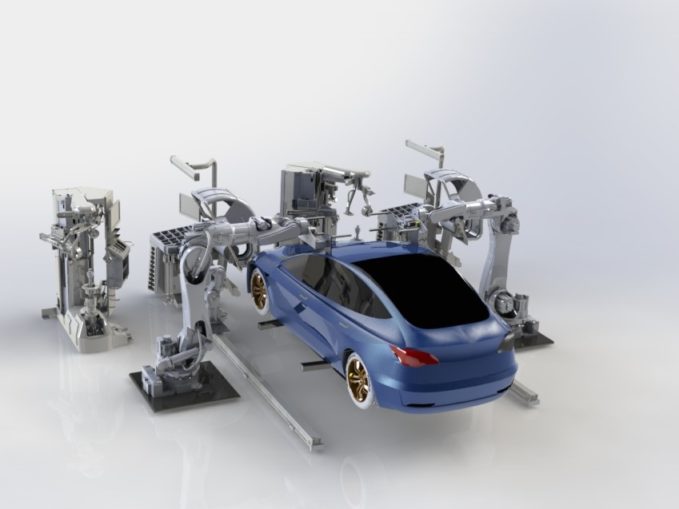
[Image reflects pre-production. Final production system will differ from the image]
The future of fleet may be about applying groundbreaking tech solutions to an often-overlooked part of a vehicle
 By Victor Darolfi, CEO of RoboTire
It’s not an understatement to say that fleet management is evolving almost daily, with industry decision makers tasked with evaluating, adopting and adapting to new trends and technologies. The future of fleet has never been more intriguing, as the promise of new tech has industry players working hard to evaluate where and how to dedicate resources to deliver the most bang for the buck in terms of new operational efficiencies.
Understanding the contours of this shifting landscape begins with appreciating its most prominent features: the challenges fleet managers face, the opportunities that exist for impactful change, and the tech-driven solutions with the greatest potential to make that change a reality.
The bumpy road
The single biggest operational priority for fleet-management professionals—and, not coincidentally, their single greatest challenge—is keeping their vehicles on the road. There is a direct connection between vehicle up-time and bottom-line financial results.
The US Postal Service alone operates more than 230,000 vehicles driving 4.3 million miles—in one day. The maintenance demands for that one institution alone are astronomical. Most large fleets simply don’t have the bandwidth to take care of those demands in-house. Exacerbating the issue is the fact that drivers of fleet vehicles are compensated to drive—not to service or maintain their vehicles, and are consequently less cognizant and generally less conscientious (compared to private vehicle owners) when it comes to vehicle service. The maintenance burden falls on fleet management professionals, who typically have to rely, by necessity, on after-hours maintenance and service options for their vehicles. They also have to compensate for downtime by increasing the overall size of the fleet to ensure that maintenance downtime doesn’t compromise operations.
The use of mobile mechanics is one attempt to address these challenges. Transporting a vehicle to a service center is an expensive and time-consuming endeavor, and hiring mobile mechanics who can come to you and work overnight or in off-hours makes sense for many fleet managers. Unfortunately, mobile technicians have some inherent limitations in what they can accomplish on-site, due to facility, equipment, or time constraints. Tires are a particularly nettlesome point of vulnerability and expense. Tires represent a fleet’s top maintenance cost, and the challenging and time-consuming process of changing tires on the large vans and trucks that make up a significant percentage of fleet vehicles is even more difficult and expensive.
Tired and true
The good news is that there is a rich and rapidly expanding ecosystem of software solutions designed to optimize fleet performance. Fleet management technology like GPS trackers and related telematics can make route-selection more efficient, increase fuel efficiency, and improve operator safety. The growing complexity of modern vehicles has prompted a “shift from technicians to diagnosticians,” and sophisticated software, in conjunction with on-vehicle electronics that allow for real-time access to operating conditions and fault data, is helping to optimize vehicle maintenance scheduling and increase up-time across the fleet.
As promising as these AI-driven systems are at facilitating preventative and even predictive maintenance, there is a glaring hole in the spectrum of maintenance solutions: few, if any, tech solutions promise to actually fix the problem.
One innovative space that does directly address the literal nuts and bolt of maintenance is the field of robotics and automation. For example, some promising solutions are emerging that can change tires safely and consistently in a fraction of the time human operators are capable of. By applying manufacturing-level automation to the traditional auto service space, these systems can reduce an hourlong process (or longer) down to under 15 minutes. The speed, safety and cost-effective efficiency of automated tire change technology has the potential to transform the traditional financial and operational calculus in this space, and change the way fleet management professionals and service providers look at tire and wheel services.
Automated maintenance solutions could be installed in existing shops or garages, or in freestanding locations in a mobile framework convenient to fleet operations. And because they can run 24/7, the potential for efficiency and convenience gains is substantial. It’s promising, as well, that automated maintenance solutions like these are not in conflict with, but are synergistic with the growing suite of software solutions designed to maximize fleet efficiency.
The future of fleet
Vehicle maintenance—and especially tire maintenance and replacement—will only become more of a priority as fleets feature higher numbers of hybrid and electric vehicles in the near future. A combination of greater vehicle weight and the stress of “instant torque” means that electric vehicles wear through tires about 30% faster than traditional gas-powered vehicles.
Traditionally, the two biggest operational expenses for fleet management are fuel costs and tire replacement and repair. And with a largely electric fleet, the urgency of addressing the expense of tire maintenance and (increasingly frequent) replacement will become even more evident. Tires are the essential automotive consumable: entirely immune to obsolescence.
As fleet vehicles and automated transport make up a higher percentage of overall vehicles on the road, improvements in fleet maintenance and safety will have a correspondingly positive impact on overall road safety metrics for all drivers. In that respect, the consistency and precision of leading automated maintenance solutions has a safety multiplier with a positive ripple effect that could have an impressive and wide-reaching impact.
The net result is that, together, software tools and tech and automated maintenance technologies promise to make the future of fleet safer and more efficient, with more consistent and more cost-effective operational parameters.
About RoboTire
RoboTire is a robotics and automation solution that is revolutionizing the way we get our tires changed. Founded by CEO Victor Darolfi in October 2018, RoboTire has designed a system that enables robots to change tires in a fraction of the time human operators can—reducing an hour-long experience down to under 15 minutes. By bringing innovation to the traditional, RoboTire is transforming the way fleet operators, dealers and independent service providers look at tire and wheel services. For more information about RoboTire, visit the website at https://robotire.com/