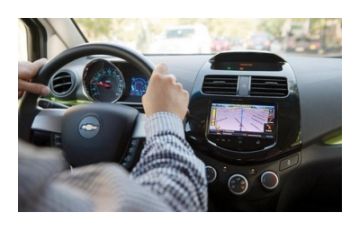
The infotainment technology that automakers are cramming into the dashboard of new vehicles is making drivers take their eyes off the road and hands off the wheel for dangerously long periods of time, an AAA study says.
The study released Thursday is the latest by University of Utah professor David Strayer, who has been examining the impact of infotainment systems on safety for AAA’s Foundation for Traffic Safety since 2013.
Past studies also identified problems, but Strayer said the “explosion of technology” has made things worse.
Automakers now include more options to allow drivers to use social media, email and text. Cars used to have a few buttons and knobs. Some vehicles now have as many as 50 buttons on the steering wheel and dashboard that are multi-functional. There are touch screens, voice commands, writing pads, heads-up displays on windshields and mirrors and 3-D computer-generated images.
“It’s adding more and more layers of complexity and information at drivers’ fingertips without often considering whether it’s a good idea to put it at their fingertips,” Strayer said. That complexity increases the overall amount of time drivers spend trying to use the systems.
The auto industry says the new systems are better alternatives for drivers than mobile phones and navigation devices that were not designed to be used while driving.
The vehicle-integrated systems “are designed to be used in the driving environment and require driver attention that is comparable to tuning the radio or adjusting climate controls, which have always been considered baseline acceptable behaviors while driving,” said Wade Newton, a spokesman for the Alliance of Automobile Manufacturers.
But Jake Nelson, AAA’s director for traffic safety advocacy and research, said drivers testing all 30 of the 2017 model year cars and light trucks took their eyes off the road and hands off the wheel while using infotainment systems. The test drivers used voice commands, touch screens and other interactive technologies to make calls, send texts, tune the radio or program navigation all while driving.
Clearly automakers haven’t worked hard enough to make the systems quick and easy to use, Nelson said. Researchers rated 23 of the 30 vehicles “very high” or “high” in terms of the attention they demanded from drivers. Seven were rated “moderate.” None required a low amount of attention to use.
Programming a destination into in-vehicle GPS navigation systems was the most distracting activity, taking drivers an average of 40 seconds to complete the task. At 25 mph, a car can travel the length of four football fields during the time it takes to enter a destination. Previous research has shown that drivers who remove their eyes from the road for just two seconds double their risk for a crash.
Under pressure from the industry, the National Highway Traffic Safety Administration in 2012 issued voluntary safety guidelines to automakers for dashboard technology instead of enforceable safety standards. The guidelines recommend that automakers lock out the ability to program navigation systems while a car is moving. However, the ability to program navigation while driving was available in 12 vehicles in the study.
The guidelines also recommend automakers prevent drivers from texting while driving, but three-quarters of the vehicles tested permit drivers to text while the car is moving. Texting was the second-most distracting task performed by test drivers.
Drivers looked away from the road less when using voice commands, but that safety benefit was offset by the increased amount of time drivers spent interacting with the systems.
AAA said drivers should use infotainment technologies “only for legitimate emergencies or urgent, driving-related purposes.” It also urged automakers to block the ability to program navigation systems or send texts while driving. Automakers should also design infotainment systems so that they require no more attention to use than listening to the radio or an audiobook, it said.
Nearly 70 percent of U.S. adults say they want the new technologies in their vehicles, but only 24 percent feel that the technology already works perfectly, according to an opinion survey conducted for AAA.
“Drivers want technology that is safe and easy to use,” said Marshall Doney, AAA’s president and CEO, “but many of the features added to infotainment systems today have resulted in overly complex and sometimes frustrating user experiences for drivers.”