By Tod Trousdell, Fleet Marketing Consultant
September 10, 2025
Today’s fleet management landscape looks much different than it did a short decade ago – a time when nearly a dozen medium to large FMCs competed for business from the same fleets.
Now, after years of consolidation and disruption, there are far fewer FMCs, with seemingly four – Holman, Element, Wheels, and Merchants – competing for the lion’s share of large commercial fleet business. This hypothesis will be put to the test next week when the fleet world comes together at the annual Automotive Fleet Leasing Association (AFLA) conference in Marco Island, Florida, September 14 – 17.
 Looking to gain insight into one of fleet’s biggest FMCs – as well as some of the biggest issues facing the fleet industry today – I sat down with Matt Dyer, CEO of fleet management company Merchants Fleet to discuss such topics as the challenges facing his customers and company, the ability to leverage technology, and the future of electrification.
From your perspective, what are the top challenges that fleets are facing today – particularly those that are most disruptive to their operations or strategic goals?
Today, like most recent years, companies that need fleets and vehicles to support their businesses are navigating a highly dynamic set of challenges.
 These range from tariffs and trade policy to optimizing the productivity and uptime of vehicles – and, of course, providing the best possible safety for drivers and vehicle operators.
In addition, fleet operators are being asked to navigate these challenges while finding ways to do more with less – a trend that started during COVID that hasn’t let up. It’s no surprise that it’s creating a real strain on the ability to manage day-to-day operations while also thinking strategically.
Right now, one dynamic that is top of mind for fleets is the trade policy environment – with numerous tariffs impacting the auto sector. After several years managing reduced OEM production and the allocation model, fleets need assurance on new vehicle availability and pricing to support replacement cycles and growth plans. With MY26 here, it does seem that fleets have that assurance and are driving ahead with order cycles.
 However, this is a crucial point of fleet strategy and will require a frequent and close review of Total Cost of Ownership – especially given potential cost impacts throughout a vehicle’s lifecycle when it comes to maintenance and repair. While it’s tempting to pause and wait for clarity, delaying key decisions can lead to missed opportunities, supply chain disruptions, and increased costs down the line. Now more than ever, staying on top of replacement cycles and maintaining health within your fleet is critical.
At Merchants, we’re committed to helping our clients stay ahead – offering advice, insights, solutions, and the operational service to empower confident decision-making. Every company has its own specific set of circumstances, so we strive to meet fleets where they are today and help them navigate the dynamics in play so they can flourish tomorrow.
How do the challenges fleet managers face differ by fleet size – and how should that influence their choice of a fleet management company?
While fleet size may influence the types of challenges that fleet managers face – what we’re hearing more and more is that size alone does not define the support and solutions our clients need.
 Smaller fleets may struggle with limited internal resources, while larger fleets can face broader operational complexity. But across the board, fleet managers are demanding that the key foundations of fleet management work as they should – for example, order management, maintenance, title and registration, resale, billing – and that fleet management providers are responsive and reliable in service delivery.
What we hear more and more is how important it is for Merchants as an FMC to truly understand the specifics of our client’s business and industry. So, the choice of FMC shouldn’t just be about scale – it should be about the ability to build a true partnership based on the alignment of capabilities and core values.
When an FMC understands the client’s world and can flex to meet their evolving needs, that’s when real value is delivered – regardless of fleet size.
A good example is the rapid growth of client relationships that require great service for not only fleet managers and their teams, but also for the clients’ divisional or regional fleet contacts who are at the forefront of driving service delivery and therefore revenue from their customers.
Looking ahead – what products or technologies do you think will truly transform fleet management and make life easier and more productive for fleet managers?
 That is quite a question given that our industry is really at the forefront of so many macro-economic trends: connected data, autonomous driving, electrification, safety, shared mobility.
Looking ahead, I believe the technologies that will transform fleet management are those that simplify complexity and empower clients and fleet managers to be more strategic. At the heart of this will be analytics, data, and insight that, for example, will help drive a more proactive approach to fleet – from vehicle selection, maintenance needs, fuel spend, route optimization, maximizing vehicle uptime, and driver safety.
This all comes together with the digital tools and technology that drive reporting and decision-making to keep fleets fit for purpose and competitive – including the digital engagement with crucial players like the driver or operator. These are the technologies that will increase clarity and productivity for fleet managers.
Is there a particular initiative or consultative program you’re especially excited about right now – something that’s not only unique to Merchants, but also helping your clients gain a competitive edge in today’s fleet environment?
Absolutely. One initiative I’m especially excited about is our FleetShare program. It’s a flexible, automated platform that’s transforming how organizations manage shared vehicles across multiple locations. Ultimately, it helps companies improve vehicle utilization without compromising service delivery.
 With FleetShare, clients can easily oversee a pool of vehicles using our self-service mobile app, network-enabled key boxes, and even keyless mobile entry – giving drivers 24/7/365 access, even at remote or unstaffed sites.
What sets FleetShare apart is the combination of convenience for drivers and control for fleet managers. While drivers enjoy seamless access, fleet managers gain real-time visibility into usage, utilization, and performance – enabling smarter decisions and more efficient operations.
In today’s environment, where agility and data-driven insights are critical, FleetShare gives our clients a true competitive edge. And honestly – we’re just getting started – the potential for this platform to reshape fleet operations is enormous.
You are now leading a company that offers both short- and long-term options. How has that shift influenced your perspective on what fleets need?
Good question. I’ve been in the leasing and fleet management business for over 30 years now. Actually, that looks scary when you put it down on paper. The majority of that time has been focused on longer-term solutions; putting different types of vehicles on the road for three, five, eight years and ensuring they have the products and services so that our clients can deliver for their clients.
 Despite this focus, I have increasingly recognized the crucial role that shorter term options play in creating the right blend of fleet solutions for clients. Different needs are present – discrete projects, start-up initiatives, flex for growth, different vehicle types, seasonal demand – these all place an emphasis on shorter term options.
Ultimately, clients do want a blend and will never be all of one and none of the other. It is about having the ability to adapt. And I see that in our short-term clients, the large majority have both short- and long-term vehicles on the road even if they are not always with us.
So, for me, to now be in a position where the Merchants Fleet business can offer this blend of solutions means we have a greater ability to be a true partner to our clients. It is a real differentiator.
Many fleet managers are relieved to see less pressure around carbon and EV mandates. What is your take on the future of EVs in fleet – do you see them continuing to play a major role?
It’s true. Many fleet managers are feeling some relief as the pressure in the US around carbon emissions and EV mandates eases. Having seen the early stage of EV transition in the UK and Europe, it was clear to me that this requires time and would be more about evolution than revolution.
 It takes a lot for fleets to transition to EV and there will need to be confidence in both the production volumes and type of electric vehicles – especially electric commercial use vehicles – to take the major steps and investments (necessary) to establish charging and other prerequisites.
But I don’t see that as a signal to pull back completely – I see it as an opportunity to recalibrate and then continue to assess. EVs are still relevant for many fleets for the future and it’s going to be driven by future product development, cost development, operational fit, commitment to sustainable business practices and, ultimately, economic value.
So, staying close to these developments and what they could mean for any organization is going to be an important strategic responsibility for fleet managers and the FMC community.
 Electrification is embedded in our organization, and we’ve learned that a one-size-fits-all approach doesn’t work. Fleets need flexibility, and that includes having the option to adopt EVs where they make sense – whether that’s for sustainability goals, cost savings, or regulatory alignment. Our role is to help them navigate the options and, at the right time, make the decisions and subsequent execution thoughtfully and in a way that fits for that company. It will be about smart adoption, not fast adoption.
About the author
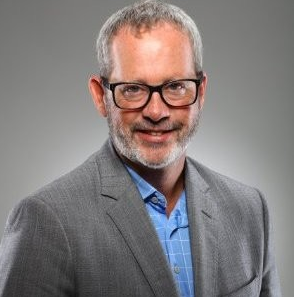 Tod Trousdell is a 40-year veteran of the marketing space and partner in the boutique firm RobertsTrousdell, headquartered in Atlanta. The firm specializes in project work for a wide variety of entities including several fleet related companies. He can be reached at [email protected].