Truemag

  • Newsletters
  • Thought Leadership
  • Mobility
  • Safety
  • Work Trucks
  • Videos
  • Home
  • Subscribe
  • Contact Us
  • Media Kit
  • Who We Are

Self-Driving Cars Could Flip the Auto Insurance Industry on its Head

Los Angeles Times

As the driverless car gets closer to reality, so too does the dilemma of how to insure the car and its owner.

The auto insurance industry faces upheaval in the next 25 years as the migration to autonomous safety features — and ultimately a self-driving car — shifts more of a car’s accident risk from the driver to the vehicle, analysts said.

The number of accidents is expected to drop sharply because currently more than 90% of accidents are caused by driver error. That could lower insurance bills for consumers.

The U.S. market for personal auto insurance policies, which currently generates $200 billion in premiums a year, could shrink substantially, some experts predict.

“There are going to be dramatic changes,” said Joe Schneider, a managing director at KPMG who’s part of the accounting firm’s task force studying the issue.

A number of cars already have collision-avoidance features, such as blind-spot detectors and front-end crash-warning systems. The auto industry and federal regulators also have agreed to equip nearly every new car with automatic emergency braking systems within the next six years.

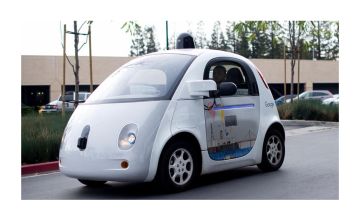
Completely self-driving cars are being developed by several auto manufacturers and Alphabet Inc.’s Google unit.

But the insurance industry, regulators and consumer advocates caution that myriad questions have to be answered before it’s known exactly how those driverless cars will be insured.

For instance, although a driverless car might cut the risk of accidents, it still would share the road with drivers behind the wheel. How would insurance for both types of vehicles be written, and what would it cost?

“We don’t want to see an environment created where you have vehicles that might not be nothing more than glorified golf carts autonomously operating among big-rig tractor trailers,” said Jim Whittle, assistant general counsel for the American Insurance Assn., a trade group for the insurers.

And don’t expect a price cut in auto insurance anytime soon. In fact, prices have been climbing in recent years because of a rise in the number of crashes that reflects more miles being driven, higher car sales and an increase in texting and other driver distractions, among other factors.

The average annual spending for car insurance nationwide was $841.23 in 2013, the most recent year available, up 7% from $786.65 in 2009, according to the National Assn. of Insurance Commissioners. In California, it rose to $782.63 from $756.16.

The number of crashes rose 10% to 6.06 million in 2014 from 5.51 million in 2009, according to the National Highway Traffic Safety Administration.

Cars with autonomous safety features are “certainly not the majority” of vehicles on the road because “the features themselves, while important in adding safety, aren’t such that every use and operation of the car is now automated,” California Insurance Commissioner Dave Jones said.

“So far, we haven’t seen significant changes in claims or experience that would warrant changes in [customer] rates,” Jones said.

Read more of the original article in The Los Angeles Times.

Jul 10, 2016connieshedron
Writing a Vision StatementAll New Cars To Have Significant Autonomous Vehicle Technology
Recent Posts
  • IMPROVLearning: How Comedy, Behavioral Science and AI Improve Fleet Safety
  • Improving Productivity with AI: Turning Fleet Data into Faster Decisions
  • National Safety Council Projects Increased Traffic Crash Risk during Fourth of July Weekend
  • Keep Every Heavy-Duty Maintenance Inspection on Track — Free Fullbay Checklist
  • Gain Data-Driven Insights into Commercial Vehicle Market Trends at Executive Leadership Summit
  • Last Chance to Save: Register for NAFA’s Maintenance Workshop
  • License Plate Cameras Are About to Start Tracking a Lot More Than Just Your Car
  • America’s Heavy EV Problem May End with Drivers Paying More
  • Trends in U.S. Drivers’ Perceptions and Attitudes Toward Vehicle Automation, 2019–2025
  • 2026 NETS Strength IN Numbers Conference: Early Bird Rates!
ASSOCIATION NEWS
Last Chance to Save: Register for NAFA’s Maintenance Workshop
How AFLA Is Positioning Itself for the Future of Fleet Mobility
‘Raise Your Hand and Get Involved’
NAFA Names 2026 Class of Fellows, Honoring Leaders in Fleet Management
Award Winners Honored at NAFA I&E
2026 NAFA I&E Seeks to Change Perceptions, Invigorate Fleets
NAFA Announces Lineup for Media Day at I&E 2026: Industry Leaders to Showcase the Latest Innovations
TECHNOLOGY
Improving Productivity with AI: Turning Fleet Data into Faster Decisions
Fleet Operations Are Changing – The Industry Needs to Evolve With Them
AI-Powered Vehicle Inspections Move Beyond the Checklist
Motive’s New Workforce Capabilities Aim to Improve Performance, Automate Rewards
AI + Human Insight: Why Fleet Leaders Need Both to Win in 2026
NTSB Finds Automation Overreliance Contributed to Two Fatal Ford BlueCruise Crashes
New AI Assistants Automate Fleet Data Analysis, Decision Making and More
CONFERENCES & WEBINARS
2026 NETS Strength IN Numbers Conference: Early Bird Rates!
AFLA 2026 – Keynotes Announced!
Private Fleets Flex at National Private Truck Council Conference
Free NAFA Webinar: Manage Your Fuel Cost Volatility
Registration Now Open for NETS Annual Conference
Early Bird Pricing for AFLA 2026 – Ending June 1
NAFA Online Seminar: Essentials of Fleet Management
INDUSTRY ANNOUNCEMENTS
Union Leasing Becomes Moventum Fleet Management as 70-Year Company Accelerates into Next Phase
Fleetio Wins Innovations Award at NAFA’s 2026 Institute & Expo
WIFM is heading to NAFA!
Cox Automotive Unveils Cox Fleet, Setting a New Standard for Fleet Uptime Nationwide
AFLA Canadian Fleet Professional of the Year Award: Nominations Open!
NAFA Webinar: Kickoff the 2026 100 Best Fleets Contest on December 4!
Join NAFA’s Free Fleet 101 Live Course

Fleet Management Weekly Newsletter Archive
Access to back issues of the FMW newsletter.

FMW Mobility
How mobility is rapidly changing the fleet management landscape.

Newsletter

Subscribe

FMW Fleet Videos
Video clips of industry leaders speaking on a variety of engaging hot topics in fleet.

2014-2020 © Fleet Management Weekly