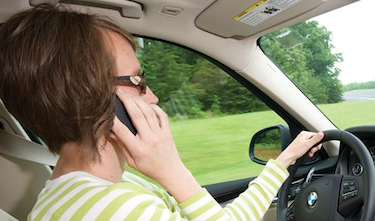
Using a cellphone while driving is risky and can lead to crashes. Making or taking calls, texting, or interacting with an electronic device in any way can take your eyes off the road at a critical moment. Teenage drivers may be especially susceptible to distractions. In response, states have enacted cellphone and texting bans, and insurers along with other groups have sponsored public education campaigns. Even though studies show that phone use by drivers has declined in states with bans, crashes reported to insurers haven’t gone down during the same period.
While phoning and texting have become synonymous with distracted driving in the news, distraction is a much larger problem than just electronic devices. A new study by IIHS in partnership with Virginia Tech helps clarify the risk of cellphone use behind the wheel and offers insight into other distracting things drivers do when they aren’t using cellphones. The research points to the need for a broader strategy to deal with the ways that drivers can be distracted.
“Keep your eyes on the road” is a basic tenet of driving, and it goes without saying that anything that diverts a driver’s attention could lead to a crash. As cellphones have surged in popularity, concerns have been raised about the safety implications of using them behind the wheel, and early studies linked talking on a cellphone directly to increased crash risk. Surprisingly, though, this apparent safety risk hasn’t translated into higher crash rates. In fact, crashes reported to police and insurers have declined as cellphones and other electronic devices have proliferated.
New research by the Institute and the Virginia Tech Transportation Institute (VTTI) examined how drivers’ near-crash and crash risk changes as their cellphone usage patterns change and how cellphone use fits in with other driver behavior and affects attention to the road. The research confirms that frequent cellphone users have more near misses or crashes. However, a new finding is that individual drivers’ overall near-crash or crash rates don’t increase the more they use their phones. That may be because drivers tend to do other things that take their eyes or minds off the road when they aren’t engaged in phone conversations. There’s also evidence that drivers compensate for the distraction of using cellphones, for example, by making calls while stopped or during less-demanding driving situations.
Though wireless phone use continues to climb among the general population, hand-held phone use by drivers appears to be leveling off. After doubling to 6 percent between 2000 and 2005, the percentage of drivers observed talking on hand-held phones while stopped at intersections has stood at 5-6 percent since then, the National Highway Traffic Safety Administration (NHTSA) estimates. Texting still appears to be on the rise. The percentage of drivers texting or visibly manipulating hand-held devices was 1.5 percent in 2012, up a fraction from 1.3 percent in 2011 but sharply higher than the 0.2 percent observed in 2005. Texting in 2012 was highest among 16-24 year-olds, at 3 percent.
At the same time, U.S. crash deaths have fallen sharply since 2006, and overall crashes reported to police and insurers have dropped, too.
Read the entire article at IIHS.org